

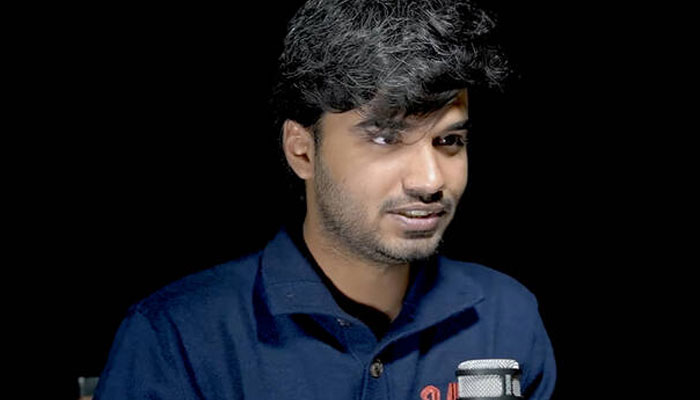

By: Muhammad Mohsin Khan Rajput
Email: muhmmadmohsinrajput@gmail.com
In Karachi, a mother’s lap has been left empty, a father has lost his support, and the happiness of a family has turned into mourning. The death of 25-year-old Mir Raza Ali has not only devastated his family but has also placed a question before the conscience of the city:
What happened to Mir Raza, and who is responsible?
Mir Raza Ali, a former student of the Institute of Business Administration (IBA) and a young entrepreneur, left his home on the night of July 28, saying that he would return shortly. But he never came back. His body was later found in the Gulistan-e-Johar area. Initial investigations revealed several possible angles, and the police began working on various possibilities.
But this is where the real story begins.
The information emerging about Mir Raza’s death has raised one question after another. The initial medical report, subsequent investigations, forensic evidence, CCTV footage, mobile phone data, and smartwatch records have now become important links in the case.
According to the latest reports, additional members have been included in the investigation committee probing the Mir Raza case, bringing the total number of committee members to nine. His mobile phone and smartwatch have also reportedly been sent to a forensic laboratory in Lahore for further examination.
This development is important because, in the modern age, a mysterious death cannot be solved through statements alone. Digital evidence can also play a crucial role in uncovering the truth.
CCTV footage concerning Mir Raza’s final movements is also part of the investigation. Investigators are attempting to piece together different recordings to determine where he went after leaving home and what happened to him afterward.
Then comes the most sensitive question:
What do the medical findings reveal?
Questions surrounding the post-mortem examination have led to calls for further medical and forensic examination. For this reason, every piece of medical and scientific evidence in the case must be examined with the utmost care.
Recent reports have also contained various claims regarding chemical analysis. However, such findings should not be treated as conclusive judicial facts unless and until they are supported by the relevant forensic reports and examined through the proper investigative and judicial process.
There is one question on everyone’s lips:
Who killed Mir Raza?
But the answer cannot be found in emotions, rumours, or speculation on social media. Declaring someone a murderer merely on the basis of suspicion or allegations is not justice. A person can be held responsible only when credible evidence establishes their involvement and a court reaches a decision according to law.
At the same time, it would also be unjust to ignore the questions being raised by Mir Raza’s family.
His family has the right to know what actually happened to their son. It is the responsibility of the state and investigative agencies to assure them that every possible piece of evidence is being preserved, every angle is being investigated, and no influential person or external pressure is being allowed to affect the investigation.

Another important aspect of the case concerns business dealings and financial difficulties. These matters are reportedly also being investigated by the police and should be examined alongside all other available evidence.
This is what responsible journalism demands.
We must stand with the victim’s family, but we must not declare an innocent person guilty.
We must question the police, but we must not take the authority of the courts into our own hands.
We must demand a transparent investigation, but we must not present unverified information as established fact.
What the Mir Raza case now needs is an investigation that does not suppress questions but seeks answers to them.
Where did Mir Raza go after leaving home?
What were his final movements?
What do the digital records reveal?
What conclusions do the medical and forensic reports establish?
And, most importantly:
Who took Mir Raza’s life—and why?
Until clear and credible answers to these questions emerge, this case will remain more than just a criminal investigation. It will also remain a test of the trust Karachi’s citizens place in the state and its institutions.
A mother’s lap has already been left empty.
Now it is the responsibility of the state to give that mother, at the very least, truth and justice.
Mir Raza cannot return, but the truth about his death must emerge. Because when the killing of a citizen remains unanswered, fear does not remain confined to one home it spreads throughout the city.
And until the truth comes to light, one question will continue to live:
Who is the killer?
Comments are closed, but trackbacks and pingbacks are open.