

Power, Politics and Pakistan in a Changing World
From Diplomatic Sidelines to Strategic Centerpiece: How Pakistan Is Navigating a World Where Power Rules

The shock waves of two World Wars lasted for decades and moved the world towards a peaceful retreat, where countries relied on diplomacy to resolve their conflicts rather than the use of force. If one goes to think about the post–Cold War era, the world had moved towards a silent peace that lasted a few decades, where countries moved for arms-control agreements and nuclear non-proliferation instead of competing over who could build the most devastating weapons of mass destruction.
Other than regional conflicts like the Korean War, Vietnam War, Gulf War, Iran-Iraq War or even Arab-Israel conflicts, there was no such involvement of war from the powers of the world. But was this peace or a mere pause before the storm?
9/11 and the Birth of a New Era
Things took a turn on September 11th, 2001, when the world’s most hustling city, the city where dreams come true, was sent into chaos when its twin towers fell to the ground. It gave birth to a new era where Islamophobia was born, where the West got a reason to wage war against countries it thought posed a threat.
If you ask me, it was the aftereffects of the two World Wars that there was a need to justify waging a war against a country has to have a solid reason of defending oneself.
Afghanistan, Iraq, and Iran: A New World Order
This thought brought the war to Afghanistan for finding Osama Bin Ladin – who was later not even found in Afghanistan, the war on Iraq to eradicate the weapons of mass destruction – that were never found in Iraq, and imposed sanctions on Iran – who was yet to build a nuclear weapon.
This was the beginning of a new world order, where under the guise of protecting oneself, countries were annihilated – As long as there was a somewhat plausible reason that it posed a threat to us.
The Erosion of Justification
Over time, even the need to have justification began to erode; Russia’s invasion of Ukraine, Israel’s campaigns in Gaza and Lebanon, India’s blatant attack on civilian locations of Pakistan, and now the United States of America kidnapping a sitting President of Venezuela, all signal a deeper shift.
These are all signs that as the horrors of the World Wars are fading, the world is moving quickly towards a new normal – a normal where power overrides principle.
Pakistan’s Diplomatic Past
It seems in times like these, having brute force can somehow justify your actions. Therefore, Pakistan’s performance in retaliation to India’s attack raised many eyebrows.
There was a time when diplomatic norms held less weight for Pakistan, when our top leadership struggled for recognition, where one ex–Prime Minister waited for a mere phone call from President Joe Biden which was never received, where an ex-Prime Minister was allegedly left at an airport to later be rescued by a private jet.
From the times when foreign ministers received the Prime Minister rather than the heads of state. From the times when Pakistan was informed of the decisions, rather than being part of the decision making.
A Changing Phase for Pakistan
Just like the world order is changing, so is that phase of Pakistan, as now the Saudi Air Force gives a ceremonial welcome to the Prime Minister. President Donald Trump publicly acknowledges Pakistan by giving the microphone to Prime Minister Shehbaz Sharif.
Now Pakistan is not informed of the decisions rather involved in the decision making.
The Islamabad Peace Talks
How can one forget what was arguably Pakistan’s biggest diplomatic success in recent years; The Islamabad Peace Talks? At time when tensions between the USA and Iran were spiraling into a full-scale regional war, Pakistan played a critical role in achieving a ceasefire.
Not only that but also ensuring that Saudi Arabia stays out of this conflict. Had the war prolonged, it wouldn’t have just been Pakistan that would have suffered.
The entire world economy would be facing soaring energy prices and widespread instability.
For decades Pakistan has been unfairly portrayed in the international community as the hub for terrorism. Yet during one of the region’s most dangerous times, it was Pakistan that chose diplomacy and emerged as a credible voice for peace.
Pakistan vs. India in the Peace Process
On the other hand, India that portrayed itself as the natural leader of South Asia found itself struggling to make itself relevant in this peace process.
The difference could not have been more obvious: one nation was helping build peace, while the other was left observing from the sidelines.
This shift signals a broader change: Pakistan’s renewed relevance is not rooted in historical sentiment or long-standing alliances, but in the demonstration of force at a time when force has once again become a central currency in the emerging world order.
A New Centralized Command
Therefore, the need of a new centralized command under one Chief of Defense Forces in Pakistan was a strategic and timely move. If anyone had doubted the need of this new role, Field Marshal Asim Munir has demonstrated having a clear military stance towards stabilizing the country in times where force rules the world was the need of the hour.
We still have a long way to go, but we are on the right track.
Looking Back at the Musharraf Era
Yet the question remains: when will the masses reap the rewards of the affair between the riches of the world and Pakistan? For that, we have to head to the Musharraf era, when Pakistan was closely aligned with the United States and we saw economic relief in the shape of debt rescheduling, increased dollar influx, and greater flexibility by international financial institutions.
Pakistan’s Window of Opportunity
A similar opening may be emerging again. Pakistan today sits at the intersection of United States and China competition, sustained IMF engagement, renewed interest from the Gulf states and a non-sanctioned neighbor Iran.
Though, the catch here is: without economic reforms, institutional stability, and investor confidence, strategic importance can vanish just as quickly as it came. Power can open doors, but only smart policy will determine whether Pakistan walks through those doors.
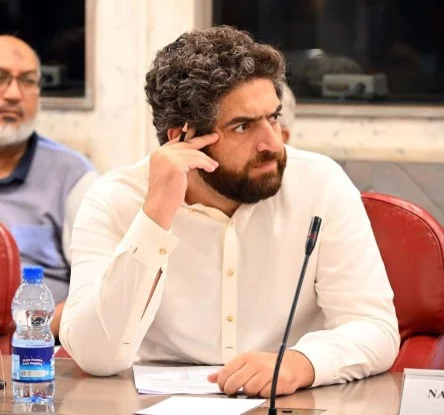
Writer: Muhammad Usman Awaisi
Parliamentary Secretary Railways MNA – Bahawalpur
Graduate in Economics and Finance from University of Waterloo, Canada


Comments are closed, but trackbacks and pingbacks are open.