
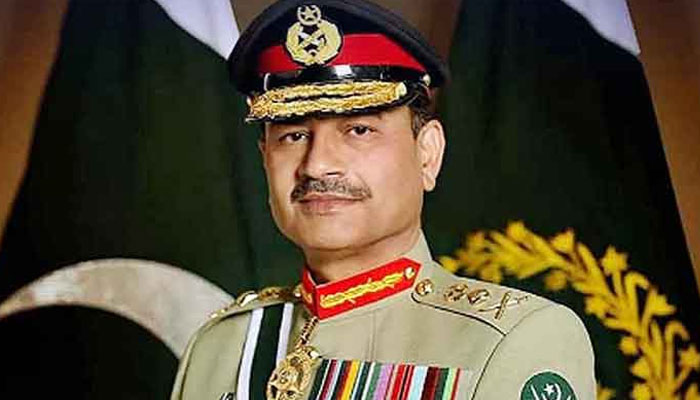
Operation Bunyan-ul-Marsoos: Guardian of Stability and the Rise of Field Marshal Syed Asim Munir
By Syed Faiz Naqshbandi

Operation Bunyan-ul-Marsoos stands today, one year on, as a defining chapter in Pakistan’s contemporary history, an episode that reshaped perceptions, reinforced national confidence, and elevated the country’s standing across military, diplomatic, political, and economic spheres.
At a time of heightened tension following Indian attacks Pakistan, killing innocent civilians including children, the region stood at the edge of uncertainty. The risk of escalation between nuclear armed neighbors was real, and the margin for error was dangerously thin. In that critical moment, the leadership of Field Marshal Syed Asim Munir came into sharp focus.
What distinguished the response was not merely its strength, but its discipline, clarity and boldness.
Rather than allowing events to spiral, the operation was conducted with precision and clarity of purpose. Pakistan demonstrated its ability to defend its sovereignty through calibrated action, targeting specific objectives while consciously avoiding uncontrolled escalation. This balance between force and restraint became the defining feature of the operation, projecting a message that Pakistan was both capable and responsible.
The impact of Operation Bunyan-ul-Marsoos extended far beyond the immediate military domain.
Militarily, it showcased preparedness, coordination, and the growing strength of indigenous capability. Platforms such as the JF-17 Thunder symbolized this progress, drawing increased international attention and sparking discussions around defense collaboration. The operation reinforced the narrative of a self-reliant defense posture, capable of meeting modern challenges with confidence. Powerful tributes are sent to the bravery, sacrifices, and exceptional services of the Pakistan Armed Forces.
The spirit of resilience, unity, and unwavering determination of the Pakistani nation.
Diplomatically, Pakistan’s image experienced a notable transformation. The country began to be viewed not simply as a participant in regional tensions, but as a state capable of measured and responsible decision-making under pressure. This perception strengthened Pakistan’s image in international forums and contributed to renewed engagement with global partners.
Politically, the operation fostered a sense of unity and institutional confidence within the country. It underscored the importance of coordinated leadership and reaffirmed trust in national institutions during a moment of potential crisis. Economically, the improved perception of stability played a subtle yet meaningful role in shaping external outlooks, encouraging cautious optimism regarding Pakistan’s trajectory.
In recognition of his leadership during this pivotal period, Syed Asim Munir was elevated to the rank of Field Marshal, an honor reflecting both honesty, discipline, performance and trust. His leadership style, defined by composure and strategic clarity, became central to Pakistan’s evolving narrative on the global stage. He became the only Five Star General of Pakistan Army and the first ever Chief of Defense Forces (CDF) of Pakistan.
CDF and Field Marshal Asim Munir described Kashmir as Pakistan’s “jugular vein” during a diaspora event in April 2025, where he said,”Our stance is very clear, it was our jugular vein, it will be our jugular vein, and we will not forget it. We will not leave our Kashmiri brothers in their heroic struggle…” The clear statement of Field Marshal Syed Asim Munir has encouraged and strengthened the people of IOJK in their quest for freedom from India. His bold and unwavering stance reflecting strong leadership has reinforced hope among Kashmiris and highlighted their struggle on the global stage. His courage and clarity continue to inspire those who seek justice and self-determination.
Yet, the broader significance of this leadership extended beyond national borders.
As tensions goes on escalating over naked U.S. Israel attack on Iran the world once again faced the imminent danger of wider conflict. In this volatile environment, Pakistan adopted a constructive and exemplary role. Through quiet engagement and sustained diplomatic efforts, it contributed to reducing tensions and supporting pathways toward de-escalation and ultimately the ceasefire. Pakistan’s miraculous mediation under leadership of Field Marshal Syed Asim Munir and Prime Minister Shahbaz Sharif finally averted nuclear war.
These efforts were acknowledged across globe especially the diplomatic circles. The eventual easing of tensions was welcomed by numerous countries, reflecting a shared recognition of Pakistan the best diplomacy and peace and security initiatives in the region and across.
One year after Operation Bunyan-ul-Marsoos, its legacy continues to resonate.
It is remembered not only as a demonstration of military capability, but as a moment when leadership, restraint, and strategic judgment converged. Under Field Marshal Syed Asim Munir, Pakistan projected an image of strength guided by responsibility, an image that elevated its standing across multiple domains.
In a world where crises often escalate unchecked, such leadership offers a different model: one where power is measured, decisions are deliberate, and stability remains the ultimate objective. Well done Pakistan,
الحمد لله رب العالمين
The author is senior leader of All Parties Hurriyet Conference (APHC) and legal expert of international law. He can be reached at faiz.naqshbandi@gmail.com & at WhatsApp number 03335145416.
[…] infrastructure solutions, called on Chief of Army Staff and Chief of Defence Forces Field Marshal Syed Asim Munir at General Headquarters (GHQ) in Rawalpindi on […]
[…] understanding was reached during a meeting between Field Marshal Syed Asim Munir, Chief of Army Staff and Chief of Defence Forces (COAS and CDF), and Admiral Renato Rodrigues De […]