


Terrorism remains one of the gravest challenges facing the modern world. It threatens peace, undermines social stability, disrupts economic progress, and, above all, strikes at the most fundamental human right—the right to life. Yet terrorism is far more than guns, bombs and suicide attacks. It is a complex phenomenon rooted in extremist ideologies, political alienation, economic deprivation, ignorance, unemployment, social injustice, organized crime, external interference and, in some cases, institutional weaknesses. That is why the war against terrorism cannot be won on the battlefield alone. It demands a comprehensive national response involving the state, political leadership, security institutions, religious scholars, educational institutions, the media, civil society and, ultimately, every citizen.
Pakistan knows the price of terrorism better than most nations. For decades, the country has remained on the frontline of the global struggle against violent extremism. Soldiers have fallen defending the frontiers, police officers have sacrificed their lives protecting cities, and ordinary citizens have paid an unbearable price simply for wanting to live in peace. Journalists, teachers, religious scholars, political workers and members of civil society have also been among the victims. Entire families have been shattered, homes have been emptied and communities have been scarred. Yet the Pakistani nation has repeatedly demonstrated that terrorism cannot force it into submission.
For Pakistan, terrorism is not a distant threat. Over the past two decades, waves of violence have affected virtually every sphere of national life, from major urban centres to remote and difficult-to-access areas. Places of worship, markets, schools, public institutions, police stations and security installations have all been targeted. The objective of terrorist groups has never been limited to killing people. Their broader aim has been to spread fear, weaken public confidence in the state, disrupt economic activity, undermine national cohesion and create an atmosphere in which ordinary citizens begin to question the state’s ability to protect them.
The tragic attack on the Army Public School in Peshawar remains one of the darkest moments in Pakistan’s history. The murder of innocent schoolchildren shocked the conscience of the entire nation. Their blood became a symbol of Pakistan’s determination to confront terrorism without ambiguity or compromise. The tragedy strengthened the national resolve and contributed to a more coordinated and determined campaign against terrorist networks.
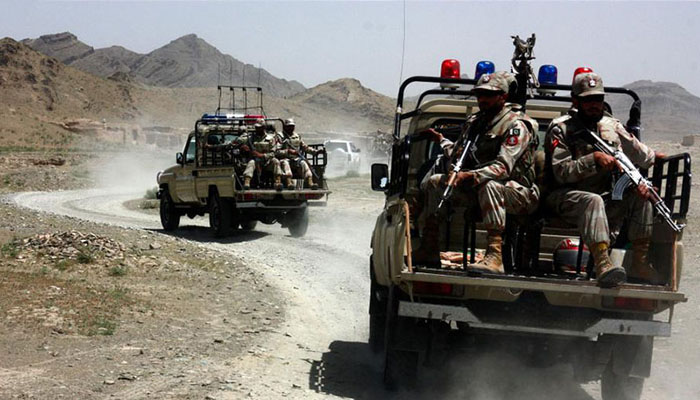
Pakistan’s armed forces and law-enforcement agencies subsequently conducted major operations against terrorist organizations and their infrastructure. These efforts inflicted severe losses on terrorist networks, disrupted their operational capabilities, dismantled their hideouts and helped restore a greater degree of peace to large parts of the country. The courage and sacrifice of security personnel remain central to Pakistan’s struggle against terrorism.
But military success, however important, cannot by itself guarantee permanent peace. Terrorist organizations are adaptable. When one network is disrupted, another may emerge. When one route is blocked, another may be found. Recruitment methods change, propaganda evolves and modern technology provides new tools for radicalization and communication. The challenge, therefore, is not simply to defeat terrorists militarily but to prevent the conditions that allow terrorism to regenerate.
The second and perhaps more enduring battlefield is the battle of ideas.
A terrorist can be physically eliminated, but the ideology that persuades a young person to embrace violence cannot be defeated by force alone. If extremist narratives continue to find receptive minds, terrorism can reappear in different forms. Pakistan therefore needs an equally determined intellectual and ideological response.
Islam, as understood through its fundamental teachings, is a faith of peace, justice, mercy and respect for human life. The killing of innocent people cannot be justified in the name of religion. Any attempt to associate terrorism with Islam or any other faith is a distortion of religion and an injustice to millions of peaceful believers. Religious extremism must therefore be challenged not only through security measures but also through scholarship, dialogue and responsible religious leadership.
Pakistan’s religious scholars have an important role in this regard. Mosques, seminaries and religious institutions influence millions of people. Their message can help shape the attitudes of young generations. Religious leaders should continue to speak clearly against terrorism, sectarian hatred, violence and intolerance, while promoting coexistence, compassion, respect for differences and obedience to the law. Young people must understand that disagreement is not a justification for violence and that political or social grievances must be addressed through constitutional and peaceful means.
Education is perhaps the most powerful long-term weapon against extremism. A young person who has access to quality education, meaningful employment, constructive activities and hope for the future is less vulnerable to extremist recruitment. By contrast, ignorance, unemployment, deprivation and a sense of exclusion can create vulnerabilities that extremist groups may exploit.
Pakistan’s education system therefore needs to go beyond traditional academic instruction. Schools, colleges and universities should encourage critical thinking, dialogue, tolerance, civic responsibility and respect for diversity. Students should learn how to question information, examine evidence and recognize manipulation. They should understand that asking difficult questions is not rebellion, that disagreement is not hatred, and that a person holding a different opinion is not necessarily an enemy.
The digital age has added another dimension to this challenge. Social media and online platforms have become important tools for terrorist propaganda, recruitment and ideological indoctrination. Extremist groups can spread misinformation and emotional propaganda at unprecedented speed. Combating this threat requires more than censorship or restrictions. Pakistan needs stronger cybersecurity capabilities, digital literacy, effective counter-narratives and timely intelligence, while ensuring that all actions remain consistent with law and fundamental rights.
An effective intelligence system is equally critical. Modern counterterrorism is increasingly dependent on timely information, intelligence sharing, data analysis and inter-agency coordination. The ability to identify a terrorist network before it carries out an attack can save countless lives. Intelligence agencies, police, military authorities and other law-enforcement institutions must therefore continue to improve coordination and information-sharing mechanisms.
Border security is another vital component. Pakistan’s geographical position presents unique security challenges. Long borders, difficult terrain and cross-border movement can create opportunities for terrorist networks to establish links and exploit gaps in surveillance. Modern border-management systems, documented movement, advanced surveillance technologies and stronger cooperation with neighbouring countries are essential. Pakistan’s diplomatic position should remain clear: the territory of no country should be used to launch terrorism against another.
Cutting off terrorist financing is equally important. Terrorist organizations cannot function without resources. Extortion, smuggling, narcotics, kidnapping for ransom, illegal financial networks and other forms of organized crime can provide funding for violent activities. Counterterrorism efforts must therefore be closely connected with the fight against organized crime and illicit financial flows. Financial institutions, law-enforcement agencies and intelligence organizations need effective mechanisms to identify and disrupt the financial lifelines of terrorist networks.
Economic development is another powerful instrument in the fight against extremism. Peace cannot survive for long where people remain trapped in poverty, unemployment and hopelessness. Development projects in terrorism-affected areas should therefore be treated as a national security priority. Employment opportunities, technical education, small-business financing, healthcare, quality education and improved infrastructure can strengthen public confidence in the state and give young people alternatives to extremism.
This is particularly important in regions that have suffered from prolonged insecurity and deprivation. The people of Balochistan and Khyber Pakhtunkhwa, among other areas, deserve meaningful development, effective governance and opportunities for their younger generations. Genuine grievances must be heard and addressed through constitutional and political mechanisms. At the same time, there must be no confusion between legitimate political demands and terrorism. Peaceful political expression is a constitutional right; violence against innocent people and attacks on state institutions are entirely different matters.
Justice is another essential pillar of counterterrorism. Arresting terrorists is only the beginning. Effective investigation, professional prosecution and timely judicial proceedings are necessary to ensure that those responsible for serious crimes are held accountable. Weak investigations or prolonged legal processes can undermine public confidence and create opportunities for terrorist networks to survive.
At the same time, the rule of law must remain non-negotiable. A strong state is not one that merely exercises force; it is one that exercises authority within a clear legal framework. The fight against terrorism must be firm, but it must also be fair. Protecting innocent citizens from terrorism and protecting their fundamental rights are not contradictory objectives. Both are essential to the legitimacy of the state.
The police deserve particular attention. Police officers are often the first line of defence in cities and towns. They operate in markets, neighbourhoods, police stations, checkpoints and other public spaces where terrorist threats can emerge without warning. Modern training, forensic capabilities, intelligence support, digital systems and adequate resources can significantly strengthen their ability to prevent and investigate terrorist activity.
The media also carries a major responsibility. Terrorists seek publicity because publicity amplifies fear. Responsible journalism should ensure that terrorist propaganda is not inadvertently transformed into a platform for recruitment or intimidation. At the same time, the media should highlight the sacrifices of security personnel, the resilience of affected families and the positive efforts of communities working for peace. In times of crisis, responsible journalism is not only about reporting what happened; it is also about preventing fear from becoming a weapon in the hands of terrorists.

Writers, intellectuals, poets and artists can contribute to this struggle in their own way. Weapons may defeat a terrorist physically, but ideas can defeat the culture of hatred that sustains extremism. Literature, art, film and cultural activities can promote tolerance, compassion, pluralism and national solidarity. Pakistan’s young generation needs a narrative of hope—one that presents the country as a land of opportunity and possibility rather than fear and despair.
Families and women also have a crucial role. The home is often the first place where a child’s worldview is formed. Parents who teach their children tolerance, compassion, respect for law and human dignity contribute directly to building a resilient society. Women’s education and economic empowerment can further strengthen families and communities and reduce vulnerabilities that extremist groups seek to exploit.
Counterterrorism policy should also consider rehabilitation and reintegration where appropriate and within the framework of law. Individuals who have been exposed to extremist propaganda but have not committed serious crimes may, under carefully designed programmes, be given opportunities for education, vocational training, psychological support and reintegration into society. Such programmes must always protect public safety and remain consistent with legal and national-security requirements.
Pakistan must also continue to strengthen its diplomatic engagement on terrorism. Terrorist networks do not respect national borders. Their financial, communication and logistical links can extend across several countries. International cooperation is therefore essential. Intelligence sharing, financial monitoring, cybersecurity, border management and joint counterterrorism initiatives can help states confront a threat that no country can defeat entirely on its own.
Regional cooperation is particularly important for South and Central Asia. As trade, transport and economic connectivity increase across the region, security cooperation must advance at the same pace. Regional states should share intelligence, strengthen border controls and ensure that terrorist organizations cannot exploit political differences for their own purposes. Regional peace and economic development are closely connected; instability in one country can quickly affect its neighbours.
The international community must also avoid double standards. Terrorism cannot be condemned selectively. The identity, nationality or political objectives of the victims should never determine whether an act of terrorism is considered unacceptable. The world needs a consistent principle: terrorism against civilians is wrong regardless of who commits it, where it occurs or what political justification is offered.
For Pakistan, national unity remains one of the strongest defences against terrorism. Terrorists benefit from division. They seek to exploit differences of religion, sect, ethnicity, language, province, region and political affiliation. A fragmented society is easier to intimidate and manipulate. Pakistan’s political leadership and society must therefore ensure that legitimate political differences do not become obstacles to national solidarity on matters of security and survival.
The fight against terrorism must also include the fight against organized crime. Illegal weapons, narcotics, smuggling, extortion, kidnapping and other criminal activities can create an ecosystem in which terrorism flourishes. Breaking these connections can deprive terrorist organizations of both resources and operational space.
The families of martyrs must never be forgotten. Behind every fallen soldier, police officer or civilian is a family that continues to live with the consequences of that sacrifice. Supporting these families is not merely a welfare obligation; it is a national duty. The education of their children, healthcare, financial support and long-term dignity should remain a permanent priority.
Ultimately, the success of the fight against terrorism should not be measured only by the number of terrorists eliminated. It should be measured by the number of children who can attend school without fear, the number of businesses that can operate safely, the families that can sleep peacefully, the worshippers who can pray without anxiety, and the citizens who trust their state to protect them.
Peace is not simply the absence of gunfire. Peace exists when people have justice, dignity, opportunity and hope.
Pakistan now needs a long-term counterterrorism strategy that survives political transitions and remains rooted in national consensus. Political parties, state institutions, security agencies, religious scholars, educational institutions, media organizations and civil society must work together to establish a comprehensive framework with clear objectives, adequate resources and measurable outcomes.
The lesson of the past is clear: military operations can destroy terrorist infrastructure, but lasting peace requires something more. It requires education to defeat ignorance, justice to defeat impunity, economic opportunity to defeat hopelessness, dialogue to defeat intolerance, and national unity to defeat division.
Pakistan has already paid an enormous price in this war. The sacrifices of its martyrs must not become merely statistics in national records. Their blood must become the foundation of a safer and more prosperous future.
We owe them a Pakistan where the sound of books is louder than the sound of guns; where young people see careers instead of extremism; where differences are resolved through dialogue rather than violence; where citizens trust institutions; and where the law protects everyone equally.
The ultimate victory over terrorism will come when terrorist organizations are not only defeated militarily but are denied the ability to recruit, finance, indoctrinate and intimidate. That goal is difficult, but it is certainly achievable.
Pakistan has faced immense challenges before and emerged stronger. The country now needs the same courage, unity and determination that carried it through its darkest hours. The fight against terrorism must remain above politics and beyond temporary interests. It must become a permanent national commitment.
Pakistan wants peace, but peace must never be mistaken for weakness. Pakistan supports dialogue, but not at the expense of national security. Pakistan seeks development, but not at the cost of sovereignty. Above all, Pakistan has a responsibility to protect the lives and dignity of its citizens.
This is not merely a security challenge. It is a struggle for the future of Pakistan.
We must therefore confront hatred with compassion, violence with the rule of law, ignorance with education, poverty with opportunity, and despair with hope. We must ensure that no child grows up believing that violence is the answer to his or her grievances.
This country belongs to its people, and its future cannot be surrendered to those who thrive on fear.
The darkness of terror may still linger in some corners, but it cannot last forever. With national unity, strong institutions, economic opportunity, quality education, responsible media, effective diplomacy and an unwavering commitment to the rule of law, the darkness will recede.
And when it does, the sun of peace will rise over Pakistan.
Comments are closed, but trackbacks and pingbacks are open.