


By Marib Noor Sajid, Nadia Ejaz, Surahbeel Bokhari
(Students from National University of Science and Technology pursuing BSc in Mass Communication.)
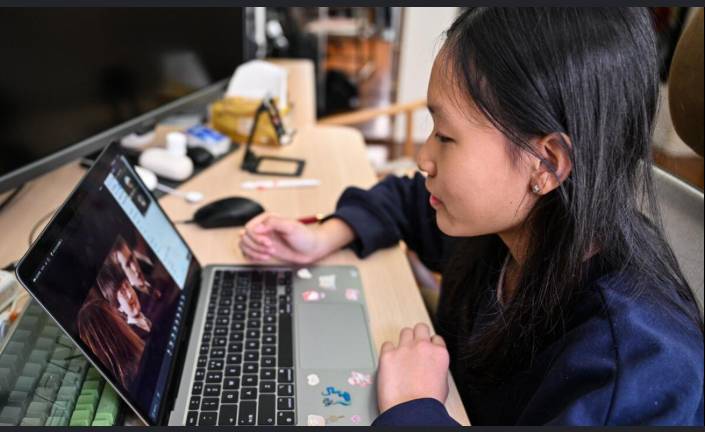
The library at the National University of Sciences and Technology is amazingly quiet at 2:13 pm. Through tall windows the sunlight scatters, and the busy desks in rows are in the sunlight. Among them, Muhammad Atta is sitting with his laptop open not to read lecture notes, but to do something that earns him money.
“It’s certainly a compromise,” he states. “There are instance when you need to favor one over the other.”
To students like Atta, university life goes beyond grades. It is focused on survival, strategies, and keeping a level of security in a world where having a college degree can no longer guarantee one security.
During several decades, a university degree in Pakistan was the guarantee of security and a chance to develop further. The promise that was made nowadays appears more doubtful than ever. With the growth of digital platforms, freelancing opportunities, and remote employment, traditional career paths are no longer the only option that the young generation can choose. Numerous students are joining the workforce prior to graduation, developing skills that create income and experience together with their degrees.
Students are no longer asking themselves whether they need to study or they can get something by studying on their own. Finally, a degree is the gatekeeper, according to Atta but competencies show your instant value.

This change is also evident within classrooms. Rubban Shakeel notes that learners are becoming increasingly critical of traditional education especially with the ready access of online learning. He observes that students today have a different understanding of universities and perceive them as social, and less employment-oriented, with many students already seeking sources of income as they pursue their studies. Regarding the employability, he says, “Hiring, I would select a candidate that has strong digital marketing skills but does not have a relevant degree and lacks experience. Moreover, he emphasizes that students should not rely solely on universities and seek additional online learning opportunities.
At the same time, this educational-employment gap points to more systemic problems. Ismah Zaib emphasizes that despite the efforts made by the universities to incorporate practical learning, its implementation differs. “There exists a gap,” she clarifies. The demand is higher in the practice- based courses that can be adapted to the actual needs in the industry. Relating this issue to the wider economic context, she finds, that, indeed this has created some concerns… we find that business is being affected and consequently this affects employability. Nevertheless, she has a rather moderate opinion, which is the following: Skills help you become more professional, whereas a degree will help you become more scholarly.
In a global perspective, Ahmad Mohsin sheds more light on the revolution education has gone through. Currently enrolled at Stanford University, he depicts an academic setting where theory and practice are intimately connected. He says that understanding is what is in close linkage with practical use. Classes are often centered around projects, research questions and open-ended research questions rather than mere exams. Given the students in Pakistan, he says, the difference lies more about opportunity rather than ability. The debate to him is not about a choice between one or the other: “A degree is organized knowledge and legitimacy, whereas skills determine real effectiveness.
This change is supported by a student survey conducted in the frame of this study as the majority of the surveyed students stated that skills play a no less important and even more crucial role in the modern job market than degrees. Quite a number of those who participated in this also claimed that they were stressed about trying to balance their school work and trying to learn skills or get a job. One individual put it in the following way: “In 2026, what will be of more importance is not what you study but how you can put into practice what you have studied. Students are, therefore, not choosing any of the two, but opting to take both degrees and skills. To many people, such a concurrent project is a source of stress. The real challenge is both mental and physical exhaustion, Atta admits. “Attempting to do both leads to real burnout.”
It is not the denial of education that comes out of these experiences. Another perspective on it. As industries evolve, jobs are facing the influence of technology which means that universities are under pressure to change. At this point, we need graduates no longer but people who can apply knowledge in real-life situations. Educators keep stressing the need for balance. Ismah Zaib says, ” rather than either of them instead, take the opportunity of finding a middle ground between the two. The success of 2026 is not only about the need to follow a specific way. The ancient path of attaining a degree and subsequently a job is evolving. Now it is a matter of being flexible with skills and continuing to learn. Students are not giving up on education, they are simply shifting the meaning of education in a fast-paced world.
As the light in the afternoon starts to fade Atta turns his attention back, to what he’s doing. The paid job is done and yet the academic time limit remains. I would surely strive to the same proportion in case I had a chance to start all over again, but I would start earlier.
There is within that silent contemplation the story of a generation who is not rejecting education but instead finding other means of approaching it in a society where success does not rely solely on the diploma.
Comments are closed, but trackbacks and pingbacks are open.