

NUST s3h
Department of Mass Communication 2k24
News Reporting & Writing
Dinner tables in Pakistani households were once filled with family conversations, the sound of television, and the clinking of plates. Now, a child watches cartoons on a tablet while his older sister scrolls endlessly through Instagram reels. Their mother replies to WhatsApp forwards between bites, while their father silently checks work emails on his phone. Everyone is sitting together, yet the room remains unusually quiet.
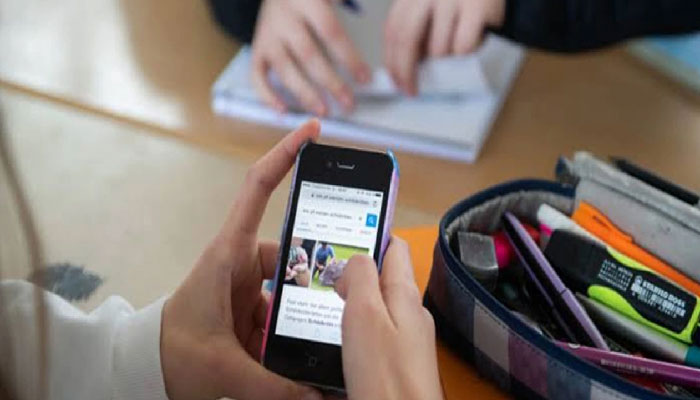
Over the past few years, screen addiction in Pakistan has evolved from being seen as a teenage problem into something much larger. This issue is quietly affecting not only youth but entire households across urban Pakistan. Smartphones, cheap internet packages, and unlimited short-form content have become part of daily life, Pakistanis are spending more time online and less time interacting with one another in real life. Studies conducted globally after COVID-19 have linked excessive screen time with sleep disruption, anxiety, and reduced attention spans among young users. What began during the COVID-19 lockdowns as a necessity for work, education, and entertainment has slowly turned into a lifestyle that does not seem like it will change anytime soon.
According to the Pakistan Telecommunication Authority (PTA), Pakistan crossed 190 million cellular subscribers in 2025. Internet and smartphone usage in Pakistan have continued to rise rapidly in recent years, particularly among youngsters. Apps such as TikTok, Instagram, YouTube, and Netflix now dominate everyday life, often replacing activities that once centered around conversation, family gatherings, or outdoor gatherings.
For young people, the effects are evident and difficult to ignore.
“I spend around seven hours a day on my phone,” said Ebba Wahid, a student who mostly uses YouTube, Netflix, and WhatsApp. While she admitted that screens sometimes affect her studies, sleep, and mood, she has also acknowledged how difficult it has become to stay away from her phone.
Too much dependence on devices is no longer limited to entertainment alone. Teachers say they are increasingly noticing changes in students’ attention spans and classroom behavior. Teachers also say online classes during lockdown normalized long hours of phone usage for both children and adults.
A private-school teacher who has worked with O-level and university students told in an interview that many students now struggle to focus during lectures because they are accustomed to receiving information in quick and visually engaging formats online. “They are so accustomed to getting information in short amounts quickly and in a more interactive way,” the teacher explained, adding that even classrooms using multimedia tools struggle to compete with the constant stimulation students experience on their phones.
As attention spans shorten, Educators say students become distracted more easily and often lose focus unless classrooms remain highly interactive. unless classrooms remain highly interactive it is not possible to help the distracted students study properly. The shift reflects a broader change in how younger generations process information and spend their free time.

But the impact is not limited to the classrooms.
Parents are also beginning to notice how screens are changing family dynamics at home. Karachi resident Khaula Khan said her children spend too much time on screens and admitted that family bonding is sometimes affected during meals or gatherings. Although she has tried to limit screen usage for her children and herself, she feels her concerns are often ignored.
“I’ve tried, but my concerns go unheard,” she said.
For some people, however, excessive screen use is less about entertainment and more about escape. Social media platforms offer distraction from academic pressure, rising living costs, work stress, and even everyday problems that many Pakistanis face.
Digital creator Hussain Avan believes this may be one of the main reasons people struggle to disconnect. “To distract themselves, I guess we need social media to feel validated”, he said when asked why people spend so much time online. He also described social media as “a continuous circle that keeps spinning” which keeps users coming back.
The shift has quietly reshaped social habits across urban Pakistan. Family gatherings that once revolved around conversations now frequently pause for TikTok videos, selfies, Instagram stories, or replying to messages. Even when families spend time together physically, attention is often divided between multiple screens and many conversations are interrupted midway by notifications and scrolling.
Global health organizations and researchers have increasingly raised concerns over how social media platforms are designed to maximize engagement through endless scrolling, autoplay videos, and constant notifications. While technology itself is not inherently harmful, the growing dependence on screens is raising questions about balance, particularly among young users who have grown up entirely in the digital age.
Still, few people see abandoning screens altogether as realistic and possible. Smartphones have become essential for work, communication, education, and even social belonging in many areas of life. Many believe the real challenge is learning how to live with technology without allowing it to replace genuine human connection.
Late into the evening, long after dinner has ended, the same blue glow continues to light up living rooms across the country. Conversations drift in pieces between notifications and scrolling. In many Pakistani homes today, silence no longer means people have nothing to say. Sometimes, it simply means everyone is online.
Sources Interviewed for Feature Story
- Ebba Wahid ; Student
- Khaula Khan ; Parent
- Hussain Avan ; Digital creator on Instagram
- Private-school teacher interviewed for classroom observations
Comments are closed, but trackbacks and pingbacks are open.