
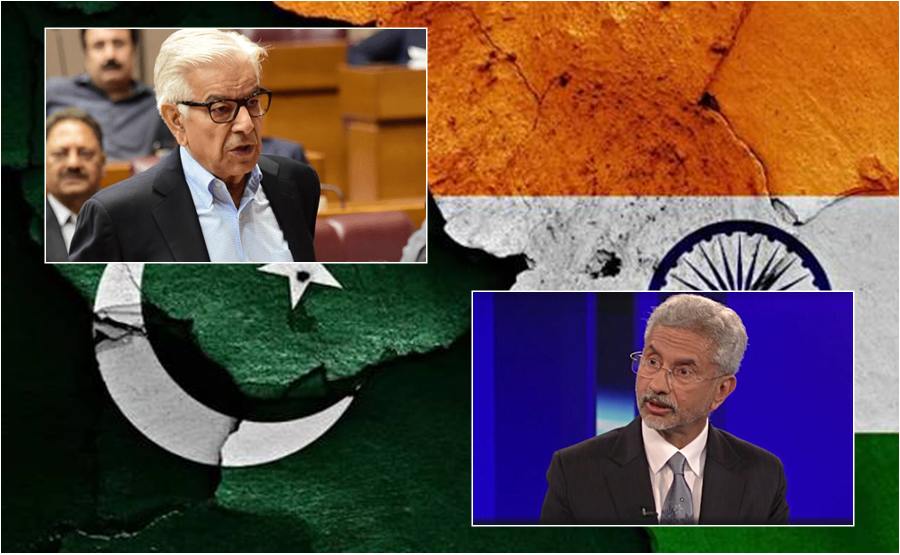
The Escalation Trap: Why South Asia Remains One Miscalculation Away from War
By: SIKANDER IQBAL

The recent incidents between India and Pakistan after the Pahalgam attack once again highlighted a perilous truth that both the countries’ decision makers tend to overlook; nuclear weapons can often stop war but they cannot stop conflict. Indeed, in some cases they can give the illusion of stability which can enable lesser skirmishes to fester in unpredictable ways. The incidents that unfolded in the aftermath of Pahalgam, Operation Sindoor and the Operation Bunyan-um-Marsoos undertaken by Pakistan, increased military preparedness and the escalation of rhetoric, have all highlighted the fact that South Asia is stuck in a cycle of crises and the biggest danger to it could be miscalculations rather than aggression.
Over the past decades, the idea of strategic thinking has been around for decades, with many experts stating that war on any scale would be irrational due to the deterrent effect of nuclear weapons. Both countries India and Pakistan have the capability to launch nuclear attacks if there is a war and the repercussions would be disastrous for all of them. But the previous history of South Asia has shown that deterrence has failed to bring durable peace. Rather, it has created the “stability-instability paradox”: that nuclear weapons make it less likely that the world will be engulfed in an all-out war, but yet they can promote lower-level confrontations because of the belief that the other side would not cross the nuclear threshold. Such a trend has been observed on many occasions in South Asia. Kargil conflict of 1999 took place after both countries declared themselves as nuclear nations. In 2001-2002, almost one million soldiers arrived on the border due to the military standoff. In 2019, during a crisis in Pulwama-Balakot, air strikes, aerial engagements and enticing of an Indian pilot were witnessed. The standoff over Pahalgam has been a classic case of how a localised issue can escalate to regional security concerns in recent times.
The unique threat in today’s crises is the evolution of conflict. Escalation is no longer limited to traditional military operations. The narratives in information warfare, computer operations, media, and social media now have a significant impact on public perception and political decision-making. During the past few decades leaders had more time to make decisions. In today’s 24-hour news and digital world, governments are under immediate pressure to deal with rumours, which outpace verified information. The chances of misperception have thus grown significantly. In a crisis sometimes decisions must be taken in the absence of certainty. Assessment of intelligence may be inadequate, public pressure may be great, and the military may be misinterpreted. One side’s defensive move may seem an attack on the other side, leading to an unanticipated series of escalation. History has shown that wars have been fought not for aggressiveness on the part of the leadership, but due to a wrong understanding of what each side wanted to achieve.
The military standoff between India and Pakistan adds to this scenario. India has one of the largest military forces in the world, spending an estimated $87 billion per year on its defence forces. Pakistan, on the other hand, has an approach of credible deterrence which it applies to compensate for conventional imbalance, yet spends far less. Both states are on an ongoing path of modernisation of their military forces, such as missiles, surveillance, cyber and precision strike technologies, which increases the risk of escalating situations in the future. Yet another is the limited space for diplomacy. Political relations are tense and formal mechanisms for dialogue between the two countries are frequently in suspension during tense times. If communication is not effective, there are more obstacles to overcome. The reliance on third party mediation, informal contacts and military hotlines for crisis management is also critical in the event of a rapid, evolving crisis.

Uncertainty is also being stoked by the international climate. The advent of new technologies, including artificial intelligence and autonomous systems, and the rise of great power competition between the United States and China have changed the nature of the military landscape in the region. New pathways of escalation have been brought about by these developments that were not completely anticipated by traditional deterrence theories. For instance, a cyber attack on a critical infrastructure could have effects similar to a traditional military attack, and would be hard to attribute.
In spite of these risks, however, there is still a tendency among policy makers and public to see each crisis as unique. The truth is that, there is a structural issue in South Asia. The cycle of attacks, counter-attacks, mobilization and de-escalation indicates that the region is unable to have a sustainable mechanism for tension management. Things should be quiet for a while, but this isn’t a stable situation.
This cycle can only be broken by having more than military preparedness. It requires robust communication, enhanced crisis management processes and increased focus on confidence building. The two countries must understand that the use of deterrence measures will not ensure peace. Nuclear weapons can stop total war, but they won’t stop human error, technology going wrong or politics getting it wrong. So, the lessons have been learned from the recent crisis. Not all war is caused by a choice to fight war, not every war in South Asia is a result of a conscious decision to fight war. Instead, it is the potential of a future crisis that could develop into a self-sustaining momentum, with limited diplomatic contact, misinformation, and technology, running amok. The incident in Pahalgam and the reaction to it must be a warning to us. Stability is not just the lack of war in an area where two nuclear armed nations are still contesting unresolved issues and tensions. The big question now is whether South Asia can break out of the escalation trap before a miscalculation has a consequence neither side wants nor afford?
Author Information:
The Author SIKANDER IQBAL is an IR Scholar at National Defence University, Islamabad. He is deeply interested in researching and writing on regional issues, national security, diplomacy, international relations, and world affairs.
Comments are closed, but trackbacks and pingbacks are open.