

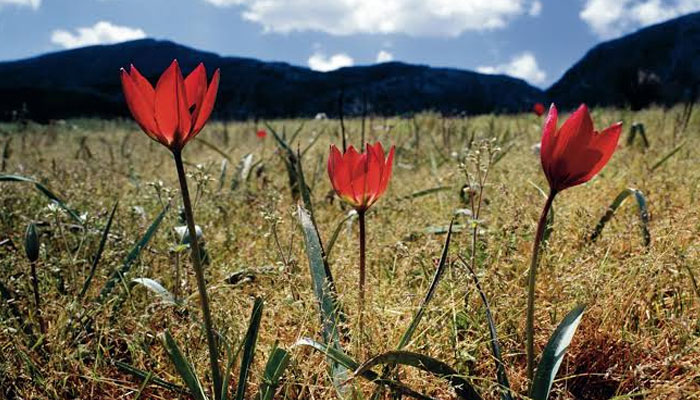
Plants Can Communicate: The Hidden World of Botanical Intelligence
(By Laiba Khan, Botanist)

Walk through a forest, and everything appears calm and silent. Trees stand motionless. Flowers bloom quietly. Grass bends gently with the wind. To the human eye, plants seem passive — alive, yet inactive.
But beneath that silence, an extraordinary conversation is taking place.
While they lack brains, nerves, or voices, modern science has revealed that plants possess remarkable communication systems that help them survive, defend themselves, and even support their neighbors. The idea may sound like science fiction, but it is firmly rooted in scientific research. Plants are far more responsive to their environment than we once imagined.
The Myth of “Silent” Plants
For centuries, plants were viewed as simple, stationary organisms that merely absorbed sunlight and water. Unlike animals, they do not run from danger or make audible sounds, leading many to assume they are incapable of communication.
Science tells a different story.
Plants continuously detect changes in light, temperature, moisture, gravity, touch, and nearby organisms. They respond through complex biological and chemical signaling systems, adjusting their growth, activating defense mechanisms, and sending warning signals to neighboring plants. Their communication relies on chemical signals, electrical impulses within plant tissues, and underground fungal networks.
When Plants Warn Each Other About Danger
Imagine a caterpillar begins eating the leaves of a tomato plant. Within moments, the damaged plant releases invisible chemical compounds into the air. Nearby plants detect these warning signals and begin preparing their defenses before the insects even reach them. Some plants start producing bitter chemicals that make their leaves unpleasant to eat. Others release scents that attract beneficial insects, which prey on the attacking pests. In effect, plants send distress signals to protect one another. This remarkable survival strategy has been observed in forests, grasslands, and agricultural fields around the world. Nature, it seems, is constantly communicating.
The Hidden Network Beneath Our Feet
Beneath the forest floor lies a vast underground network formed by microscopic fungi that connect plant roots. Scientists often call it the “Wood Wide Web.” Through these fungal connections, plants can exchange nutrients, water, and chemical signals. Research suggests that older trees may even transfer carbon and nutrients to younger seedlings during periods of environmental stress. Rather than existing as isolated individuals, forests often function as interconnected communities.
Plants Have Memory Too

One of the most surprising areas of research involves plant memory. Scientists have discovered that some plants can learn from previous experiences. Certain plants exposed repeatedly to harmless disturbances eventually stop reacting strongly, conserving energy for genuine threats. Although plants do not possess brains, these adaptive responses demonstrate remarkable biological adaptation and memory-like responses that helps them survive changing environments.
Can Plants Recognize Family?
Surprisingly, research suggests that some plant species can distinguish between relatives and strangers.
Studies on several plant species have found that seedlings growing alongside their siblings often compete less aggressively for water, nutrients, and space. Instead of spreading roots aggressively against close relatives, they appear to adopt a more cooperative growth strategy.
While scientists continue to investigate how this recognition occurs, it challenges the long-held belief that cooperation exists only among animals.
Why Plant Intelligence Matters to Humans
Understanding plant communication isn’t merely fascinating—it has practical implications for agriculture and environmental conservation.
Scientists are exploring ways to use natural plant signaling to reduce pesticide use, improve crop resistance to pests and diseases, and create more sustainable farming systems. By understanding how plants naturally defend themselves and cooperate, farmers may one day rely less on synthetic chemicals and more on ecological solutions.
Protecting forests also becomes even more important when we recognize that trees are not isolated individuals but members of interconnected living communities. Damaging one part of the network may affect many others.
A New Way of Looking at Nature
For centuries, humans viewed intelligence as something unique to animals and people. Plants were considered simple life forms existing quietly in the background. Modern science is changing that perspective. While plants do not think like humans, they demonstrate extraordinary abilities. The more scientists study the natural world, the clearer it becomes that life on Earth is deeply interconnected. The forest is not silent after all.
Final Word: The Forest Is Never Silent
The hidden world of botanical intelligence is one of the most fascinating frontiers in modern science. Plants may never speak our language, yet they are constantly exchanging information in ways invisible to the human eye. Every rustling leaf, spreading root, and underground fungal thread tells a story of cooperation, adaptation, and survival. The next time you walk past a tree or sit beneath a garden canopy, remember that nature may be speaking in a language we are only beginning to understand. Sometimes, the greatest conversations are the ones we cannot hear.
Nature speaks in whispers. Science is finally learning how to listen.
Comments are closed, but trackbacks and pingbacks are open.