
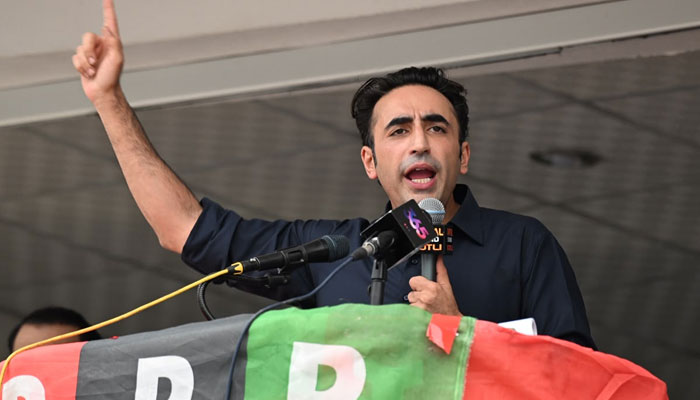

As the Azad Jammu and Kashmir (AJK) general election campaign enters its decisive phase, political temperatures across the region continue to rise. Among the developments shaping the electoral landscape, the recent campaign trail of Pakistan Peoples Party (PPP) Chairman Bilawal Bhutto Zardari stands out as a significant factor. His public meetings in Dadyal and Kotli have not only drawn large crowds but have also reignited political debate about the direction of AJK politics ahead of polling day.
The rally held in Kotli on July 19 was particularly noteworthy. By all accounts, it was one of the largest political gatherings witnessed in the district in recent years. The overwhelming turnout created a sense of momentum around the PPP campaign and strengthened perceptions that the party is mounting a serious challenge across Kotli’s constituencies. Political observers were quick to point out that such demonstrations of public support often play an important role in shaping electoral narratives during the final stages of a campaign.
The scene in Dadyal was equally impressive. Supporters from different walks of life—young people, elders, women, and party workers—gathered in large numbers to welcome Bilawal Bhutto Zardari. The enthusiasm on display reflected the party’s organizational strength in the Mirpur region and highlighted its ability to mobilize supporters at a crucial moment in the election cycle.
What made these rallies particularly significant was not merely the size of the crowds but the themes around which Bilawal Bhutto Zardari built his message. By emphasizing the rights of governance, ownership, and employment, he sought to place constitutional, political, and economic concerns at the center of the electoral debate. These issues resonate deeply with many Kashmiris, especially younger voters who are increasingly focused on questions of opportunity, representation, and empowerment.
Equally important was the emotional and historical dimension of his speeches. Bilawal repeatedly invoked the legacy of Shaheed Zulfikar Ali Bhutto and Shaheed Mohtarma Benazir Bhutto, reminding supporters of the PPP’s longstanding association with the Kashmir cause. References to their sacrifices and commitment to the rights of Kashmiris generated a strong response from the audience and reinforced the party’s traditional narrative in the region.
One of the most emotionally charged moments came when Bilawal recalled Benazir Bhutto’s famous declaration that “where the sweat of Kashmiris falls, our blood will fall.” The crowd responded enthusiastically, with chants of “Jeay Benazir” echoing across the venue. Such moments underscored the enduring emotional connection that many PPP supporters continue to feel toward the Bhutto legacy.
Yet political rallies, however large, do not automatically translate into electoral victories. The true test will come on polling day when voters make their final choices. Nevertheless, political momentum is an important ingredient in any election campaign, and the PPP appears determined to capitalize on the energy generated by these public gatherings.
Another notable aspect of the campaign is Bilawal Bhutto Zardari’s personal involvement. By leading the election drive himself and maintaining an active presence across multiple districts, he has signaled the importance the PPP attaches to the AJK elections. His extensive outreach reflects a broader strategy aimed at reconnecting with voters and positioning the party as a viable governing alternative.
As the campaign moves forward, attention is now turning to Nikyal, Mirpur, and Muzaffarabad, where further public meetings are expected to test the party’s growing momentum. Whether these gatherings ultimately translate into electoral success remains to be seen, but they have undoubtedly altered the tone of the campaign and added a new dimension to the political conversation in Azad Kashmir.
For now, one conclusion appears difficult to dispute: the PPP has succeeded in making itself a central player in the election contest, and Bilawal Bhutto Zardari’s rallies have become one of the defining features of this campaign. The final verdict, however, will belong to the voters on July 27.
Comments are closed, but trackbacks and pingbacks are open.