
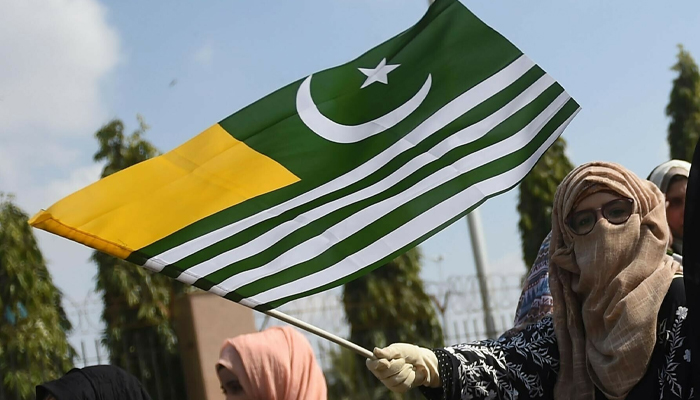

The world has changed. Wars are no longer fought only with tanks, missiles and gunpowder. Modern conflicts are now driven through narratives, media campaigns, diplomatic pressure, economic manipulation, human rights slogans and international lobbying. Anyone who believes Pakistan is facing threats only at its borders perhaps still does not understand the reality of twenty-first century warfare. Today, bullets may be silent, but narratives are poisonous. Attacks are carried out not only on battlefields, but through headlines, reports, social media trends and political pressure.
Kashmir once again stands at the center of international politics. However, an important question arises: why have some British parliamentarians suddenly become vocal about Kashmir now? Where were these voices when innocent children in Indian-occupied Kashmir were being killed? Where were these defenders of human rights when pellet guns blinded Kashmiri youth? And where was the global conscience on August 5, 2019, when India revoked the special status of occupied Kashmir and turned the entire valley into an open prison?
At that time, the international community largely remained silent. Human rights organizations issued weak statements while major powers preferred diplomacy over morality. Yet today, when comments are directed toward Pakistan’s internal matters, the sudden activism raises serious questions. This is why many observers believe that these developments are not simply about human rights, but part of a larger geopolitical game.
Pakistan is not merely a country; it is a strategic state, a nuclear power and an important player in the Muslim world. Its geographical position makes it central to regional politics. From the very beginning, hostile forces have attempted to weaken Pakistan internally through political instability, economic pressure, sectarian divisions and institutional conflicts.
If one carefully studies India’s long-term policies, a pattern becomes visible. The objective has never been limited to border disputes alone. The broader aim appears to be keeping Pakistan politically and economically unstable. Whether through diplomatic pressure, propaganda campaigns, disinformation networks or attempts to isolate Pakistan internationally, the strategy seems focused on weakening the country from within.
At the same time, influential lobbying networks across the world often shape international narratives according to political and economic interests. This explains why human rights abuses against minorities in India, including events in Gujarat, Delhi and occupied Kashmir, rarely receive the same intensity of criticism that Pakistan faces. The silence over the suffering of Kashmiris contrasts sharply with the rapid attention given to Pakistan’s internal affairs.
If human rights are truly universal, then why is the world silent over the militarization of occupied Kashmir? Why have United Nations resolutions remained practically inactive for decades? Why is the Kashmiri right to self-determination discussed only symbolically in international forums?
The answer largely lies in global interests. In international politics, economic and strategic priorities often outweigh moral principles. India is viewed by many Western powers as a major market and a strategic counterweight in the region. As a result, many of its controversial actions are ignored or downplayed.
On the other hand, Pakistan occupies a different strategic position. It is home to the China-Pakistan Economic Corridor (CPEC), while Gwadar is seen as an important future trade route. Pakistan’s nuclear capability and regional importance make it highly relevant in global calculations. These realities naturally create pressure from different international actors seeking influence in the region.
Another concerning reality is the rise of narrative warfare. Certain groups operating abroad openly campaign against Pakistan’s institutions while remaining silent on Indian policies in Kashmir. Such lobbying efforts often attempt to internationalize Pakistan’s domestic issues while ignoring far greater violations elsewhere. This selective activism creates understandable skepticism among Pakistanis.
The question therefore becomes important: who benefits when Pakistan is constantly portrayed as unstable? Why are incidents inside Pakistan amplified globally while violence against Muslims and minorities in India is often described merely as an “internal matter”?
One major reason is the power of modern media narratives. In today’s world, perception often shapes reality. Countries with stronger lobbying systems and media influence are able to project their version of events more effectively. Unfortunately, Pakistan has historically struggled to present its narrative globally with consistency and strategic clarity.
It must also be acknowledged that no country can survive external pressure without internal unity. Political differences are natural in every democracy, but when internal conflicts begin weakening the foundations of the state itself, hostile forces take advantage. History repeatedly shows that nations divided from within become vulnerable from the outside.
Countries such as Iraq, Libya and Syria are examples often cited in discussions about foreign intervention and instability. In many such cases, political divisions, narrative wars and international pressure combined to create long-term chaos. This is why many Pakistanis remain cautious whenever external voices appear unusually active regarding Pakistan’s internal affairs.
Pakistan, despite facing terrorism, economic crises and political instability, continues to stand resilient. This resilience itself frustrates those who wish to see the country weakened. The issue of Kashmir must therefore be understood in this broader geopolitical context.
India understands that Kashmir is not merely a territorial dispute for Pakistan; it is an emotional and political issue deeply connected with the identity of millions of Pakistanis. For this reason, developments surrounding Kashmir are often linked with larger regional strategies.
The recent statements by British parliamentarians also appear to be part of this broader picture. The real question is not only what was said, but why it was said now and why similar concern is rarely shown for the people of occupied Kashmir. If genuine sympathy existed for Kashmiris, the same intensity of criticism would also be directed toward Indian actions in occupied Kashmir. The silence there, combined with sudden activism here, naturally raises important questions.
This is why Pakistan’s Foreign Office response carried significance. It delivered a clear message that Pakistan is not a colonial territory but a sovereign democratic state. The statement emphasized that interference in Pakistan’s internal matters is unacceptable and that mutual respect between nations remains essential for international relations.
At the same time, Pakistan must strengthen itself internally. A strong economy, political stability, responsible media, effective diplomacy and national unity are essential if the country wishes to defend its position internationally. Emotional slogans alone cannot protect national interests in today’s complex world.
Social media has also become a powerful weapon in modern hybrid warfare. Fake news, manipulated videos, organized propaganda campaigns and foreign-funded influence networks can create confusion and distrust within societies. Young people in particular must learn to critically examine narratives rather than emotionally reacting to every viral trend.
Pakistan’s greatest strength has always been the resilience of its people. Despite countless crises, the country continues to move forward. This resilience must now be supported through wisdom, unity and strategic thinking rather than endless internal conflict.
Kashmir remains emotionally connected to Pakistan, but the issue cannot be advanced effectively unless Pakistan itself remains stable and united. A divided Pakistan weakens the Kashmiri cause internationally, while a strong Pakistan strengthens it diplomatically and politically.
The need of the hour is balance, awareness and national maturity. Criticism should exist, but not at the cost of weakening the state itself. Political competition should continue, but not in ways that provide hostile actors opportunities to exploit divisions.
History teaches us that nations survive not merely through military power, but through unity, clarity of purpose and strong institutions. Pakistan’s future depends on its ability to remain internally strong while understanding the changing nature of global politics and modern information warfare.
Pakistan has survived immense challenges before, and it can continue to do so if its people remain aware, united and focused on strengthening the country rather than tearing it apart from within.
Comments are closed, but trackbacks and pingbacks are open.