

Cockroach Movement Modi Youth Protest Explained: Why the Dharmendra Pradhan Resign Demand Is Growing Louder
Government asks for more time as youth anger builds over exam leaks, and Sonam Wangchuk ends his 26-day fast

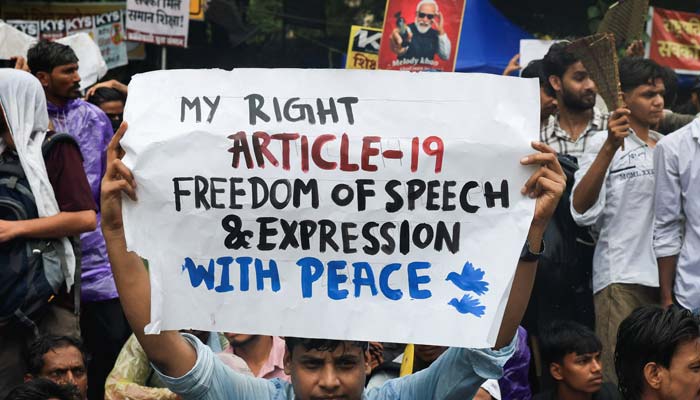
NEW DELHI: (Special Correpondent/Web Desk) – The Dharmendra Pradhan resign demand has become the loudest voice in India right now, as the Cockroach Movement Modi youth protest explained itself once again on the streets of Delhi. Young people from across the country have gathered to push one clear message: they want the education minister gone.
On Friday, leaders of this youth-led movement said the government has asked for extra time. Officials want until Saturday afternoon to give a final answer on the resignation demand. This came right after fresh talks between protest leaders and senior government ministers.
The timing matters a lot here. Just hours before these talks, activist Sonam Wangchuk ended his hunger strike. He had gone without food for twenty-six days. His fast became a symbol for thousands of angry young Indians who felt ignored by those in power.
END OF HUNGER… BEGINNING OF ACCOUNTABILITY…!
Sonam Wangchuk ends his fast after 26 days upon getting assurance from the government and members of parliament of all political parties that the issue of accountability in the failing examination system will be discussed on the… pic.twitter.com/0C9YX5VlsL— Sonam Wangchuk (@Wangchuk66) July 24, 2026
This protest is not small. Analysts now call it the biggest youth challenge Prime Minister Narendra Modi has faced since he first took office back in 2014. Opposition parties have jumped in too, backing the protesters and slowing down work in parliament this week.
Monday saw the first real round of talks between both sides. This week’s meeting was the second, and it felt more serious. The government sent two senior ministers, JP Nadda and Jitendra Singh. The protest group, known by its unusual name, Cockroach Janta Party, sent spokespersons Saurav Das and Ashutosh Ranka.
Protest leaders made their stance very clear during the meeting. Nothing short of the minister’s resignation will satisfy them. They also warned that if the government stays silent, the protests will only grow bigger across more cities.
Nothing is more important than the welfare and future of our youth!
We have decided to set up fast-track courts to ensure swift and stringent punishment for those involved in paper leaks. Have directed the concerned authorities and officials to take all necessary steps in this…
— Narendra Modi (@narendramodi) July 23, 2026

Ranka told reporters after the meeting that the government wants until Saturday to reply. He said protesters are hoping the minister either resigns on his own or gets removed soon, so the matter can finally be settled.
Minister Nadda described the talks as friendly and calm. He confirmed that three main demands were placed before the government, and a follow-up meeting is planned for Saturday afternoon.
Besides the resignation call, protesters also want criminal cases against demonstrators dropped. They are also asking for compensation for families of students who reportedly died by suicide after the exam paper leak that happened back in May.
Life in Delhi has been disrupted too. Sixteen metro stations near the protest area were shut down this week. Mobile internet in the region has also stayed blocked, causing daily trouble for local residents and workers.
Earlier, Modi offered a different solution. He proposed setting up special courts to handle paper-leak cases. Protesters rejected this idea almost right away, saying it does not fix the deeper problems behind the movement.
What makes this protest stand out is its comparison to nearby countries. Youth movements in Sri Lanka, Bangladesh, and Nepal have already toppled governments in recent years. That history is giving this Indian movement extra weight and attention.
More strict actions against paper leaks to come in tomorrow’s Cabinet! pic.twitter.com/NRysBukk5U
— Narendra Modi (@narendramodi) July 23, 2026
National elections are still years away, but state elections in Uttar Pradesh, Gujarat, and Punjab are coming up next year. Many experts believe this growing youth anger could shape how people vote in those states.
For now, all eyes remain on Saturday afternoon, when the government is expected to respond.
Comments are closed, but trackbacks and pingbacks are open.