
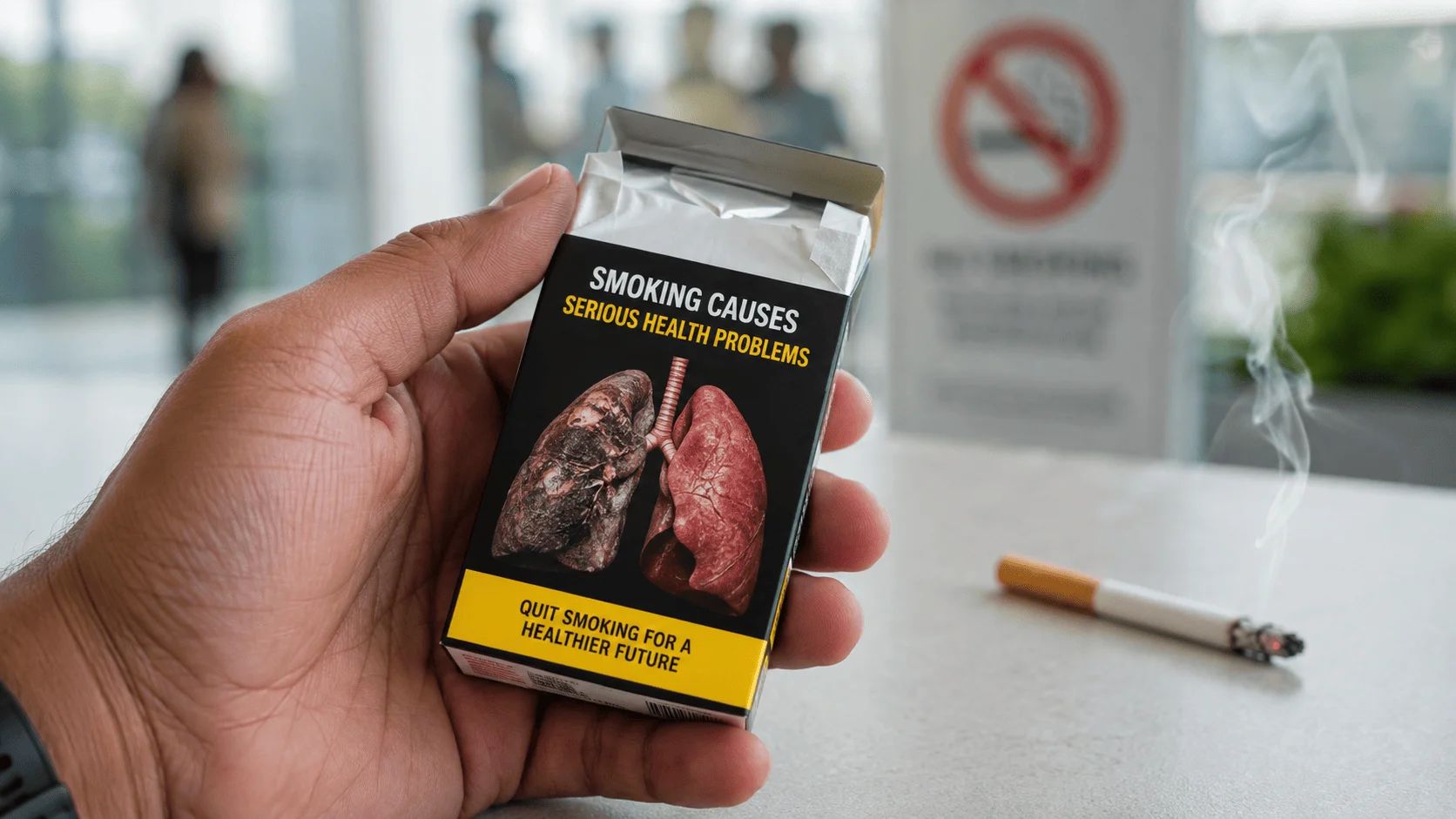
Graphic Health Warnings: A Powerful Message for a Healthier Future
How Warning Labels on Cigarette Packs Are Changing the Way People See Tobacco

Graphic Health Warnings (GHWs) are one of the most visible and effective ways of communicating the dangers of tobacco use. Found on cigarette packs and other tobacco products, these warnings combine clear text with powerful images to show the real health consequences associated with tobacco consumption.
Their purpose is simple: to inform people, remind users of the risks, discourage young people from starting, and encourage current users to consider quitting.
Tobacco use remains a major public health concern around the world. Many people begin using tobacco without fully understanding the long-term consequences.
Countering Attractive Packaging
Because tobacco products are often packaged in attractive designs and promoted in ways that can make them appear less harmful than they really are, health warnings provide an important counter-message. Every time a person reaches for a cigarette, the warning on the package can serve as a direct reminder of what tobacco can do to the body.
Unlike advertisements, which are designed to attract attention and create positive associations, graphic health warnings communicate an entirely different reality. Images showing damaged lungs, diseased organs, or other consequences of tobacco use can make health risks more understandable and immediate.
For people who may not respond to written information alone, visual messages can be particularly powerful.
Reaching People with Limited Access to Health Information
GHWs also play an important role in reaching people who may have limited access to health information. A health warning printed directly on a tobacco package travels wherever the product goes.
It does not require a person to attend a seminar, read a brochure, visit a health facility, or search for information online. The message is repeatedly displayed to the consumer and can also be seen by family members, friends, and others around them.
Influencing Young People’s Perceptions
Another important benefit of GHWs is their ability to influence young people’s perceptions of tobacco. Young people are particularly vulnerable to messages that make tobacco products appear fashionable, modern, or socially desirable.
Strong health warnings can help challenge these perceptions by presenting tobacco use in the context of its genuine health consequences. When warnings are clear, prominent, and visually compelling, they can help prevent tobacco use from being viewed as harmless or normal.

Encouraging Current Users to Reflect
For current tobacco users, repeated exposure to health warnings can also encourage reflection. Quitting tobacco is not always easy, particularly because nicotine is addictive.
However, awareness is an important first step. A warning on a cigarette pack may prompt someone to think about their health, their family, their future, or the financial and emotional costs associated with continued tobacco use.
Even when a person does not quit immediately, the message can contribute to greater awareness and future motivation to quit.
Design and Effectiveness
The effectiveness of GHWs depends greatly on how they are designed and displayed. Warnings that are large, clear, understandable, and placed prominently on packaging are more likely to attract attention.
The use of appropriate images can make complex health information easier to understand. Regularly changing or rotating warnings can also help prevent people from becoming accustomed to the same message.
Bridging the Gap Left by Delayed Symptoms
GHWs are especially important because tobacco-related diseases often develop over many years. A person may not experience immediate symptoms after beginning to smoke, which can create a false sense of security.
Health warnings help bridge this gap by communicating that the absence of immediate symptoms does not mean the product is safe. They remind consumers that tobacco use is associated with serious diseases, including cancers, cardiovascular diseases, respiratory illnesses, and other health problems.
Shifting the Broader Culture Around Tobacco
Beyond individual awareness, GHWs contribute to a broader culture of health. When people repeatedly see honest and visible information about the dangers of tobacco, the perception of tobacco use can gradually change.
What may once have been considered ordinary or socially acceptable can increasingly be recognized as a serious health concern.
Alishba Asif, HDF- Volunteer / Columnist
Comments are closed, but trackbacks and pingbacks are open.