
Gaza’s Ceasefire Still Has a Body Count
A year after the truce, more than 1,300 people have been killed, reconstruction has not started, and winter rains threaten fragile shelters.

By: Muskan Umer
Louay al-Ajla, 54, was asleep when the six-storey building near him collapsed before dawn on September 17. He lost nearly ten family members.
Nearby, survivor Nader El-Ejlah described the search through the wreckage: seeing relatives torn apart, others simply gone.
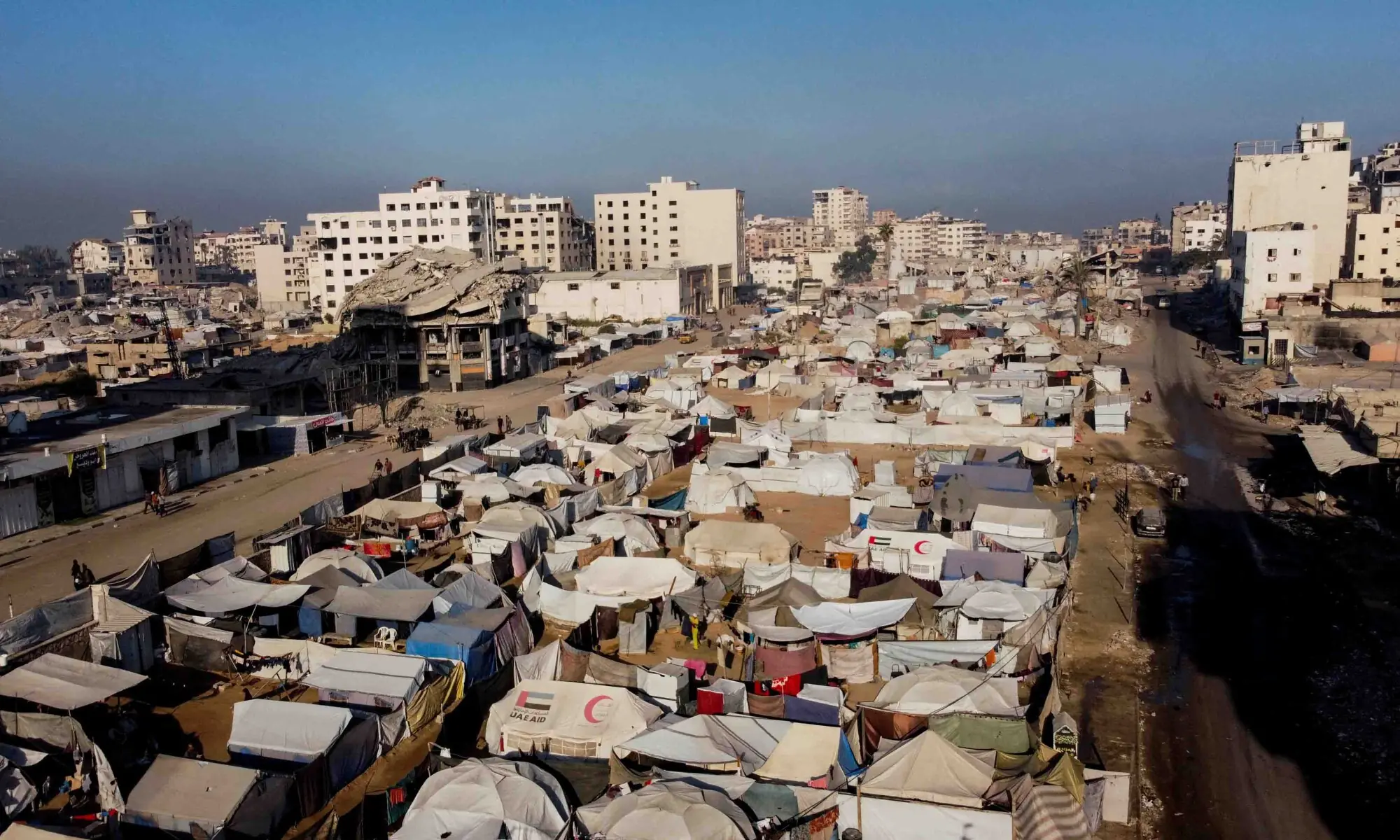
Their family had moved into the damaged building, one of roughly 2,000 across Gaza still standing on borrowed time because there was nowhere else left to shelter.
This is what remains of the ceasefire. Gaza’s Ministry of Health recorded 73,910 deaths and 174,914 injuries since October 2023, figures still rising a full year after the fighting was declared over.
Since the ceasefire took effect in October 2025, more than 1,300 people have been killed and over 4,400 injured a war continuing under a word that was supposed to mean it had ended.
The numbers behind al-Ajla’s loss are Gaza’s numbers, multiplied. Nearly the entire population, roughly 1.9 million people, has been displaced at least once, the same shortage of safe shelter that left al-Ajla’s family with no option but a building already cracked by an earlier strike.
Ninety-seven percent of school buildings are damaged; hundreds of thousands of children now study in tents, when they study at all.
Gaza has more child amputees per capita than anywhere else on record. More than 18,000 of the dead are children.
None of this is being repaired. While the damage compounds, reconstruction itself has not even started. The technocratic committee created in January 2026 to oversee rebuilding has yet to be allowed into Gaza.
Families like al-Ajla’s move into half-collapsed buildings not out of desperation, but because no alternative exists. Alessandro Mrakic, head of UN Development Programme’s Gaza office, has warned that the coming winter rains will likely bring more of these buildings down.
For most of the world, this story arrives as a headline scrolled past between others. That is not indifference so much as fatigue a crisis this long eventually gets filed under “ongoing” instead of “urgent” and the mind stops treating it as either.
But al-Ajla is still searching for relatives whose fate remains unknown. For him, nothing about this is ongoing. It is happening now.
Gaza does not need the world’s guilt. It needs the world’s attention to outlast the scroll.
Sources: Gaza Ministry of Health; Xinhua/Omani Observer (al-Ajla, El-Ejlah accounts); UN Development Programme, Gaza office (Alessandro Mrakic).
Comments are closed, but trackbacks and pingbacks are open.