
Beyond a Deal: A Manifesto for Enduring Stability
By Dr. Muhammad Tayyab Khan Singhanvi, Ph.D

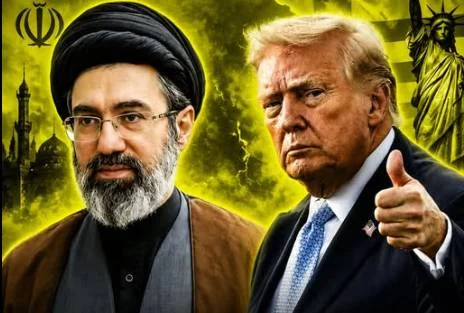
Within the labyrinthine architecture of international politics, there exist certain conflicts whose manifestations may be temporarily suspended through diplomatic maneuvering, provisional accommodations, and carefully negotiated agreements, yet whose essential dynamics remain fundamentally unaltered. Such disputes may be rendered dormant for a season, but they cannot be genuinely resolved unless the historical grievances, ideological antagonisms, political contradictions, and strategic calculations that sustain them are comprehensively addressed. The protracted confrontation between the Islamic Republic of Iran and the United States of America belongs unmistakably to this category of multifaceted and deeply entrenched geopolitical rivalries. Its origins do not reside solely in questions of nuclear enrichment, economic sanctions, or regional influence; rather, they are embedded within nearly half a century of accumulated ideological divergence, political estrangement, strategic competition, and mutual insecurity. It is therefore unsurprising that, amid contemporary discussions concerning ceasefires, negotiations, and prospective diplomatic arrangements, Tehran appears less interested in securing yet another transactional accord than in pursuing a more comprehensive settlement capable of addressing the underlying causes of the dispute itself.
From the Iranian perspective, any attempt to reduce the present crisis exclusively to questions of uranium enrichment, international inspection regimes, or nuclear oversight mechanisms constitutes an incomplete and ultimately superficial reading of reality. Iranian policymakers contend that since the advent of the Islamic Revolution, the country has been subjected to sustained political pressure, economic coercion, diplomatic isolation, and a diverse array of security challenges. In this interpretation, the principal issue has never been the nuclear program in and of itself. Rather, the deeper contention concerns Iran’s sovereign foreign policy orientation, its perceived role within the regional order, and the ideological foundations upon which its political identity rests. The nuclear controversy, according to this view, represents merely one visible expression of a much broader and older disagreement.
A more penetrating examination of the historical record reveals that relations between Iran and the Western world entered a prolonged phase of tension and distrust following the revolutionary upheaval of 1979. Tehran’s unwavering position regarding the Palestinian question, its enduring refusal to normalize relations with Israel, and its political and moral support for various resistance movements throughout the Middle East collectively contributed to a widening gulf between Iran and many Western governments. Iranian officials maintain that organizations such as Hezbollah, Hamas, and the Houthi movement were not artificially engineered by external actors but emerged organically from specific historical, political, and social circumstances. While Iran acknowledges extending political and moral support to these movements, it rejects the notion that their existence can be reduced merely to instruments of Iranian influence.
With respect to the nuclear issue, Iran has consistently maintained that its program is intended exclusively for peaceful and civilian purposes, including energy production, medical research, industrial development, and scientific advancement, rather than military applications. In support of this position, Tehran frequently cites the religious decree issued by the Supreme Leader declaring nuclear weapons incompatible with Islamic principles. The Joint Comprehensive Plan of Action concluded in 2015 was widely regarded as evidence that Iran was prepared to accept international monitoring and limitations upon enrichment activities within an agreed framework. Yet the subsequent withdrawal of the United States from that agreement reinforced within Iran a growing conviction that the establishment of durable trust and predictability in relations with Western powers remains an exceptionally difficult undertaking.
Recent military tensions have introduced this longstanding confrontation into a new and consequential phase. Iranian authorities argue that despite intense economic pressure, security threats, military attacks, and diplomatic isolation, the institutional foundations of the state have remained intact and, in certain respects, have become more resilient. Statements emanating from Tehran increasingly suggest an effort to reposition Iran not as a defensive actor reacting to external pressure, but as a self-assured and influential participant seeking to enter future negotiations from a position of greater strategic confidence and leverage.
The American perspective is shaped by a different, though equally complex, set of considerations. For Washington, the prospect of another large-scale conflict in the Middle East has long represented a profoundly consequential strategic decision. The experiences of the past two decades have demonstrated repeatedly that military interventions within the region often generate outcomes markedly different from those originally anticipated by policymakers. Consequently, recent diplomatic signals and political rhetoric indicate a preference within the United States for de-escalation and negotiated engagement, provided that American interests and personnel in the region are not subjected to direct threat.
At the present juncture, Iran appears to assign particular importance to several core objectives: the removal of economic sanctions, the restoration of access to frozen financial assets, respect for principles of regional sovereignty, and the establishment of a revised framework governing the regional balance of power. Tehran’s argument is straightforward. If the fundamental sources of contention remain intact, any future agreement will constitute little more than a temporary respite rather than a genuine resolution. Lasting peace, in this conception, requires confidence-building measures, mutual respect, strategic equilibrium, and innovative approaches to collective regional security.
Indeed, the current situation cannot be adequately understood through the conventional binary of war versus diplomacy. Rather, it constitutes a broader test of whether global powers and regional states are prepared to move beyond short-term accommodations and narrowly defined exchanges of interest toward the construction of a comprehensive political and security architecture capable of mitigating the very conditions that generate recurring conflict. Should the parties ultimately converge upon a framework grounded not merely in calculations of power but also in the equitable management of mutual concerns, security anxieties, and strategic interests, such a development could inaugurate a new chapter not only for Iran and the United States but for the Middle East as a whole.
Should that opportunity be squandered, however, history may once again reaffirm one of its most enduring lessons: agreements can provide temporary calm and limited stability, yet genuine and enduring peace emerges only when the visible manifestations of conflict are traced back to their deeper intellectual, political, and historical foundations, and when those foundations themselves become the object of serious and sustained remedy.
Comments are closed, but trackbacks and pingbacks are open.