
Bajaur Bloodshed: Attaullah Tarar Slams Cross-Border Attacks, Reaffirms Pakistan’s Resolve
Tarar Pays Tribute to Martyrs, Calls Operation Bunyan-un-Marsoos a National Triumph

Bajaur District (Special Correspondent / Web Desk) – A fresh wave of violence in Pakistan’s northwestern border region has intensified tensions, with officials accusing militant elements of deliberately targeting civilians in Khyber Pakhtunkhwa’s tribal districts. The latest incidents, reported in Bajaur District, have left multiple civilians dead and injured, including women and children, raising serious humanitarian and security concerns.
According to a statement issued by the local administration, at least nine civilians were killed in what authorities described as “unprovoked and indiscriminate attacks.” Among the victims were six women and children. In addition, twelve people were injured, including seven women and one minor, after residential areas were reportedly hit during cross-border fire.
Local officials allege that the attacks originated from across the border in Afghanistan, accusing elements linked to the Afghan Taliban and affiliated militant groups of deliberately targeting civilian populations. Pakistani authorities have strongly condemned the incidents, calling them a serious violation of international norms and humanitarian principles.
Federal Minister for Information and Broadcasting Attaullah Tarar issued a strong statement condemning the attacks. He described the targeting of innocent civilians, especially women and children, as “inhuman and unacceptable,” adding that such actions reflect a mindset that disregards human life. He emphasized that attacks on civilian areas after facing pressure from Pakistani security forces demonstrate both desperation and an unwillingness to engage in direct confrontation.
Security sources further claimed that the attacks followed setbacks suffered by militant groups during clashes with Pakistani forces. “Targeting civilians is a sign of weakness and frustration,” a senior official said, adding that the country’s security forces remain committed to defending national borders and protecting citizens.
In a separate incident reported a day later, three civilians were injured when a quadcopter drone allegedly targeted individuals playing cricket in an open field. Officials attributed the attack to extremist factions operating in the region. The use of drone technology in such incidents has raised new concerns about the evolving capabilities of militant groups and their increasing focus on soft targets.
Residents of Bajaur have expressed fear and frustration over the continuing violence. Many say daily life has become increasingly difficult amid the threat of further attacks. “We are ordinary people trying to live peacefully, but the situation has made it impossible to feel safe,” said a local resident. Some families have begun relocating to safer areas, while others remain due to limited resources.
Meanwhile, Pakistani authorities have rejected accusations from Afghan Taliban representatives alleging that Pakistan deliberately targets civilians inside Afghanistan. Officials maintain that any cross-border operations conducted by Pakistan are strictly aimed at militant hideouts and infrastructure, with every effort made to avoid civilian harm.
The inhuman violent spate of deliberate targeting of innocent civilians by Afghans Taliban regime in border districts of KP is unacceptable, insidious and reflective of their barbaric nature towards human life. Resorting to targeting civilian areas after being comprehensively… pic.twitter.com/1cPd7c6JeI
— Attaullah Tarar (@TararAttaullah) May 1, 2026
Minister Attaullah Tarar reiterated this position, stating that Pakistan’s actions are based on credible intelligence and are carried out with transparency. He stressed that the country’s fight is directed against terrorism and not civilians, and that all possible precautions are taken to minimize collateral damage.
The exchange of allegations between the two sides has further strained relations along the Pakistan-Afghanistan border, a region long affected by militancy and instability. Analysts warn that without improved coordination and communication, the situation could escalate further, putting more civilian lives at risk.
Security experts have highlighted the urgent need for coordinated efforts to address cross-border militancy. They argue that both countries must work together to prevent militant groups from using border areas as safe havens. “Without cooperation, civilians will continue to suffer the consequences,” said a regional analyst.
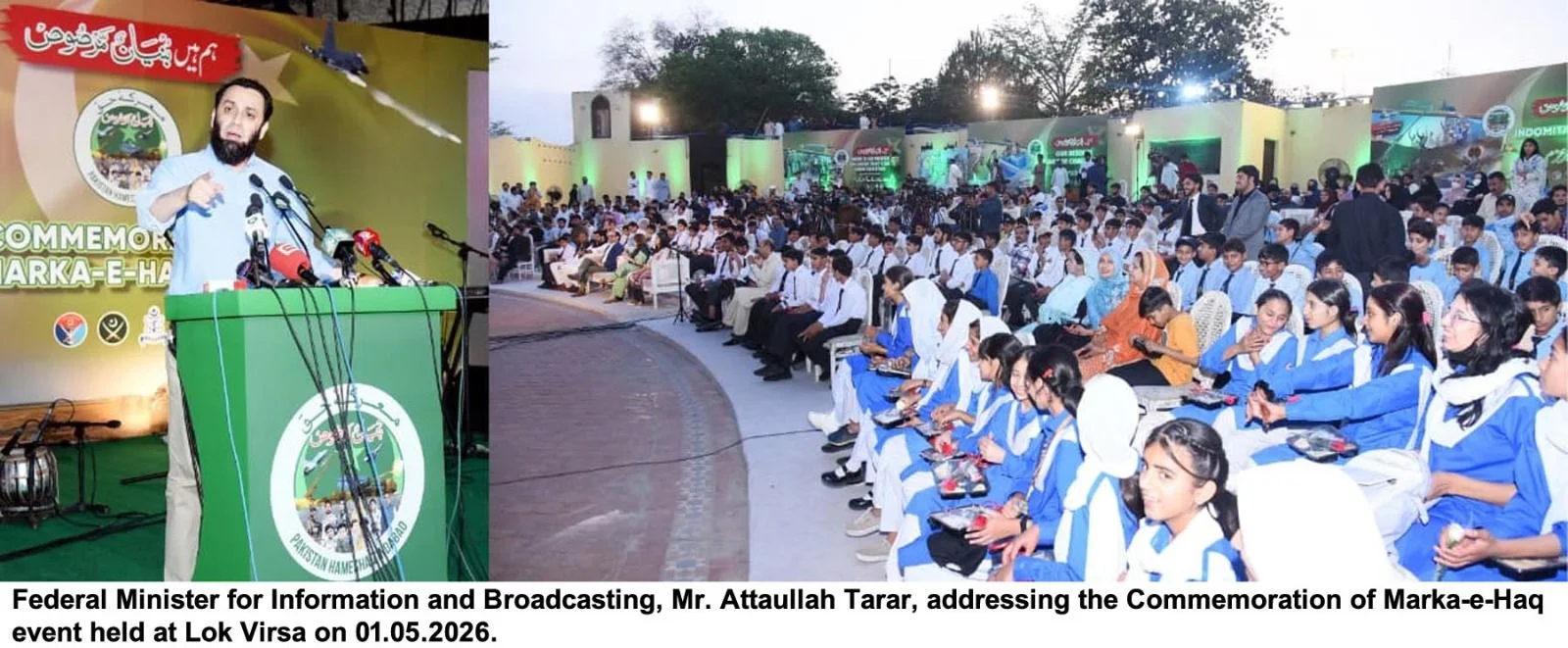
The recent incidents come at a time when Pakistan is emphasizing its broader counterterrorism efforts and national unity. Speaking at a ceremony in Islamabad marking the first anniversary of Operation Bunyan-un-Marsoos, Minister Attaullah Tarar described the operation as a defining moment in the country’s history.
He said that the success of the operation established a new standing for Pakistan and changed the course of events, demonstrating the country’s ability to effectively respond to security challenges. Addressing students at the event, he remarked that their enthusiasm and commitment reflected a promising future for the nation.
The minister highlighted that Pakistan was established after significant sacrifices and that its continued strength depends on unity and resilience. He credited national leadership for guiding the country through challenging times and ensuring a coordinated response to emerging threats.
Referring to regional tensions, Tarar said that hostile elements have consistently attempted to undermine Pakistan’s stability. He noted that during recent crises, Pakistan adopted a clear and principled stance, including offering transparent investigations into contentious incidents.
He further stated that Pakistan has remained actively engaged in combating terrorism, while emphasizing that the international community is increasingly recognizing the country’s efforts in this regard. According to him, success has not only been achieved on the battlefield but also in diplomatic and informational domains.
Highlighting leadership during times of conflict, Tarar said that Prime Minister Shehbaz Sharif provided clear direction, while military leadership ensured an effective defense strategy. He added that unity between the public and the armed forces played a key role in achieving national objectives.
The minister also criticized the spread of misinformation during periods of tension, stating that false narratives had been exposed and rejected at the international level. He emphasized the importance of accurate information and responsible communication in maintaining stability.
According to Tarar, the success of Operation Bunyan-un-Marsoos demonstrated that the Pakistani nation stands united in the face of challenges. He described this unity as a critical factor in strengthening the country’s defense and resilience against external and internal threats.
Following the ceremony, the minister participated in a candlelight vigil alongside students to honor those who lost their lives during the operation, paying tribute to their sacrifices and reaffirming the nation’s commitment to peace and security.
As tensions persist along the border and incidents of violence continue to impact civilians, the need for both security measures and diplomatic engagement remains pressing. Observers note that long-term stability will depend not only on counterterrorism efforts but also on building trust and cooperation between neighboring countries.
For now, residents of Bajaur and surrounding areas continue to live under uncertainty, facing the dual challenges of security threats and humanitarian concerns. With limited signs of immediate de-escalation, ensuring the safety and well-being of civilians remains a critical priority for all stakeholders involved.
[…] (Special Reporter) – Federal Information Minister Attaullah Tarar has criticised the PTI-led Khyber Pakhtunkhwa government, saying the province’s problem in […]
[…] (Mudassar Iqbal) – Federal Minister for Information and Broadcasting Attaullah Tarar and Minister of State for Interior Talal Chaudhry have criticised the Khyber Pakhtunkhwa government […]
[…] (Mudassar Iqbal) – Federal Minister for Information and Broadcasting Attaullah Tarar has called for a sustainable resolution of the situation in Afghanistan, reiterating that Pakistan […]