

Dr. Ghulam Nabi Fai
Chairman
World Forum for Peace & Justice
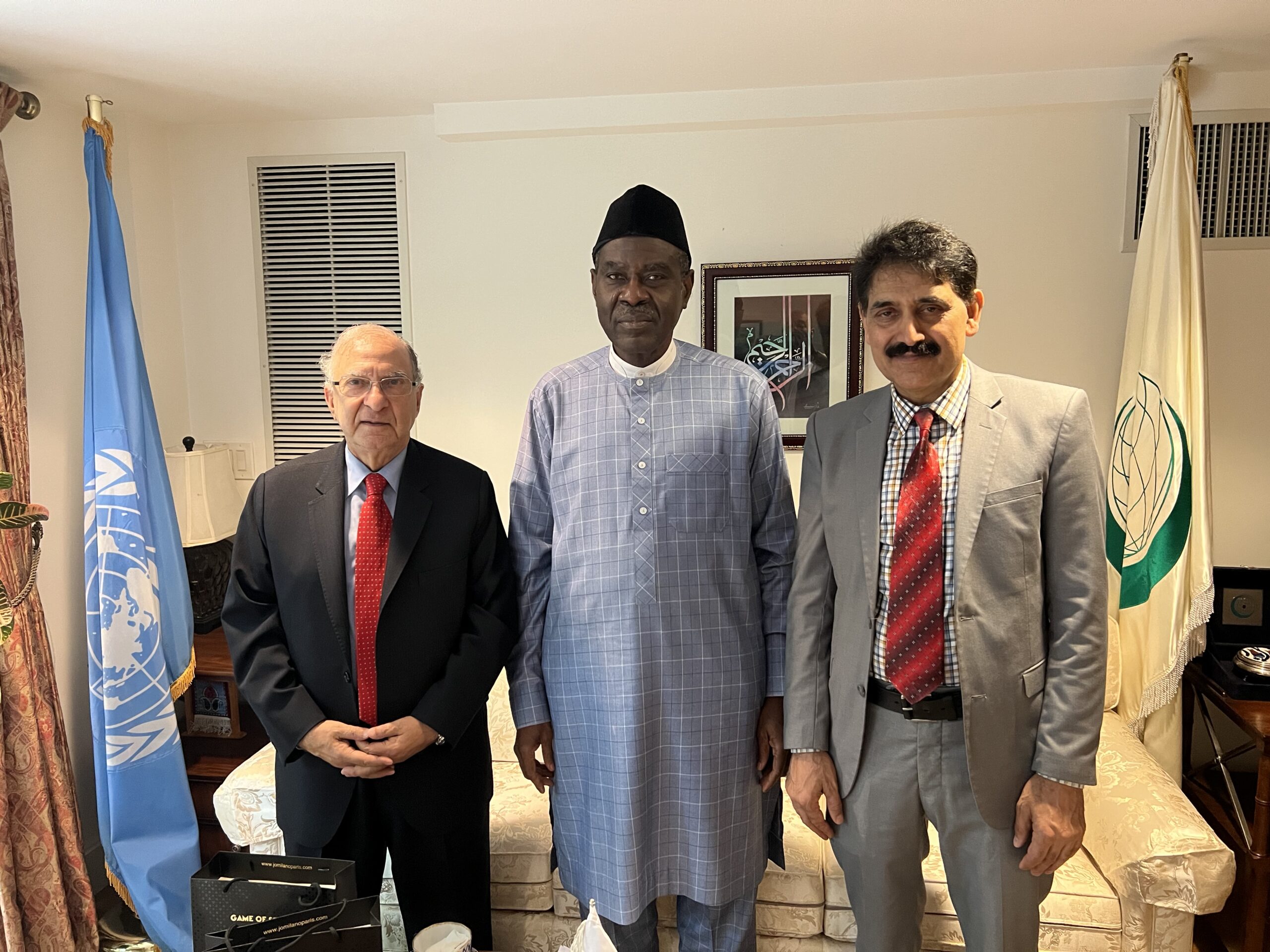
Today’s meeting in New York between Dr. Ghulam Nabi Fai, Chairman of the World Forum for Peace & Justice, Sardar Taj Khan, Senior Vice Chairman of the Kashmir Mission USA, and Ambassador Hameed Ajibaiye Opeloyeru, the Permanent Observer of the Organization of Islamic Cooperation (OIC) to the United Nations, serves as an important reminder that the question of Kashmir remains unresolved and continues to demand sustained international attention.
Ambassador Opeloyeru, a distinguished Nigerian diplomat with decades of service across the Middle East, Africa, and Europe, brought to the discussion not only diplomatic experience but also an understanding of the importance of multilateral engagement in resolving protracted conflicts. His reaffirmation of the OIC’s commitment to peaceful settlement of the disputes in both Kashmir and Palestine in accordance with relevant United Nations Security Council resolutions reflects the organization’s long-standing position.
During the meeting, Dr. Fai painted a grim picture of the human rights situation in Kashmir. He argued that demographic changes, which he characterized as a “settler-colonial project,” threaten the identity and future of the Kashmiri people. He further alleged that individuals expressing criticism of the Indian Army or the government, even through social media posts, risk detention and prolonged disappearance. According to Dr. Fai, advocacy for the implementation of UN resolutions on Kashmir has also become increasingly restricted, with the possibility of facing serious legal consequences.
These allegations underscore why the international community cannot afford to remain indifferent. Whether one agrees with every aspect of the political discourse surrounding Kashmir or not, allegations of restrictions on civil liberties, arbitrary detention, and suppression of political expression deserve impartial international scrutiny.
Sardar Taj Khan urged Ambassador Opeloyeru to raise the issue of Kashmiri political prisoners, including Mohammad Yasin Malik, Shabir Ahmad Shah, Masarat Alam, Aasiya Andrabi, Sofi Fehmeeda, and Nahida Nasreen. Their cases, he argued, should receive greater international attention as part of any meaningful discussion on human rights in the region.
Dr. Fai also expressed appreciation for the OIC’s Independent Permanent Human Rights Commission (IPHRC), which has repeatedly called for an end to alleged human rights violations in Kashmir, the restoration of fundamental freedoms, the repeal of laws such as the Armed Forces (Special Powers) Act, greater access for international fact-finding missions, and implementation of relevant UN resolutions concerning the right of self-determination. He urged the Commission to go a step further by convening formal hearings on Kashmir and inviting independent experts and Kashmiri representatives to testify.
During the meeting, Ambassador Opeloyeru, reaffirmed the organization’s unwavering support for the peaceful resolution of the Kashmir dispute. He emphasized that the OIC remains committed to backing efforts aimed at achieving a settlement in accordance with relevant United Nations Security Council resolutions. The OIC’s stance highlights its long-standing position on advocating for the rights and aspirations of the Kashmiri people and underscores the need for sustained international engagement to address the ongoing conflict.
The significance of Ambassador Opeloyeru’s response should not be underestimated. By assuring the delegation that their proposals would be conveyed to OIC headquarters and considered during forthcoming meetings of the OIC Kashmir Contact Group in Iraq and on the sidelines of the United Nations General Assembly in New York, he indicated that the discussion would not simply end with diplomatic courtesies.
Yet diplomacy must ultimately be measured by results rather than rhetoric. For decades, the Kashmir dispute has remained one of the world’s longest unresolved conflicts. International organizations, including the various UN Secretary Generals, have consistently reiterated their positions, but many Kashmiris and observers continue to question whether declarations alone are sufficient.
If the UN seeks to reinforce its credibility on issues of justice and human rights, it should consider complementing its statements with more proactive engagement. Facilitating independent fact-finding, promoting humanitarian dialogue, encouraging confidence-building measures, and maintaining sustained diplomatic engagement with all relevant stakeholders could contribute to a more meaningful international response.
The New York meeting should therefore be viewed not merely as another diplomatic exchange but as an opportunity for renewed international engagement. Whether that opportunity leads to tangible progress will depend on the willingness of international institutions to transform expressions of concern into sustained and constructive action.
For those who believe that peaceful resolution of disputes must remain anchored in international law, dialogue, and respect for human rights, Kashmir deserves continued attention—not only in diplomatic communiqués but also through concrete initiatives that can help build confidence, accountability, and ultimately, peace.
Dr. Fai is also Secretary General
World Kashmir Awareness Forum.
He can be reached at: WhatsApp: 1-202-607-6435
gnfai2003@yahoo.com
Comments are closed, but trackbacks and pingbacks are open.