

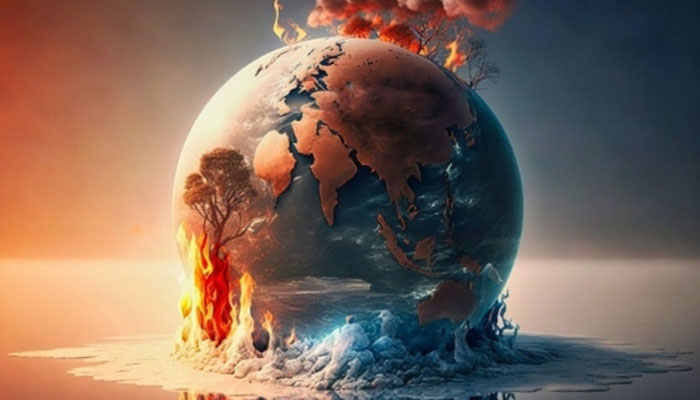

Rising temperatures driven by human activity are reshaping climates and threatening ecosystems worldwide.
“Nature’s first green is gold, her hardest hue to hold.” — Robert Frost
The Earth is currently facing a serious environmental crisis as global warming continues to increase at an alarming rate. The greenhouse effect, which is a natural process that helps maintain the planet’s temperature, has become intensified due to human activities. Gases such as carbon dioxide and methane are being released in large amounts from the burning of fossil fuels, deforestation, and industrial emissions. These gases trap heat in the atmosphere, causing the Earth’s temperature to rise beyond normal levels.
As a result of this warming, significant changes are being observed across the globe. Glaciers are melting at a rapid pace, leading to rising sea levels that threaten coastal areas and island communities. In many regions, extreme weather conditions such as heatwaves, heavy rainfall, and floods have become more frequent and intense. Countries like Pakistan have also experienced severe climate impacts, including devastating floods and increasing temperatures, which affect agriculture, water resources, and human health.
Experts warn that if immediate action is not taken, the consequences of global warming could become irreversible. It is essential to reduce greenhouse gas emissions by shifting towards renewable energy sources, protecting forests, and promoting sustainable practices. Public awareness and collective efforts are necessary to address this global challenge and to ensure a safer and more sustainable future for coming generations. The rapid increase in global temperatures is not only an environmental issue but also a serious threat to human survival and economic stability. Climate change is affecting food production as changing weather patterns disrupt agricultural cycles, leading to reduced crop yields in many parts of the world. Water scarcity is also becoming a major concern, as rising temperatures and irregular rainfall patterns are drying up rivers and underground water sources. These challenges are especially severe in developing countries, where resources to cope with such changes are limited.
In addition to environmental and economic impacts, global warming is also affecting human health. Increasing temperatures have led to a rise in heat-related illnesses, while the spread of diseases is becoming more common due to changing climates. Air pollution, closely linked with greenhouse gas emissions, continues to harm millions of people worldwide, causing respiratory and cardiovascular problems. Vulnerable populations, including children and the elderly, are at the greatest risk.
Despite the seriousness of the situation, there is still hope if timely action is taken. Governments, organizations, and individuals all have a role to play in reducing the effects of global warming. Transitioning to cleaner energy sources such as solar and wind power, improving energy efficiency, and adopting environmentally friendly practices can significantly reduce greenhouse gas emissions. Furthermore, increasing awareness and encouraging responsible behavior among people can contribute to long-term environmental protection.
The fight against global warming requires global cooperation and immediate attention. If strong measures are not implemented today, future generations will face even more severe consequences. Protecting the planet is not just a responsibility but a necessity to ensure the survival and well-being of life on Earth.
Another major concern linked to global warming is the loss of biodiversity. As temperatures rise and natural habitats are disturbed, many species are struggling to survive in their changing environments. Forests are shrinking, oceans are warming, and ecosystems are becoming unstable. This has led to the extinction of some species and placed many others at risk. The imbalance in ecosystems not only affects wildlife but also disrupts the natural processes that humans depend on, such as pollination, clean water, and a stable climate.
Urban areas are also experiencing the direct effects of rising temperatures. Cities are becoming significantly hotter due to the “urban heat island” effect, where concrete buildings and roads absorb and retain heat. This increases energy demand as people rely more on air conditioning, which in turn contributes to higher emissions. Traffic congestion, industrial activities, and population growth further worsen the situation, making urban living more challenging and increasing the overall environmental burden.


Comments are closed, but trackbacks and pingbacks are open.