

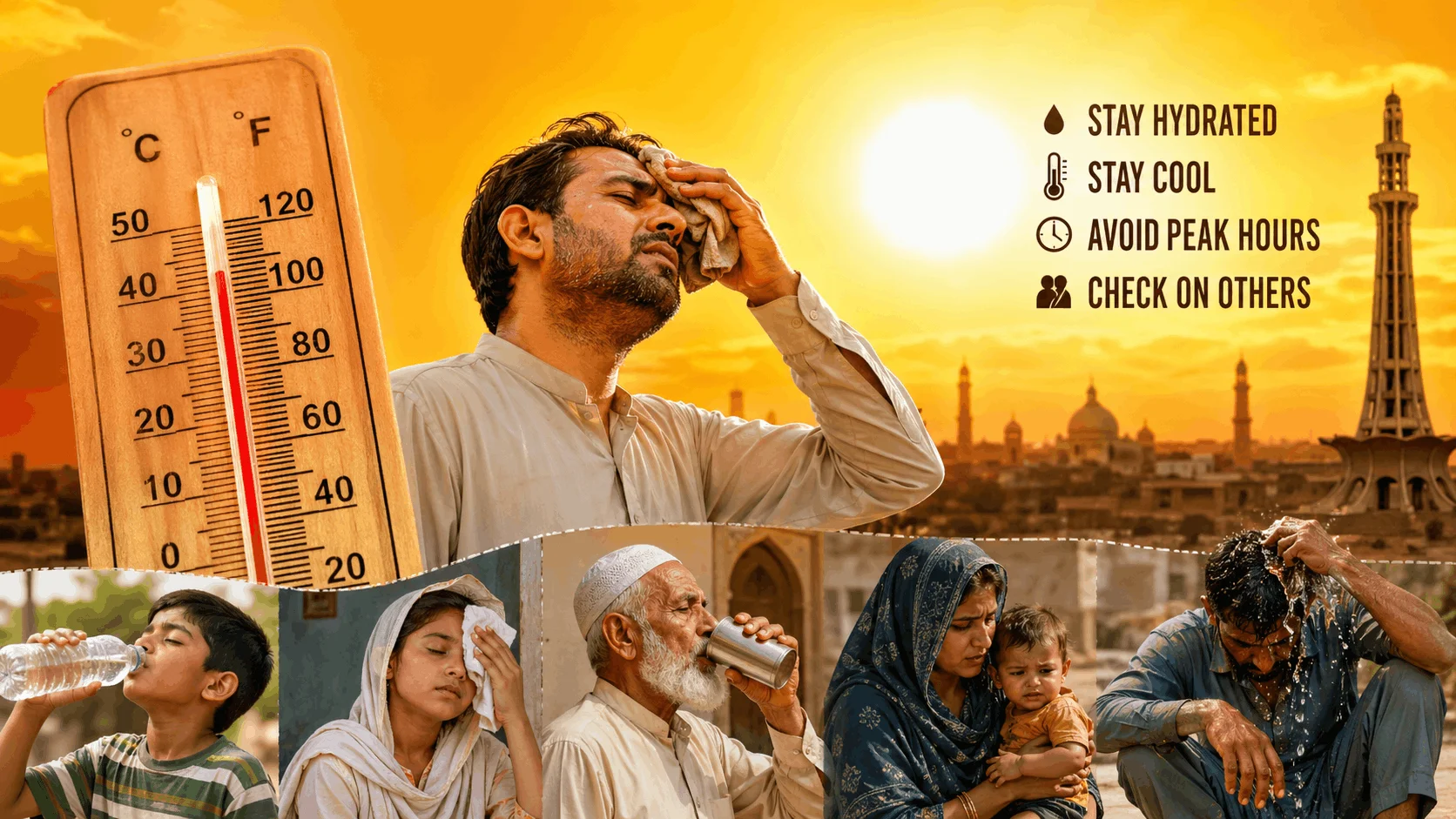
The Scorching Truth: How Heat Wave Precautions in Pakistan Are Reshaping Our World
Stay Safe This Summer: Essential Heat Wave Precautions in Pakistan

By Zunaira Riaz
Heat waves in Pakistan are becoming a serious concern, with rising temperatures leading to dangerous conditions. These extreme heat events are exacerbated by factors like climate change and urban development, which trap heat and reduce cooling. The impacts are widespread, affecting public health, agriculture, and water resources.
To protect ourselves, it’s crucial to take several precautions. Staying hydrated is key, so drink plenty of water even if you don’t feel thirsty. Avoid strenuous outdoor activities during the hottest parts of the day, typically between 11 AM and 4 PM. If you must be outside, wear lightweight, light-colored clothing, and a hat. Seek out cool, shaded areas or air-conditioned spaces whenever possible. For those without air conditioning, cool baths or showers can offer relief, and using damp cloths on your skin can also help.
It’s also important to be aware of the signs of heat-related illnesses like heat exhaustion and heatstroke. Symptoms include dizziness, nausea, rapid pulse, and confusion. If you or someone you know experiences these symptoms, move to a cooler place, lie down, and hydrate. Seek medical attention immediately if symptoms are severe, as heatstroke can be life-threatening. Community awareness and preparedness are vital in mitigating the risks associated with these increasingly frequent and intense heat waves. Children are particularly vulnerable to the effects of heat waves because their bodies are less efficient at regulating temperature compared to adults. Their smaller body size means they heat up faster, and they may not always recognize or communicate their thirst as effectively.
During extreme heat, children can experience a range of health issues. Dehydration is a primary concern, which can lead to fatigue, headaches, and reduced cognitive function, impacting their ability to concentrate and learn. More severe heat-related illnesses like heat exhaustion and heatstroke can occur. Symptoms in children might include lethargy, irritability, vomiting, and in serious cases, loss of consciousness.
For their breathing and overall respiratory health, prolonged exposure to high temperatures can worsen existing conditions like asthma. The air can become more stagnant during heat waves, potentially leading to higher concentrations of pollutants, which irritates airways. Children with respiratory sensitivities may find it harder to breathe, leading to increased coughing, wheezing, and shortness of breath. It’s essential to keep children in cool environments, ensure they are well-hydrated, and monitor them closely for any signs of distress. Heat waves can have a significant impact on the health of both the elderly and the youngest generation.
For older adults, their bodies may have a harder time regulating temperature, making them more susceptible to heat-related illnesses. Conditions like heart disease, diabetes, and respiratory issues can be worsened by extreme heat. They might also be on medications that interfere with their body’s ability to stay cool. Dehydration is a major concern, and they may not always recognize thirst as readily as younger individuals.
For infants and young children, their bodies are still developing and they have a higher surface area to body mass ratio, which means they can lose fluids more quickly. They are also less able to communicate their discomfort or needs effectively. Their bodies can overheat faster, and they are at a higher risk for dehydration and heat rash. It’s crucial to ensure they stay cool, hydrated, and are not left in hot environments, especially cars.
During heat waves, conserving water is important while also making sure you stay hydrated.
To hydrate yourself effectively:
Drink plenty of fluids: Water is the best choice. Sip it regularly throughout the day, even if you don’t feel thirsty.
Electrolyte drinks: For prolonged exposure to heat or heavy sweating, consider drinks with electrolytes to replenish salts lost.
Avoid dehydrating beverages: Limit caffeine and alcohol, as they can increase fluid loss. Sugary drinks can also be less effective for hydration.
Eat water-rich foods: Fruits and vegetables like watermelon, cucumbers, strawberries, and oranges have high water content and can contribute to your hydration.
When using water, try to be mindful of conservation:
Reuse water where possible: For example, water used to rinse fruits and vegetables can be used to water plants.
Take shorter showers: While a cool shower can help you cool down, keeping them, brief helps conserve water.
Fix leaks: Dripping faucets waste a surprising amount of water.
By combining smart hydration strategies with conscious water usage, you can better manage the challenges of heat waves.
If someone suddenly becomes ill due to a heat wave, it’s important to act quickly. Here’s what you can do:
Move them to a cooler place: Get them out of the direct sun and into an air-conditioned building or a shady spot.
Cool them down: Loosen their clothing, and apply cool, wet clothes or a cool bath. Spraying them with cool water can also help.
Give them fluids (if conscious): If they are alert and able to swallow, offer them cool water or a sports drink to help rehydrate. Avoid giving them liquids if they are disoriented or unconscious.
Call for medical help: If symptoms are severe, such as confusion, loss of consciousness, rapid pulse, or a high body temperature (103°F or higher), call emergency services immediately.
Recognizing the signs of heat-related illnesses like heat exhaustion and heatstroke is key. Heat exhaustion symptoms include heavy sweating, weakness, dizziness, nausea, and headache. Heatstroke is a more severe condition and is a medical emergency, with symptoms like a high fever, hot, dry skin (or sometimes profuse sweating), confusion, and even seizures.
Preventing heat-related issues involves a multi-faceted approach centered on staying cool and hydrated. It’s crucial to drink an abundance of water consistently, even if thirst isn’t a primary sensation, while steering clear of dehydrating beverages like those high in sugar or alcohol, as well as excessive caffeine. Seeking refuge in cool environments, particularly air-conditioned spaces, is paramount; if personal air conditioning isn’t available, frequenting public cool zones like libraries or malls offers a viable alternative. Lightweight, loose-fitting, and light-colored clothing, along with a wide-brimmed hat, aids in managing body temperature and protecting against sun exposure.
Furthermore, adjusting daily routines to avoid strenuous activities during the hottest parts of the day, typically mid-afternoon, is a smart preventive measure, opting instead for cooler morning or evening hours for exertion. Incorporating cool showers or baths can provide immediate relief and help lower overall body temperature. Special attention should be paid to individuals who are more vulnerable to heat, such as young children, the elderly, and those with pre-existing health conditions, ensuring they are adequately protected and monitored., being mindful of any medications that might interfere with thermoregulation and allowing the body to gradually acclimatize to hotter weather are important considerations. Consistent application of sunscreen also plays a role, as sunburn can impair the body’s natural cooling mechanisms and exacerbate dehydration. By actively implementing these practices, individuals can significantly reduce their risk of experiencing heat-related illnesses.


Comments are closed, but trackbacks and pingbacks are open.