

Kinza Kanwal
Investment, Exports and Economic Opportunity
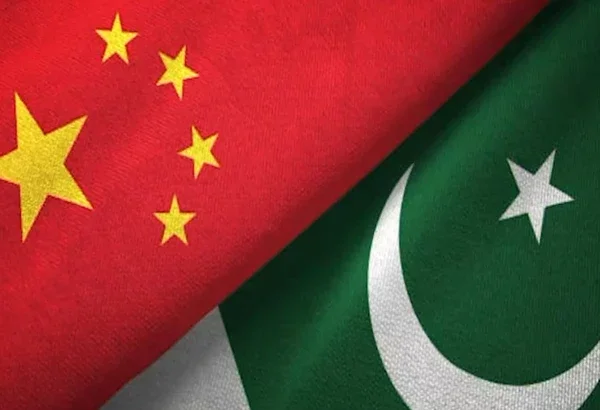
Pakistan’s economic ties with China are presents a striking contrast. China is one of Pakistan’s biggest trading partners and a significant supplier of machinery, industrial equipment and investments. However, Pakistan’s export trade to China is still far less than its imports. In bilateral economic diplomacy, a question needs to be asked as, why the growing trade cooperation has not been matched by the export capabilities of Pakistan.
Trade data is not the key to the answer. It needs to look into the opportunities opened by bilateral dealings and the profile of Pakistan’s exports and the hurdles Pakistan businesses face in global competition. Both countries have expanded their economic cooperation, but a key challenge is to make market access a driver of continued export expansion.
This imbalance is apparent in recent trade figures. According to the statistics in July 2026, Pakistan exported $2.68 billion and imported $19.54 billion from China in fiscal year 2025-26. Exports grew in comparison with the previous year while imports grew as well. The net result of this merchandise trade was around $16.85 billion.
These statistics show the imbalance of two-way trade but a trade imbalance with one trading partner does not necessarily indicate an unsuccessful economic relationship. Machinery, raw materials and intermediate goods imports can help the domestic production and investment. The matter which is more crucial is whether these imports support to build industries that can produce competitive products in the domestic and global markets.
This is especially significant as Pakistan and China have an existing bilateral mechanism to ease trade. In 2007, the first phase of their Free Trade Agreement came into effect. A second phase agreement was signed in April 2019, and tariff cuts took effect January 2020. Its aim was to enhance market access, to fix vulnerabilities of the previous agreement and to enhance trade cooperation.
In the modified deal, China will remove tariffs on 313 lines of products that are considered priorities for Pakistan. These comprised textiles, garments, seafood, meat, leather, chemicals, footwear and engineering goods. The deal also included a more comprehensive timetable of tariff cuts in the future.
The concessions were vital because they sought to resolve a long-standing issue that Pakistani exporters required more competitive access to the Chinese market. But preferential tariffs are not the only element of trade, however. Reduced customs duties can enhance the price of a product, but they cannot offset the lack of reliable supply, product consistency, or high production costs or poor commercial contacts.
This was emphasized in a preliminary evaluation of the second phase of the agreement carried out by the Pakistan Business Council. The study findings showed that the new tariff regime provided significant market access benefits. Meanwhile, in consultation with exporters it found barriers that were not solely due to Chinese tariff policy.
Some challenges cited included insufficient market information, lack of skill to find Chinese buyers, lack of factory infrastructure and lack of knowledge about trade procedures. The results indicated that enhanced access will bring opportunities while the Pakistani businesses will require the ability to compete for customers.
The difference between access and competitiveness is key to the trade relationship. While a company might be favored under a contract, it could still not be able to obtain orders because it is not able to meet the requirements of the buyers regarding the quality, quantity, delivery and pricing. Trade negotiations can be done with favorable conditions, but businesses need to be able to operate effectively within these.
Product diversification is another crucial factor to consider. It is difficult for exporting activities to grow if a country relies significantly on few products or commodities which lack value addition. While there may be buyers overseas for raw materials and semi-processed products, there is potential to earn more when manufacturing skills and processing, specialized production skills are developed.
This increases the significance of identifying products for which there is a demand in China and where a potential for realistic competitive positions exists for Pakistani producers. The Pakistan Business Council made this distinction between goods already exported to China, products exported to other countries but not to China and the products that are imported by China but not exported by Pakistan. It is a good starting point in order to discover opportunities in China, instead of seeing it as one homogeneous market.
It also recommends that trade promotion should be made more specific. Rather than simply concentrating on overall export expansion goals, institutions and business associations could target specific products which have the potential to succeed and look at the competition in specific market segments and assist exporters in understanding the commercial needs of the market.
Market intelligence is a key feature to pay attention to. China’s huge consumer and industrial marketplace offer a variety of opportunities, but also poses some challenges. The Pakistani exporters require honest and accurate information regarding their buyers, prices, quality of products, distribution channels, and applicable regulations. New markets can be challenging due to language barriers and unfamiliar business practices.
The Trade Development Authority of Pakistan provides a convenient online facility through which businesses can check the preferential tariff rates under the bilateral agreement. These can be used to enhance the availability of information. However, their usefulness relies on whether or not firms are aware of them and can use the information to make commercial decisions.
In other words, trade diplomacy must be more closely linked to the actual process of business development. Diplomatic missions, export promotion agencies and export chambers can help by creating links between exporters and prospective buyers. While trade shows and business meetings can provide introductions, they are best evaluated by ongoing business relationships and actual orders.
Chinese investment is also an important factor. If business conditions are favorable, joint ventures between Pakistani and Chinese companies can help in production, technical training, and the utilization of existing supply chains. JVs can be a way for businesses to create products for the Chinese market or for export.
However, the growth of investment and exports should not be taken for granted. There is a relationship between their production and their sale as well as their added value at the national level. Economic gains from an investment may not necessarily translate to direct improvements in the bilateral trade balance of the country.
The way forward requires attention to both external market opportunities and Pakistan’s productive capabilities. Better trade facilitation, more reliable market information, improvements in product standards and closer commercial cooperation are relevant to this objective. Equally important is a realistic assessment of the sectors in which Pakistani exporters can compete.
Pakistan’s trade deficit with China should neither be treated as the sole measure of bilateral economic relations nor dismissed as an unavoidable consequence of a larger partnership. It is a reason to examine the structure of trade and the opportunities available for expanding exports.
The two countries have negotiated preferential trading arrangements and developed extensive economic links. The challenge is to ensure that Pakistani businesses can make more effective use of those arrangements.
Ultimately, a trade agreement opens a door; it does not guarantee that firms will enter the market successfully. The next measure of Pakistan-China trade cooperation should be not simply how much the two countries exchange, but whether Pakistan can broaden what it sells, improve the value of its exports and establish a more competitive presence in the Chinese market.
About the Author
Kinza Kanwal is a Lecturer in the Department of Government and Public Policy at the National Defence University (NDU), Islamabad, and a PhD scholar in International Relations at Bahria University, Islamabad. She holds an M.Phil. in Public Policy with distinction and specializes in public policy, geopolitics, and international relations, with a research focus on Pakistan’s foreign policy and regional security.
Comments are closed, but trackbacks and pingbacks are open.