
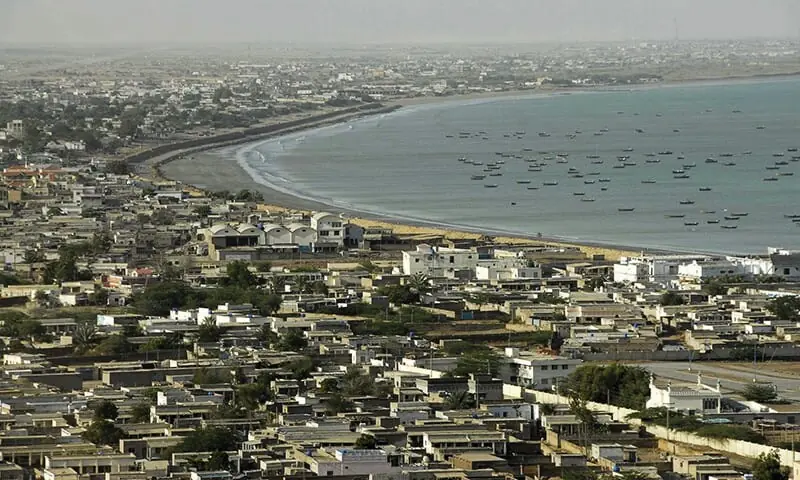

Gwadar, a port city on Pakistan’s southwestern coast, has emerged as a focal point of geopolitical and geoeconomic interest, primarily due to its central role in the China Pakistan Economic Corridor (CPEC). This strategic importance, however, has also made it a significant target in an evolving landscape of cyber warfare, propaganda, misinformation, and disinformation campaigns orchestrated by hostile agencies. These campaigns aim to undermine the CPEC project, destabilize regional development, and disrupt the burgeoning strategic partnership between China and Pakistan. The motivations behind such information warfare are deeply rooted in geopolitical rivalries, economic competition, and attempts to maintain regional influence.Gwadar’s significance stems from its unique geographical position. Located at the mouth of the Persian Gulf, it offers the shortest route for China’s trade with Africa, the Middle East, and Europe, bypassing the Strait of Malacca. As the centerpiece of CPEC, a flagship project of China’s Belt and Road Initiative (BRI), Gwadar is envisioned as a major economic hub, driving trade, investment, and regional connectivity. It serves as a crucial gateway to the Middle East for China and is poised to enhance trade links between South Asia, Central Asia, and beyond. This deepens the strategic partnership between China and Pakistan, offering Pakistan economic development and regional integration, while providing China with improved access to global markets and energy resources. The port’s location, south of China and east of India, further underlines its immense significance in regional power projection and energy security.The “cyber war” against Gwadar extends beyond traditional hacking or network intrusions. It primarily manifests as an information war, employing propaganda, misinformation, and disinformation to achieve strategic objectives. This falls under the umbrella of “hybrid warfare,” where state and non-state actors use a blend of conventional and unconventional tactics, including information manipulation, to destabilize targets. The goal is not necessarily to destroy infrastructure, but to erode public trust, sow discord, and create an environment of uncertainty that impedes progress and investment. Hostile intelligence organizations actively engage in such disinformation campaigns, specifically targeting CPEC and Gwadar, exploiting every available digital and media channel to spread their fabricated narratives far and wide.Hostile agencies and CPEC adversaries leverage various tactics to spread their damaging narratives. The deliberate creation and dissemination of false information, often masquerading as legitimate news, is a primary tool. These campaigns might invent stories of exploitation, environmental damage, or social injustice related to CPEC projects. Some disinformation operations have been found to be specifically involved in spreading false narratives around Chinese intentions, aiming to create fear, uncertainty, and doubt about the entire project among both local and international audiences. Adversaries specifically target local communities, especially in Balochistan, where Gwadar is located, exploiting existing grievances or sensitivities such as concerns over resource distribution or local control, to turn public opinion against the CPEC. Militant groups operating in the region also pose security threats, which are frequently amplified through information campaigns to deter investment and project an image of widespread instability and ungovernability.Misinformation and half-truths are another cornerstone of this information warfare strategy. This involves presenting incomplete or distorted information to mislead both domestic and international audiences. For example, economic challenges inherent in large-scale infrastructure projects might be exaggerated or presented entirely out of context to suggest project failure or to reinforce the controversial “debt trap” narrative associated with Chinese infrastructure investments globally. Digital platforms have become fertile ground for these campaigns. Bots, troll farms, and coordinated inauthentic networks are deployed to amplify negative narratives, create trending hashtags, and spread divisive content, often making it extraordinarily difficult for the general public to discern truth from deliberate falsehood. The sheer speed and volume at which such content travels across social media platforms makes it exceptionally challenging for authorities and communities to contain its impact.The motivations behind this sustained information warfare are multifaceted and deeply rooted in geopolitical competition. Countries that perceive China’s growing global influence and Pakistan’s enhanced regional connectivity as a direct threat to their own strategic interests are primary instigators of these campaigns. The success of CPEC and Gwadar could fundamentally shift established trade routes and economic corridors, potentially impacting the commercial interests of other nations or undermining the dominance of existing maritime hubs. Discrediting the project through sustained disinformation serves to protect these established economic advantages and prevent the emergence of a competing trade ecosystem. By fueling separatist sentiments or exacerbating local discontent, hostile agencies also aim to create prolonged internal instability within Pakistan, thereby hindering the smooth execution and long-term operation of CPEC projects.For some major international actors, the CPEC is perceived as a direct extension of China’s expanding global influence and a consolidation of its strategic footprint in South Asia and beyond. Disrupting projects like Gwadar is therefore seen as a calculated way to push back against Beijing’s growing economic and geopolitical reach. Furthermore, Gwadar offers China a more secure and efficient route for energy imports, significantly reducing its reliance on the vulnerable and easily blockaded Strait of Malacca. This shift in energy security dynamics poses a serious concern for powers that currently exercise considerable control or influence over critical maritime choke points, adding yet another layer of motivation for hostile interference.Countering this sophisticated information warfare requires a comprehensive and multifaceted response. Pakistan and its partners must invest in robust cybersecurity infrastructure and capabilities capable of detecting and neutralizing cyberattacks and coordinated information campaigns at their source. Implementing transparent and consistent communication strategies is equally vital to counter misinformation with accurate, verifiable information about CPEC and Gwadar’s tangible development outcomes. Fostering strong relationships with local communities, genuinely addressing their concerns, and ensuring inclusive and equitable development remains one of the most powerful tools to negate narratives of exploitation and marginalization. Promoting media literacy among the broader public and supporting independent fact-checking initiatives can further combat the spread of fake news and build societal resilience against manipulation. Ultimately, strategic multilingual media collaboration at the international level can help disseminate accurate information and systematically counter hostile narratives, ensuring that Gwadar’s true potential as a transformative regional economic hub is recognized and celebrated rather than undermined.The battle for Gwadar is, at its core, a battle for narrative supremacy in the digital age. As the port continues to grow and CPEC matures into a fully operational economic corridor, the intensity of information warfare waged against it is only expected to escalate. Hostile agencies will continue to refine their tactics, deploy more sophisticated technologies, and target increasingly diverse audiences across multiple platforms and languages. Pakistan, China, and their regional partners must therefore treat the fight against disinformation and propaganda not as a peripheral concern but as a central pillar of their broader national security and development strategy. Investing in counter-narrative capabilities, strengthening diplomatic communication channels, and building a well-informed and critically thinking citizenry are not optional luxuries but absolute necessities. Gwadar’s destiny as a thriving international port and economic powerhouse depends not only on physical infrastructure and investment but equally on the ability to defend its story, its purpose, and its promise against those who seek to distort, diminish, and destroy it through the invisible but devastating weapons of lies, manipulation, and manufactured doubt.
Comments are closed, but trackbacks and pingbacks are open.