
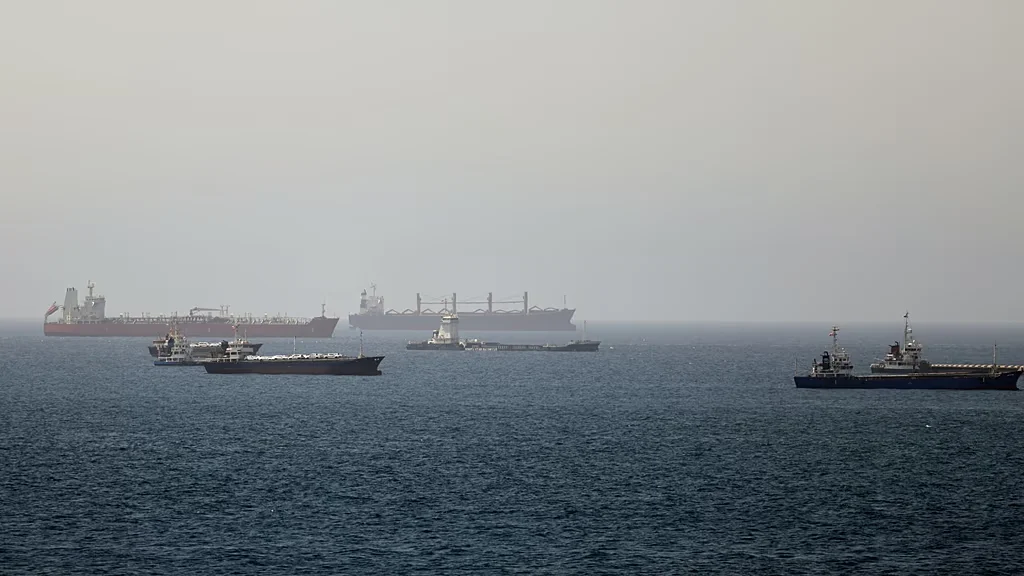
Strait of Hormuz Ships Avoiding Route After Attacks
Iran Attacks Tankers in Hormuz Strait, Forcing Ships Onto Riskier Paths

Strait of Hormuz – (Special Correspondent/Web Desk) – Shipping companies are steering clear of a US-guided route through the Strait of Hormuz, after Iran attacks tankers in Hormuz strait waters, according to seven sources close to the maritime industry. The growing danger has pushed vessels away from paths once seen as safe, changing how oil and gas move through one of the world’s busiest waterways.
For many years, ships followed a fixed lane down the center of the strait. This route was set up by the UN’s shipping body back in 1968. But since war broke out between the US and Iran in late February, Iranian forces have placed mines in that zone. This has left crews with only two rougher options—hugging either the Iranian or Omani coastline.
Earlier this summer, reports surfaced that the US military had stepped in to guide ships safely. This effort included quiet oil transfers between vessels at sea, backed by drones and helicopters watching from above and below. Thanks to this support, tens of millions of barrels of oil reached buyers, helping keep global fuel prices from spiking even higher.
Still, many shipping firms now view the Omani-side route as far too risky. Since July 7, five vessels have come under fire in these waters—three large oil tankers, one ship carrying liquefied gas, and one container vessel. It remains unclear whether all of them were following the US-backed path at the time.
One source from the shipping world put it plainly: the US no longer seems to have real control over the situation. Their company chose to skip the strait entirely, worried about crew safety as conditions kept getting worse. A Middle East risk analyst echoed this, saying Iran’s continued strikes show that Washington’s plan to keep traffic moving simply isn’t holding up.
White House officials pushed back, insisting the strait remains open and that oil continues to flow. They described Iran’s actions as acts of terror against innocent civilians and vowed a strong response. A defense official added that over 100 ships had worked directly with the US Navy to pass through safely in the last week alone, with 300 more crossing the wider region.
Tensions kept climbing this week. The US brought back a naval blockade on Iranian ports, and both sides traded new strikes. Iran also hinted it might pull in its Houthi allies from Yemen to shut down another key passage, the Bab el-Mandeb strait, opening a second dangerous front near the Red Sea.
Nine Greek-run gas tankers that had entered the Gulf to load cargo found themselves stranded inside the strait, too nervous to move. Two more ships were hit outside the strait’s boundaries in open water.
President Trump said on social media that the strait stays open to everyone except Iran. Yet maritime security firms disagree. Greek advisory group Diaplous urged companies to delay trips until the weekend, while another firm, MARISKS, said there’s simply no way to guarantee safe passage right now.
Comments are closed, but trackbacks and pingbacks are open.