
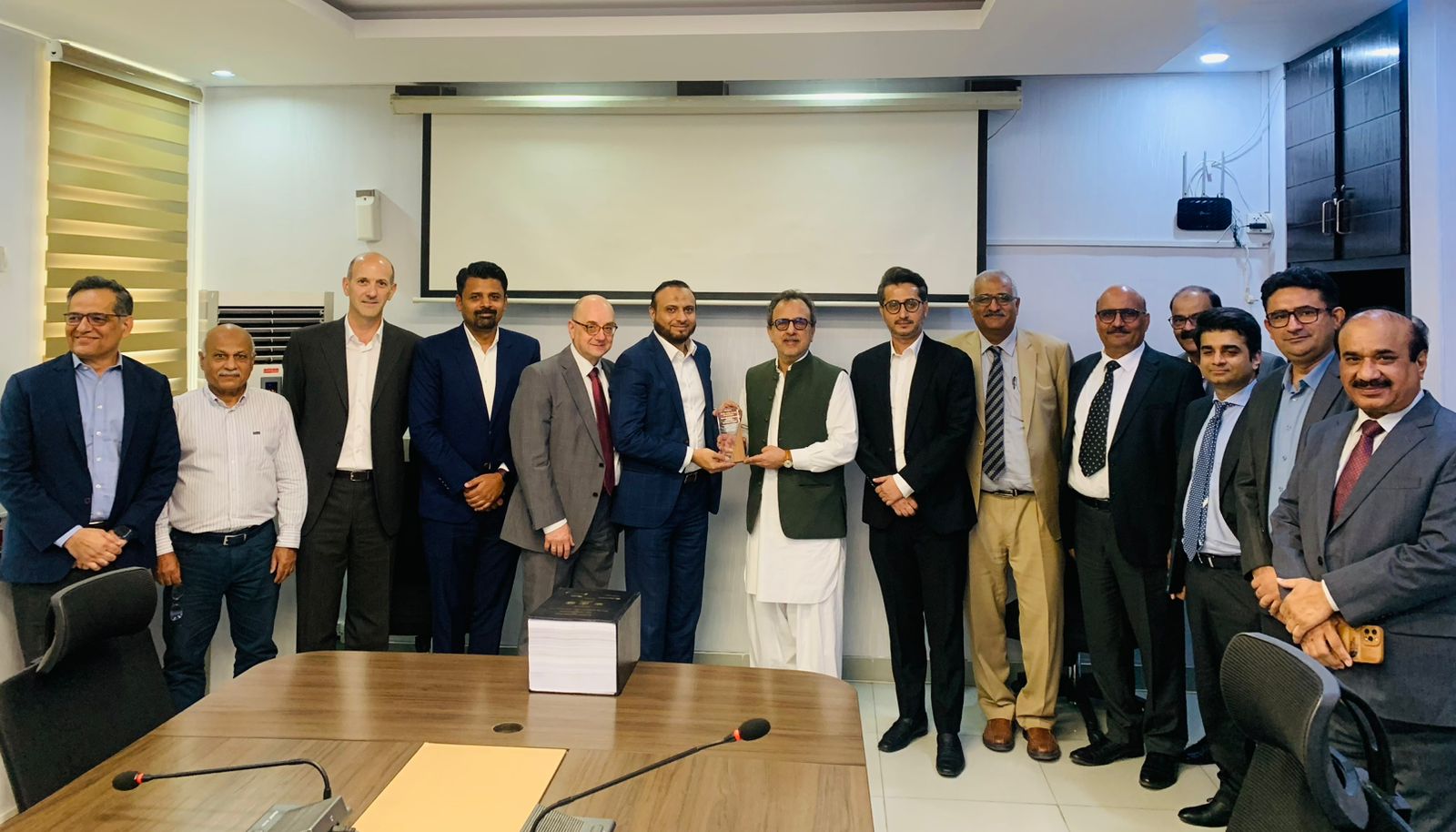

Bankable Feasibility Study Confirms Conversion is Technically Feasible, Economically Beneficial and Environmentally Manageable.
Islamabad-(News Desk)-Pakistan is poised to save USD 3.239 billion over the next 26 years — and USD 2.113 billion in foreign currency alone — by converting the Jamshoro Unit-01 power plant from imported coal to 100% indigenous Thar lignite. A world-class Bankable Feasibility Study (BFS), prepared by Dornier Group and EY Parthenon and presented today to Federal Minister for Power Sardar Awais Ahmed Khan Leghari, confirms that this transformation is not only technically feasible and economically compelling but also environmentally manageable.
WAPDA Chairman Reviews Tarbela Hydropower Expansion and Progress Works Today
The achievement of this milestone was made possible through the active support and collaboration of key stakeholders, including K-Electric (KE), Jamshoro Power Company Limited (JPCL), and the Private Power and Infrastructure Board (PPIB). To steer this complex initiative, the Federal Minister constituted a high-level steering committee, which convened 38 dedicated sessions to proactively monitor and expedite the completion of the BFS. Of these, 15 sessions were personally chaired by the Minister, reflecting the Government’s unwavering commitment to this transformative project. The Minister has expressed his sincere gratitude to KE, JPCL, PPIB, and all other partners for their invaluable support in bringing this feasibility study to fruition.
The initiative flows directly from the Prime Minister’s Power Sector Reform Plan and reflects sustained efforts by the Ministry of Energy to advance fuel indigenisation, with the BFS marking a key milestone in that process.
The economic case for the conversion is exceptionally strong. The project delivers a cost-benefit ratio of 1.8x, which remains favourable across all sensitivity scenarios. Total net benefits over the 26-year project life amount to USD 3.239 billion, comprising USD 1.720 billion in net benefits to the power sector — including generation cost savings of USD 1.051 billion and Thar mine expansion benefits of USD 669 million — alongside USD 1.519 billion in government savings from reduced interest costs on foreign borrowings. Critically, the project generates USD 2.113 billion in foreign currency savings, directly strengthening Pakistan’s balance of payments and reducing exposure to volatile international coal prices and exchange rate fluctuations. The required conversion CAPEX is estimated at USD 86.2 million (with total project cost of USD 116.6 million), representing a highly attractive return on investment.
The BFS, prepared by the internationally renowned Dornier Group as lead technical consultant, confirms that Jamshoro Unit-01 — Pakistan’s ultra-supercritical power plant — can be converted to burn 100% Thar lignite through targeted engineering modifications rather than a large-scale boiler retrofit, thereby preserving the value of the existing plant asset. The project is structured as a bankability-led brownfield modification, with a stage-gate implementation approach that introduces no new coal capacity.
Beyond the direct financial savings, the conversion carries transformative economic co-benefits for Pakistan. The shift to Thar lignite will catalyse the expansion of coal mines in Tharparkar, generating employment, accelerating infrastructure development in one of Pakistan’s most underserved regions, and deepening the country’s domestic energy supply chain. By eliminating reliance on imported coal — subject to international commodity price fluctuations, foreign exchange volatility, and supply chain disruptions — Pakistan will move decisively towards energy self-sufficiency, consistent with the Government’s broader indigenisation agenda under the Power Sector Reform Plan.
With the BFS now formally presented, the Ministry of Energy (Power Division) will proceed to the implementation readiness phase. Immediate next steps include obtaining final policy approval, initiating the lender-consent workstream and loan amendment roadmap, preparing the NEPRA/TCEB/SEPA/PPRA/PPA/CSA/EPC consent and contract matrix, launching basic design tender verification — including CFD modelling, mill tests, FGD/ESP and balance-of-plant modifications, and HAZIG/HAZOP studies — and developing a comprehensive procurement and contracting strategy with appropriate interface allocation and guarantees.
The Government of Pakistan remains committed to the timely and bankable implementation of this landmark project, which represents a cornerstone of the national energy sector’s transition towards indigenous resources, fiscal sustainability, and long-term energy security.
Comments are closed, but trackbacks and pingbacks are open.