
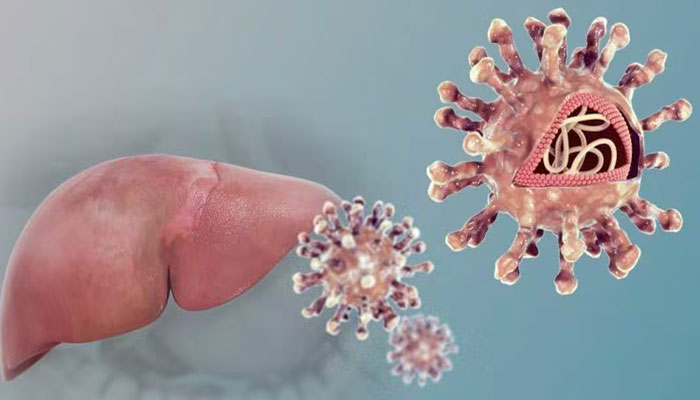
Mirum’s Experimental Hepatitis Drug Meets Late-Stage Trial Goal
Brelovitug Reduces Hepatitis D Virus Levels in Mirum’s Late-Stage Study

ISLAMABAD: (News Desk) – Mirum Pharmaceuticals said on Monday that its experimental hepatitis treatment, brelovitug, met the primary goal of a late-stage clinical trial by reducing hepatitis D virus levels in patients with the rare liver disease.
The company is developing brelovitug, a monoclonal antibody designed to target the hepatitis B surface antigen, a protein found on the virus’s surface. The treatment is being evaluated for chronic hepatitis D, also known as hepatitis delta virus infection, which occurs only in people who are already infected with hepatitis B.
Chronic hepatitis D can cause severe illness, progressive liver damage and, in some cases, death. Mirum estimates that approximately 230,000 people in the United States and Europe are living with the disease.
At the 24-week assessment, 56% of patients receiving a 300-milligram dose of brelovitug achieved both a reduction in hepatitis D virus levels and normal liver enzyme levels. The same combined outcome was achieved by 45% of patients receiving the 900-milligram dose.
By comparison, none of the patients in the delayed-treatment group achieved both endpoints, according to the company.
Mirum said brelovitug was generally well tolerated across all dose groups, with a safety profile consistent with previously reported findings.
The company plans to present the complete trial results at an upcoming medical congress. It also expects to submit a marketing application for brelovitug to the US Food and Drug Administration (FDA) in the first half of 2027.
The treatment remains experimental, and further regulatory review will be required before it can be marketed in the United States.
Comments are closed, but trackbacks and pingbacks are open.