


Tehran/Washington/Islamabad-(Special Correspondent/Mudassar Iqbal/X)-Iran has warned it would launch “long and painful strikes” against U.S. positions if Washington resumes military action, while also reaffirming its claim over the strategically critical Strait of Hormuz—a move that could further complicate U.S.-led efforts to form a coalition to reopen the waterway.
Now two months into the conflict involving Iran, the United States, and Israel, the closure of the channel—through which roughly 20% of the world’s oil and gas supplies pass—has severely disrupted global energy markets. Prices have surged amid fears of prolonged instability and a potential global economic slowdown. The route is also crucial for Iran’s own oil exports, a key pillar of its economy.
U.S. President Donald Trump is reportedly set to review options for new military strikes aimed at pressuring Tehran into negotiations, according to officials cited by Reuters. Reports of the planned briefing, first published by Axios, briefly pushed Brent crude prices above $126 per barrel before easing to around $114.
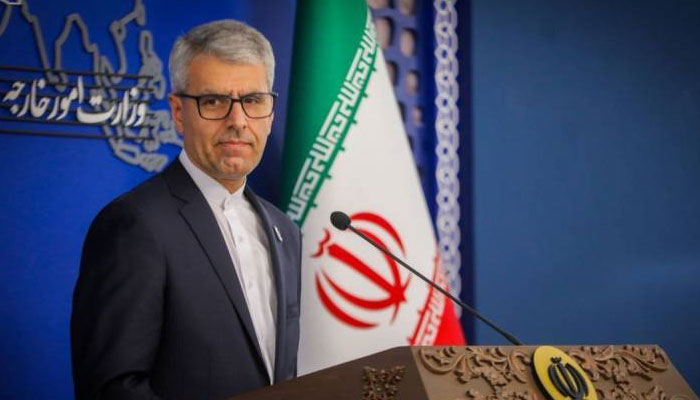
Meanwhile, Iranian Foreign Ministry spokesman Esmaeil Baghaei downplayed expectations of quick diplomatic progress, telling IRNA that reaching a resolution in a short timeframe is unrealistic regardless of mediation efforts.
Late Thursday, air defense systems were activated in parts of Tehran, with reports from Mehr News Agency and Tasnim News Agency indicating engagement with drones and surveillance UAVs.
Amid escalating tensions, the United Arab Emirates has banned its citizens from traveling to Iran, Lebanon, and Iraq, urging those currently in those countries to return home immediately due to security concerns.
Pakistan mediates Iran–US standoff, says fair agreement possible
U.S. President Donald Trump reiterated on Thursday that Iran would never be permitted to develop a nuclear weapon, adding that gasoline prices—an important issue for Republicans ahead of the upcoming elections—would fall sharply once the conflict ends.
While again accusing Tehran of serious human rights violations, Trump said he had no objection to Iran participating in the upcoming FIFA World Cup in the United States, after Gianni Infantino confirmed the country’s inclusion in the tournament.
Meanwhile, a senior official from Iran’s Islamic Revolutionary Guard Corps warned that any renewed U.S. strike, even a limited one, would trigger “long and painful” attacks on American positions across the region. Iranian media also quoted Aerospace Force Commander Majid Mousavi as cautioning that U.S. military assets, including warships, could face consequences similar to previous attacks on regional bases.
In a separate message, Supreme Leader Ayatollah Mojtaba Khamenei signaled Tehran’s determination to retain control over the Strait of Hormuz, vowing to end what he described as foreign interference in the waterway. He warned that outside forces had no rightful presence there, suggesting they risk being driven out entirely.
U.N. Secretary-General Antonio Guterres warned that if the disruption caused by the closure dragged on through mid-year, global growth would fall, inflation would rise and tens of millions more people would be pushed into poverty and extreme hunger.

“The longer this vital artery is choked, the harder it will be to reverse the damage,” he told reporters in New York.
Trump faces a formal U.S. deadline on Friday to end the war or make the case to Congress for extending it under the 1973 War Powers Resolution.
The date looks set to pass without altering the course of the conflict after a senior administration official said late on Thursday that, for the purposes of the resolution, hostilities had terminated due to the April ceasefire between Tehran and Washington.
Trump reiterated on Thursday that Iran’s economy was “a disaster,” but analysts said that if he expects Iran to blink first in a game of economic chicken, he may be waiting a while.
The conflict has aggravated Iran’s dire economic problems, risking calamity after the war, but it looks able to survive a standoff in the Gulf for now, despite a U.S. blockade that has cut off energy exports.
RANGE OF OPTIONS
As well as blocking almost all but its own shipping through the strait during the war, Iran launched drones and missiles at Israel and at U.S. bases, infrastructure and U.S.-linked companies in Gulf states.
Axios said that another plan to be shared with Trump during the briefing involved using ground forces to take over part of the strait to reopen it to commercial shipping. Trump is also considering extending the U.S. blockade or declaring a unilateral victory, officials have said.
In a sign the U.S. was also envisaging a scenario where hostilities cease, a State Department cable due to be delivered orally to partner nations by May 1 invited them to join a new coalition, called the Maritime Freedom Construct, to enable ships to navigate the strait.
France, Britain and other countries have held talks on contributing to such a coalition but said they were willing to help open the Strait only when the conflict ends.
Iranian Foreign Minister Abbas Araqchi said after talks with Lebanese Parliament Speaker Nabih Berri on Thursday that halting Israeli attacks on Lebanon, where a shaky ceasefire is in place, formed part of the Iran–U.S. ceasefire understanding and would remain a key issue in any future process.
Mediator Pakistan was trying to avoid escalation while the U.S. and Iran exchange messages on a potential deal, a Pakistani source said on Wednesday.
Comments are closed, but trackbacks and pingbacks are open.