

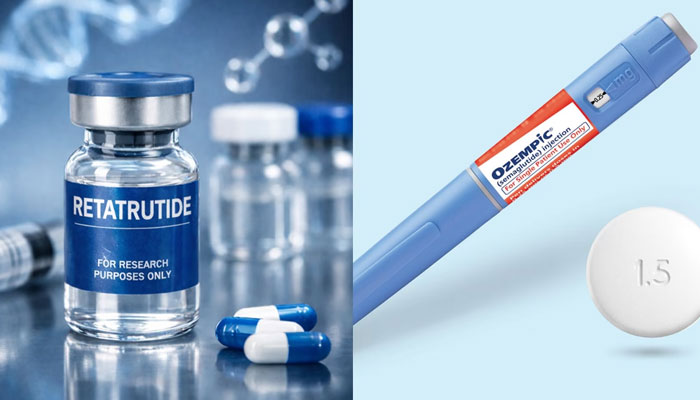
Eli Lilly’s Retatrutide Outperforms Ozempic in Diabetes Trial
Retatrutide Advances as Potential Challenger in the Weight-Loss Drug Market

ISLAMABAD: (News Desk) – Eli Lilly said Wednesday that its experimental obesity drug, retatrutide, delivered greater weight loss and better blood sugar control than Novo Nordisk’s Ozempic in a late-stage clinical trial involving patients with type 2 diabetes.
The findings strengthen retatrutide’s potential as a major contender in the rapidly expanding obesity-treatment market, where Lilly has already achieved significant success with its drugs Zepbound and Mounjaro.
Retatrutide has demonstrated substantial weight-loss potential in previous studies, with results approaching those associated with bariatric surgery in some patients with obesity. The latest findings further highlight its potential to become one of the most effective medications in the field, although its safety and effectiveness will require regulatory review.
Often referred to as a “triple-G” drug, retatrutide is administered once a week and activates three hormone receptors: GLP-1, GIP and glucagon. By targeting these pathways, the medication is designed to reduce appetite, improve blood sugar regulation and increase the body’s energy expenditure.
The head-to-head trial compared 9-milligram and 12-milligram doses of retatrutide with a 2-milligram dose of Ozempic. Lilly said the Ozempic dose was selected because it represents the drug’s highest approved dose for the relevant comparison.
After 80 weeks of treatment, both retatrutide doses reduced HbA1c, a measure of average blood glucose levels over time, by an average of 2.2 percentage points. The Ozempic group recorded an average reduction of 1.8 percentage points.
Weight-loss results also favoured retatrutide. Participants receiving the higher 12-milligram dose lost an average of 20.9% of their body weight, compared with 9.4% among those taking Ozempic.
Citi analyst Geoffrey Meacham said the findings reinforced retatrutide’s potential advantages in weight reduction and blood sugar management, strengthening its prospects as a long-term growth driver for Lilly in cardiometabolic treatments.
The experimental drug also produced greater improvements than Ozempic in certain cardiovascular risk factors, according to Lilly.
However, retatrutide was associated with gastrointestinal side effects, including nausea, vomiting and diarrhoea. Around 7.9% of participants receiving the highest dose discontinued treatment, compared with 2.7% in the Ozempic group.
Lilly plans to seek US regulatory approval for retatrutide in 2027 and intends to present detailed findings from the trial at a future medical meeting.
In a separate late-stage study, the company is also comparing retatrutide with tirzepatide, the active ingredient in Zepbound, among adults with obesity, including those with and without type 2 diabetes.
Comments are closed, but trackbacks and pingbacks are open.