

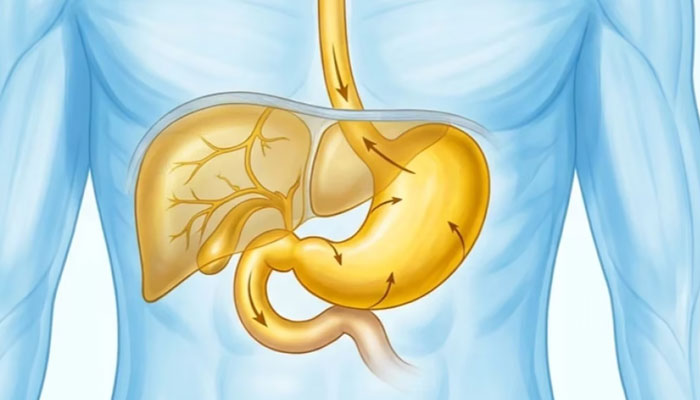
AstraZeneca’s Experimental Drug Doubles Median Survival in Advanced Stomach Cancer Trial
Sone-ve Improves Survival in Patients With Advanced Stomach Cancer

ISLAMABAD: (News Desk) – AstraZeneca’s experimental cancer drug sonesitatug vedotin, also known as sone-ve, helped patients with advanced stomach cancer live longer than those receiving standard chemotherapy, according to late-stage clinical trial results presented.
Patients treated with sone-ve survived for a median of 10 months, compared with five months among those receiving chemotherapy selected by their doctors. The results indicated a 53% reduction in the risk of death.
“A 5-month improvement in overall survival is very clinically significant in a difficult to treat patient population,” said Susan Galbraith, AstraZeneca’s executive vice president of oncology and haematology research and development.
The findings could strengthen confidence in the drug’s commercial potential, although the treatment did not achieve statistical significance on another key measure, progression-free survival, which assesses how long patients live without their disease worsening.
AstraZeneca has estimated that the drug could generate peak annual sales of $3 billion to $5 billion. However, analysts’ sales forecasts are reportedly closer to $1 billion.
Sone-ve belongs to a class of cancer treatments known as antibody-drug conjugates (ADCs). These therapies are designed to deliver cancer-killing agents to targeted cells while limiting damage to healthy tissue.
Galbraith said the latest findings supported the company’s broader strategy of developing ADCs that could improve on or replace conventional chemotherapy across different types of cancer.
Detailed results from the 532-patient study were presented at the European Society for Medical Oncology conference in Madrid on Sunday. The presentation came about a month after AstraZeneca agreed to invest $2 billion in biopharmaceutical company Summit Therapeutics and test sone-ve in combination with Summit’s bispecific antibody, ivonescimab.
The trial enrolled patients with gastroesophageal cancer whose tumours showed claudin 18.2, a protein found on certain cancer cells, in at least 25% of tumour cells. An approved treatment targeting the same protein uses a higher threshold of 75%.
Galbraith said the lower threshold could potentially double the number of patients eligible for treatment. She also indicated that the findings could support evaluating the drug at earlier stages of treatment. A separate study involving more than 2,000 patients is already examining its use earlier in the course of the disease.
HSBC analysts said the failure to meet the progression-free survival target made comparisons with IBI343, a competing claudin 18.2 treatment being developed by Takeda and Innovent, more difficult. IBI343 had met its progression-free survival goal in a late-stage trial.
Serious side effects occurred in 36.4% of patients receiving sone-ve, compared with 44.8% among those treated with chemotherapy. However, stomach-related side effects were more common with sone-ve, affecting 11.1% of patients compared with 6.3% in the chemotherapy group.
Comments are closed, but trackbacks and pingbacks are open.