

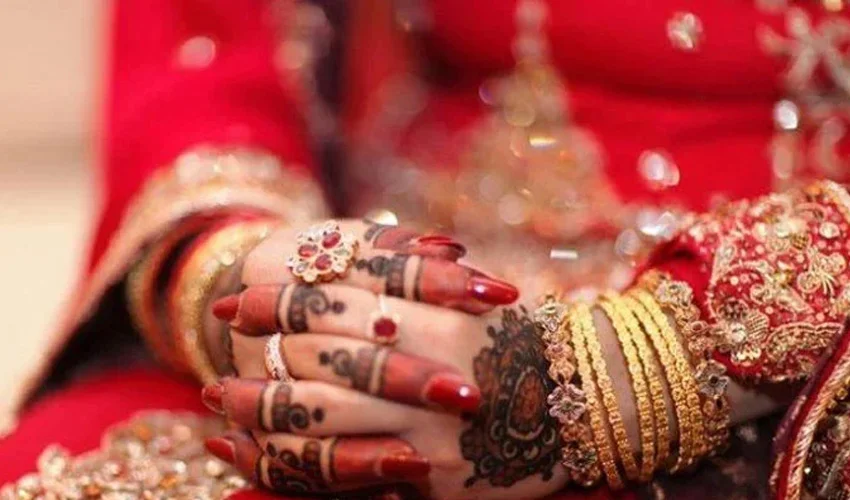
Dowry Demands Turn Wedding Joy Into Financial Distress
Experts Warn Dowry Demands Can Fuel Marital Conflict And Violence

ISLAMABAD: For many families in Pakistan, the joy of arranging a daughter’s wedding is increasingly overshadowed by the financial and emotional pressure created by dowry demands.
Instead of preparing for a celebration, parents can find themselves struggling to arrange expensive household items demanded by the groom’s family. For elderly fathers in particular, the pressure can mean borrowing money, selling valuable possessions and taking on debts simply to meet expectations.
For Shabnam from Sargodha, the situation is painfully familiar. Her niece is due to marry in two months, but her father has already passed away, leaving the family facing serious financial difficulties.
Despite knowing the family’s circumstances, the prospective in-laws have reportedly demanded items including woven rope beds, a washing machine, double beds, a refrigerator, a rug and kitchen utensils. Such demands, presented as part of tradition, can place an overwhelming burden on families with limited resources.
Dowry Turns Tradition Into Financial Burden
Dowry was historically viewed in some communities as a way of providing a daughter with financial support as she began married life. Over time, however, the practice has increasingly become associated with social status, competition and material expectations.
Low- and middle-income families are often hit hardest. With many households already struggling with employment, housing and basic living costs, meeting wedding-related demands can push them deeper into financial hardship.
Studies from rural Faisalabad have estimated average dowry expenses at around Rs157,640, a substantial amount for families earning between Rs30,000 and Rs50,000 a month.
To arrange dowry, some parents resort to borrowing money, selling land or household assets and reducing spending on essential needs.
Financial Pressure Can Shape Life-Altering Decisions
Amna recalled the case of Rukhsana from Qubo Saeed Khan, whose family was unable to afford a dowry. The family eventually married her to a man with serious mental health problems because his family did not demand dowry.
The case highlights how financial pressures surrounding marriage can force vulnerable families into choices that may have serious consequences for a woman’s future.
Psychological expert Zilehuma Suleman told APP that dowry pressure extends far beyond financial hardship. Parents can experience persistent anxiety, guilt, sadness and fear of social rejection.
Young women can also suffer emotionally when they see elderly parents working long hours to arrange expensive wedding goods. The practice can reinforce the harmful perception that daughters are financial liabilities rather than individuals deserving equal opportunities and dignity.
Suleman further warned that dowry can create an unequal power dynamic within marriage. When a bride’s family fails to meet expectations, she may face taunts, psychological abuse, additional financial demands and, in some cases, physical violence.
Experts Call For Change In Social Attitudes
Social activist Farzana Bari and civic experts described dowry as a major source of conflict between families, arguing that the practice can also undermine women’s education and independence.
In some households, girls are encouraged to focus primarily on domestic responsibilities rather than education and professional development, based on the expectation that their future depends on marriage.
Yet there are signs of change, as an increasing number of young men are rejecting dowry and choosing to marry without demanding goods or money from the bride’s family.
One such example is Mohsin Iftikhar, a prospective groom who has publicly rejected the practice.
“I completely refused to take any dowry,” he said, stressing that a wife should be regarded as a life partner rather than part of a financial transaction.
Religious And Legal Framework
The practice of demanding dowry from the bride’s family also raises religious and legal concerns.
The report notes the Islamic emphasis on simplicity in marriage, citing a narration attributed to Uqbah ibn Amir that the best marriage is the one that is easiest. It also points out that Islam does not impose a requirement on the bride’s family to provide dowry to the groom.
Pakistan has also had legislation regulating dowry and bridal gifts since 1976, while courts have addressed disputes concerning ownership and recovery of bridal property.
High Court Advocate Shah Muhammad Awan said social pressure and extravagant weddings promoted through television and social media contribute to the persistence of the practice. He maintained that families cannot legally be forced to provide dowry, despite the widespread demands that continue to generate disputes.
Dowry Disputes Can Continue After Marriage
The problem does not necessarily end once the wedding is over. Advocate Malik Amir Saleem, who practices in Rawalpindi district courts, said dowry can become a major source of conflict when marriages break down.
According to the legal perspective presented in the report, disputes can arise over the return of bridal belongings following separation or divorce. Family courts provide a legal avenue for women seeking recovery of their dowry articles or their monetary value where applicable.
However, legal remedies alone cannot eliminate the underlying social pressure, Saleem argued. Meaningful change requires families and communities to challenge the culture of demanding expensive gifts in the first place.
Education Over Dowry
The growing number of young people rejecting dowry offers a potential path toward change. If prospective grooms and their families refuse to make financial demands, parents could redirect money traditionally spent on household goods toward their daughters’ education and professional development.
A daughter’s wedding, the report argues, should be a moment of happiness rather than a source of debt, anxiety and humiliation.
Ending dowry demands ultimately requires a collective change in attitudes—one in which marriage is valued for companionship and mutual respect rather than material expectations.
Comments are closed, but trackbacks and pingbacks are open.