

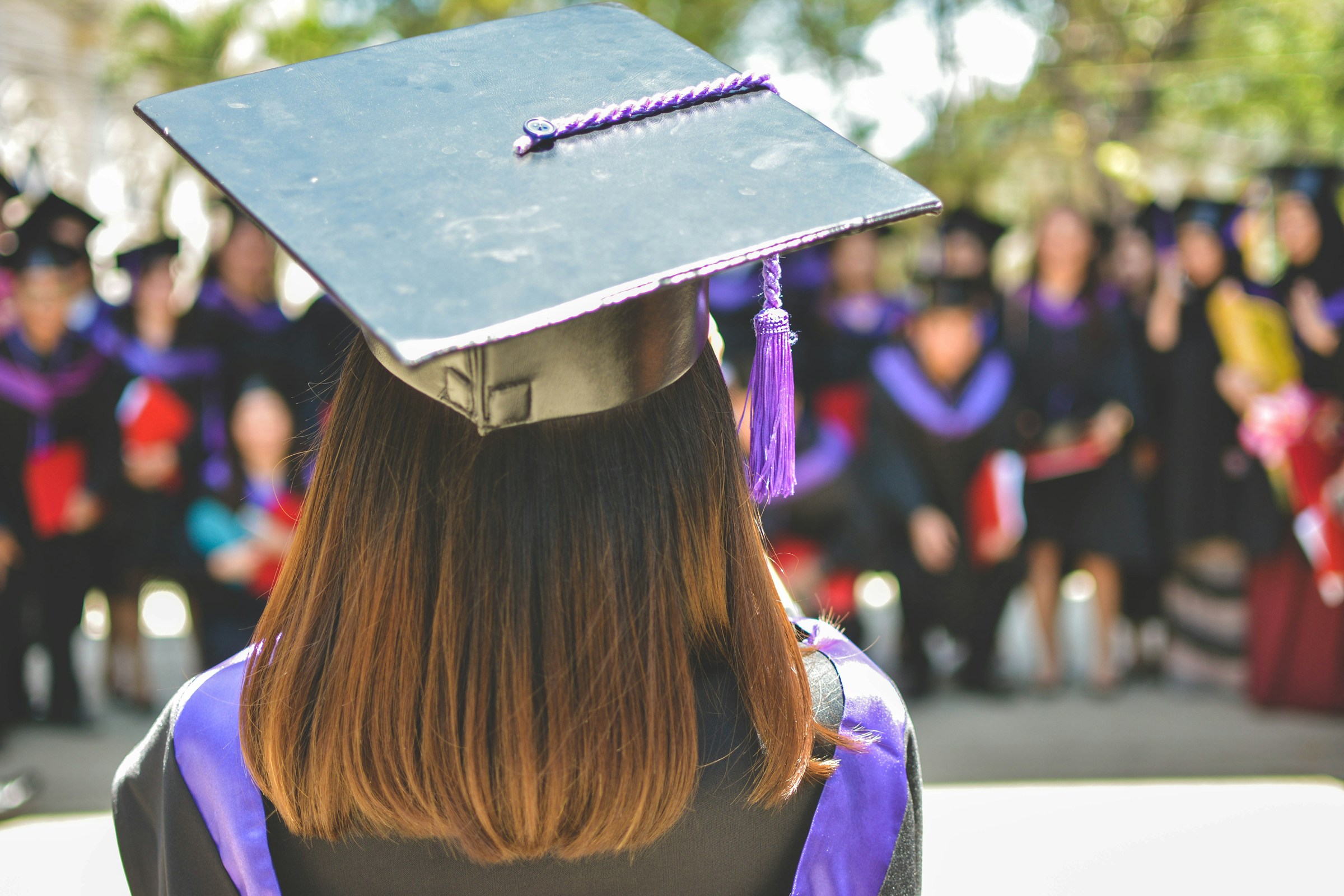

“I have never felt time pass so quickly before. The semester moved with a speed that felt like a blur, but for all the wrong reasons. Now I’m looking at these complex legal doctrines, and I’m just lost. The teachers didn’t cut the syllabus; they just compressed the timeline. I’m sitting here drowning in information I was supposed to learn weeks ago.”
This is how Ali Akbar, a sixth-semester LLB student at NUST, describes the fractured reality of his education. His experience serves as a sobering reminder that while the ‘Peace of Islamabad’ was a victory for the state, it was a compromise for the student. For thousands like him, national significance and academic fairness were never weighed on the same scale.
In April 2026, Pakistan brokered a historic ceasefire between the United States and Iran, welcoming both delegations to the capital for peace talks. The world watched with admiration; Islamabad was, briefly, the most important city on the planet. For the students enrolled at its universities, however, the experience was something else entirely. It wasn’t the hopeful silence of a ceasefire that defined their month, but the heavy, anxious quiet of a semester gutted from the inside.
The first round of US-Iran talks, held on April 11 and 12 at the Serena Hotel, triggered an administrative response that stretched far beyond those two days. International Islamic University Islamabad (IIUI), COMSATS, NUST, QAU, Fatima Jinnah Women University, and Arid Agriculture University all shifted to online delivery. Rawalpindi Medical University
postponed examinations outright. Security arrangements, sealed roads, and the general lockdown of the capital meant that even after the delegations left, campuses did not simply reopen. By the time the dust settled on round one, students had lost nearly two weeks of in-person instruction.
Then, before they could find their footing, a second round of talks was announced. Universities called off in-person classes again for roughly a week in anticipation of delegations that, in the end, never arrived. While the talks collapsed, the students lost the week regardless. By the time campuses were fully operational again, nearly three weeks of critical academic time was gone.
Ali Akbar describes the problem with online legal education plainly. “You cannot study law the way you study other subjects online,” he says. “It is not just readings. It is building arguments. It is sitting across from someone and building a case in real time. That does not happen over a screen, because students mostly have their cameras off and mics on mute.”
He is now days away from finals, and his confidence is not where it should be. “The syllabus was technically completed, but I have sections of criminal law I read and did not absorb. I will sit the exam, but I cannot tell you I feel ready the way I should in my sixth semester.”
For a final-year Data Science student at FAST-NUCES, April was supposed to mean one thing: finishing his Final Year Project (FYP). “The closures hit right when I needed my supervisor the most,” he says. “Everything moved to email threads and rescheduled calls. The feedback loop, which is needed most in a final year project, just broke down.”
An FYP is not a solo exercise; it requires sustained collaboration. Remote communication
fractured that process at the worst possible moment. “I have no idea if what I submitted reflects what I actually learned or just what I managed to put together under the circumstances.”
For the thousands of students who live in campus hostels, the closures created a unique kind of isolation. While the government suspended public transport and sealed the motorways to secure the capital, students from far-off regions found themselves trapped.
“I couldn’t go home to Gilgit because all transport in and out of the city was halted,” says one female student at QAU. “It was incredibly difficult to watch my friends from other cities take their classes from the comfort of their homes, spending time with their families. Meanwhile, we were restrained in nearly empty hostels, cut off from the city and our homes alike.”
A notification moving a semester online assumes every student has a stable environment to pivot to. For those stuck in hostels without the usual campus buzz or library access, it was an impossible transition. They were not local residents managing a work-from-home inconvenience; they were students from across Pakistan who were suddenly stranded.
For a fourth-semester Business Data Analytics student at COMSATS, the disruption was both academic and logistical. His community service project, a mandatory group assignment, came to a complete halt. “You cannot do community service from your bedroom. Now I do not know what implications these disruptions will have on my grade,” he explains.
He had built a daily structure around being on campus: commute, attend, eat, study, and go home. The closures dissolved that anchor, replacing it with the ambient noise of a house, a family, and a news cycle covering a war being negotiated just a few kilometers away.
The necessity of this academic paralysis is questionable, especially since the blueprint for a solution already exists. The COVID-19 pandemic proved that a shift to online learning does not have to be a desperate or last-minute scramble. It showed us that education can be resilient enough to cross the digital divide, but only if the shift is a pre-planned hybrid model rather than an emergency reflex. Universities must move beyond treating online classes as a temporary band-aid. By integrating a permanent hybrid infrastructure where students and staff are as comfortable in a virtual seminar as they are in a physical lecture hall, the academic whiplash of sudden closures could be replaced by a seamless transition that preserves the integrity of the syllabus.
Beyond the classroom, the logistical approach to Islamabad’s security requires a modern overhaul. The current strategy of sealing major arteries with containers is an analog solution in a
digital age. To protect both its diplomatic reputation and its residents, the federal capital could invest in smarter and more surgical security protocols. Enhanced surveillance, designated green corridors for public transport, and localized security perimeters could allow high-profile delegations to move safely through the city without bringing the lives of thousands of students to a standstill. The capital should not have to choose between hosting the world and educating its youth.
Geopolitics operates on a grand scale, but education happens on a human one. When those two worlds collided this semester, the national interest was protected, but the individual student was left to manage the fallout alone. The delegations flew home, and the ceasefire held, more or less. While the students of Islamabad sit down for finals they never felt ready for, the lesson they have learnt is that national success is hollow if it comes at the expense of individual growth. They have fulfilled their part of a difficult semester; it is now up to the city to ensure they are never left to manage the fallout.

Comments are closed, but trackbacks and pingbacks are open.