
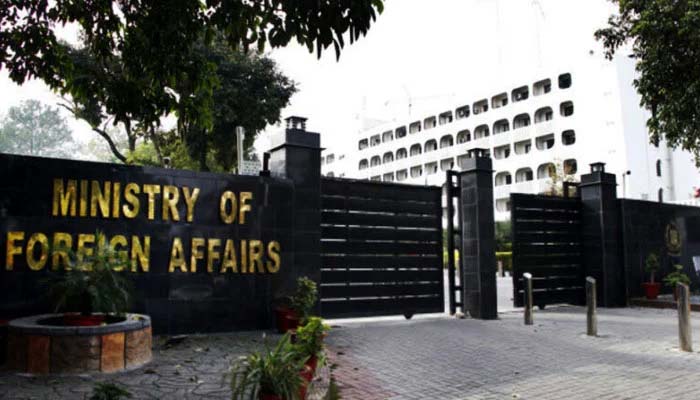

Pakistan – (Staff Reporter/Web Desk) – Pakistan Foreign Office clarifies Iran sanctions remark after several Iranian news outlets quoted its spokesperson in a way officials say was inaccurate. The government stated on Wednesday that its actual position had been twisted in translation.
Officials explained that Pakistan does not, as a rule, comment on the sanctions the United States places on Iran. They also said the country avoids offering opinions on how such sanctions should be read or applied.
The confusion started when Iranian media outlets shared remarks credited to Foreign Office spokesperson Tahir Andrabi. Those reports claimed Pakistan would keep trading with Iran under international law and did not see itself bound by one-sided US sanctions.
According to the same reports, Pakistan has long opposed sanctions that are imposed without wider global agreement. However, Islamabad now says this framing does not match what was actually communicated.
The Foreign Office added that Pakistan’s real focus stays on its role as a mediator. Officials said the country wants a fair and workable end to the ongoing tension between Washington and Tehran.
Pakistan also reaffirmed that it plans to keep playing an honest and helpful part in easing the standoff. The goal, officials said, is peace built through talks rather than pressure or confrontation.
This clarification comes right after the US rolled out fresh sanctions on Monday. These new steps mark a shift in the conflict, moving the focus away from missiles and airstrikes toward economic pressure.
The updated sanctions target Iran’s oil income, its banking system, and countries that trade with it. US Treasury Secretary Scott Bessent said Washington intends to choke off the financial support keeping Iran’s economy running.
A naval blockade led by the US is also limiting how much oil Iran can export. This move further restricts Tehran’s access to foreign currency and global markets.
Bessent warned that any nation continuing trade with Iran could risk losing access to the dollar-based financial system. He did not share a firm deadline, saying countries would be given some time to adjust.
Iran responded sharply, calling the expanded sanctions an example of lawlessness. Tehran’s government said it expects many nations to reject joining this pressure campaign against it.
Iran’s Foreign Ministry went further, saying the sanctions threaten international law itself. The ministry argued that this issue now reaches beyond Iran alone and affects global norms.
The statement added that no self-respecting nation should accept this kind of bullying behavior. It stressed that sovereignty and national interest should not be sacrificed under outside pressure.
Despite the tension, there are small signs that mediation efforts could restart. The war, which began after US and Israeli strikes on Iranian targets, has badly disrupted shipping routes.
The Strait of Hormuz, a key passage for global oil and gas shipments, has seen most traffic come to a halt. This route once carried close to a fifth of the world’s oil and LNG shipments.
As pressure builds on multiple fronts, Pakistan’s position remains carefully worded. Islamabad appears keen to avoid taking sides while still offering itself as a bridge between the two nations.
For now, the Foreign Office clarification serves as a reminder of how easily statements can be misunderstood in a high-stakes diplomatic environment. Officials say Pakistan’s core stance has not changed, even if the reporting around it briefly suggested otherwise.
Comments are closed, but trackbacks and pingbacks are open.