

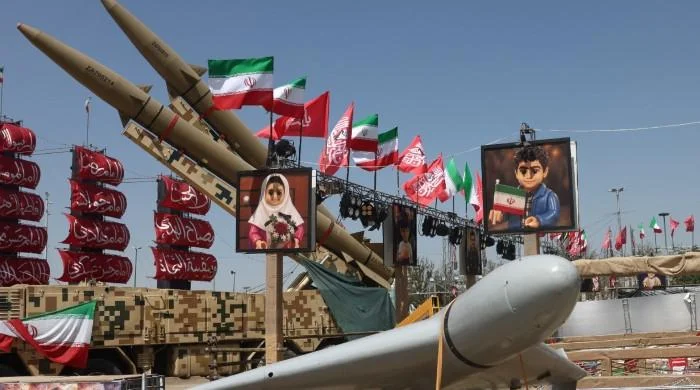
UAE Suspends Trade With Iran After Ballistic Missiles Near Fujairah
Emirates cuts all economic ties with Tehran after detecting ballistic missiles near Fujairah waters, deepening Gulf tensions

UAE – (Special Correspondent/Web Desk) – The United Arab Emirates has suspended all trade with Iran, halting every commercial and financial link between the two countries until further notice. The decision follows a tense night in which UAE air defence systems tracked two ballistic missiles launched from Iranian territory. Officials say the move marks one of the sharpest breaks in Gulf economic relations in recent memory.
The UAE Foreign Ministry announced the suspension early Wednesday. In its statement, the ministry pointed to regional escalation that it said was putting both local and global peace at risk. The wording was firm, leaving little room for interpretation about how seriously Abu Dhabi is treating the incident.
The trouble began Tuesday when the UAE Ministry of Defence confirmed it had picked up two ballistic missiles heading toward Emirati territory. This was the first such launch detected since a strike hit Fujairah port back on May 4. For weeks before that, things had been relatively calm along this stretch of coastline.
Defence officials later clarified that the missiles appeared to be aimed at maritime traffic rather than land targets. Both missiles ultimately fell into the sea without causing any damage. Still, the incident triggered a wave of concern among residents and shipping operators alike.
An emergency alert went out to phones across the UAE, warning people of a possible missile threat. Not long after, a second alert followed, telling residents the situation was under control and normal life could resume. That back-and-forth left many people uneasy, even after officials confirmed there was no lasting danger.
Iran Pushes Back Hard
Iran wasted no time responding. Foreign ministry spokesperson Esmaeil Baghaei dismissed the UAE’s account as baseless early Wednesday morning. He urged countries across the region to stop making what he called unfounded accusations against Tehran.
Baghaei didn’t stop there. He argued that any honest assessment of the situation needs to factor in what he described as ongoing harmful actions by the United States and Israel. He also referenced a pattern of alleged false-flag operations in the region, suggesting the missile claims might not tell the full story.
This kind of denial isn’t new. Iran has repeatedly rejected accusations tied to attacks on Gulf shipping and infrastructure, even as evidence has piled up pointing toward Iranian involvement in several previous incidents.
A Fragile Window Just Closed
Timing matters here. The missile launch came right after a 60-day window for peace talks between the US and Iran quietly expired on Monday. No breakthrough was reached during that period, and now fears are growing that the region could be heading into another round of escalation.
This diplomatic window had disrupted shipping through the Strait of Hormuz since February, one of the most critical oil transit routes on the planet. With talks stalled and missiles back in the sky, shipping companies and energy markets are watching closely for what comes next.

UAE Says It’s Ready for Anything
The Ministry of Defence didn’t mince words about its readiness. It stated plainly that it remains fully prepared to deal with any threats and will firmly confront anything aimed at destabilizing the country’s security. That kind of language signals the UAE isn’t backing down, even as tensions climb.
This posture fits a broader pattern the UAE has shown throughout the ongoing regional conflict. Officials have consistently paired diplomatic statements with reminders that their military capabilities remain on standby.
Not the First Accusation This Year
This isn’t the only friction point between the two nations recently. The UAE had already accused Iran of targeting its state-owned ADNOC vessels while they were transiting the Strait of Hormuz. Those accusations added fuel to an already strained relationship.
Iran, for its part, has never claimed responsibility for those ADNOC vessel attacks. However, the country’s Revolutionary Guards have made their position clear in the past, warning that ships tied to Tehran’s adversaries or those ignoring Iranian directives could face consequences while passing through the strait.
Taken together, these events paint a picture of a relationship that has been deteriorating for months, with each incident chipping away at whatever trust remained between Abu Dhabi and Tehran.
Why This Matters for the Region
Trade suspensions of this scale rarely happen overnight. The UAE has historically maintained economic ties with Iran even during periods of political tension, given the deep commercial links between Dubai and Iranian markets. Cutting that connection entirely signals just how seriously officials are treating this latest missile incident.
Regional analysts will likely be watching to see whether other Gulf states follow the UAE’s lead or take a more cautious approach. The Strait of Hormuz remains central to global oil flows, and any disruption there tends to ripple far beyond the immediate region.
For now, the situation remains fluid. Both sides have made their positions public, but neither has offered concrete steps toward de-escalation. Residents across the UAE are left watching official channels for updates, while shipping companies reassess risk along one of the world’s busiest maritime corridors.
As tensions simmer, the coming days could prove decisive in shaping whether this becomes a temporary flashpoint or the start of a longer, more serious confrontation between the two nations.
Comments are closed, but trackbacks and pingbacks are open.