
Pakistan Announces US-Iran Peace Deal, Signing Set for June 19 in Switzerland
How Pakistan's Role in the US Iran Peace Deal Shaped a Historic Agreement

US vs IRAN PEACE DEAL – (Web Desk) – Pakistan’s role in the US Iran peace deal has been widely praised after Prime Minister Shehbaz Sharif announced on Monday that a historic agreement between the United States and Iran has finally been reached following weeks of intensive diplomatic talks.
The peace deal brings an immediate and permanent end to military operations on all fronts, including Lebanon. The official signing ceremony is scheduled for June 19 in Switzerland.
Pakistan Steps Up as Key Mediator
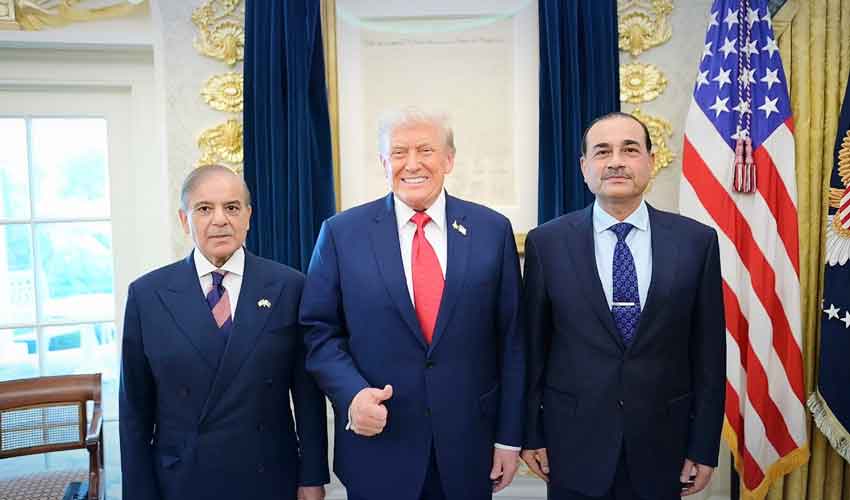
Pakistan has been quietly working behind the scenes for months, carrying messages between Washington and Tehran at a time when both sides could not talk directly. Prime Minister Shehbaz Sharif held talks with Iranian President Masoud Pezeshkian and stayed in regular contact with the US side throughout the process.\
Following intensive talks, we are pleased to announce that the Peace Deal between the United States of America and Islamic Republic of Iran has been REACHED. Both sides have declared the immediate and permanent termination of military operations on all fronts, including in…
— Shehbaz Sharif (@CMShehbaz) June 14, 2026
Senior military leadership also played an important part. Chief of Army Staff Field Marshal Asim Munir reportedly spoke with President Donald Trump at a critical moment when the US was considering further strikes on Iran.
Trump Confirms the Deal
US President Donald Trump confirmed the agreement on his Truth Social platform on Sunday evening, writing that the deal with the Islamic Republic of Iran is now complete. He also announced the end of the US naval blockade and said the Strait of Hormuz would reopen on Friday once the deal is formally signed.
Trump said that many past presidents tried and failed to achieve peace with Iran, adding that regional leaders had now found a US president who could help them reach real and lasting peace.
What the Deal Includes
Iran’s Deputy Foreign Minister Kazem Gharibabadi confirmed that a broader agreement covering sanctions relief will be negotiated during a 60-day ceasefire period. The future of Iran’s nuclear programme will also be addressed during those follow-up talks.
The deal is expected to bring relief to global energy markets. Iran had effectively blocked the Strait of Hormuz for months, pushing oil prices higher around the world. Trump said ships can now prepare to move freely once again.
Qatar and the World Welcome the Agreement
Qatar’s Prime Minister Sheikh Mohammed bin Abdulrahman Al Thani welcomed the agreement and specifically thanked Pakistan for helping create conditions that made it possible. He called on all parties to engage in upcoming negotiations with a positive and constructive spirit.
We welcome the agreement reached on the Memorandum of Understanding between the United States of America and the Islamic Republic of Iran. We extend our thanks to our brothers in the Islamic Republic of Pakistan, as well as to all regional and international parties that…
— محمد بن عبدالرحمن (@MBA_AlThani_) June 14, 2026
British Prime Minister Keir Starmer also welcomed the deal and stressed that freedom of navigation in the Strait of Hormuz must now be fully restored.
Pakistan’s Diplomatic Achievement
This agreement marks a significant moment for Pakistan on the world stage. Islamabad has rarely been called upon to mediate in such high-stakes international conflicts, but it stepped into the role effectively by maintaining trust with both sides.
My statement on today’s agreement between the United States and Iran. pic.twitter.com/taQZufv7ij
— Keir Starmer (@Keir_Starmer) June 14, 2026
Pakistan’s Foreign Minister Ishaq Dar played an active role in bringing regional partners together, including Saudi Arabia, Turkey, and Egypt, to support the diplomatic push.
Prime Minister Shehbaz Sharif also credited Qatar, Saudi Arabia, and Turkey for their valuable contributions in reaching the agreement.
Mediators will now facilitate a series of meetings this week. Pre-implementation discussions are expected to lay the groundwork for technical talks ahead of the official signing on June 19 in Switzerland.
Comments are closed, but trackbacks and pingbacks are open.