
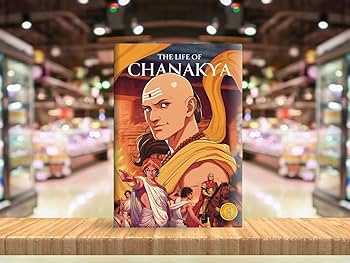

Chan kaya Kautiliya was the realist, a political thinker, proved to be a best advisor and inspiration for many rulers. Likewise, he is also entitled to be an Aristotle and Plato of India. He stated many rules for governance and included several beneficial life lessons. His student Chandragupta was the former and emperor of biggest Hindu empire and this will not be wrong if we say that this empire was formed as revenge by defeating the very powerful dynasty but this all was possible due to strategies and guidance of Kautiliya. We will study about his principles which he wrote in his famous book named as “Arthashastra” is on war and diplomacy. His book is further divided into fifteen chapters while ten discussed war, diplomacy and politics while other five includes economic, governance and other factors. Here are his few principles of war:
His first point was related to Peace as he says that the king will only surrender or will go towards the peace deals which include giving aids, offering attractive deals, welcoming mediators and doing the negotiations when he will be weakened or near to lose the war. This principle means when in a war the opponent is weak and is facing a heavy loss as well as he is near to loose so he will try all his best to end the war to avoid defeat, losses and unnecessary war penalties. In modern times you can take example of US Iran war. As in this war, US President Trump wants to end the war because of heavy losses and over burden and he cannot manage to have the war longer so he is threatening, asking for deals and wants peace. One more example includes Indo China war 1962 as Americans were around 4800 in Afghanistan and mostly have left it but Taliban’s are in power and majority in Afghanistan that’s why US has decided to have a peace instead of war even Taliban’s are never liked by them. Hence, this is a strategy given by Chan kaya that you should resort an issue instead of going for war with your powerful enemy.
His second point is war as he mentioned three types of war. First is open war, secret war and undeclared war. He says that when a state is powerful and the rule of balance of power is disturbed so the state always attack on weaker states. This theory is also linked with modern times as core states are attacking and exploiting the weaker nations. States having the military, economic, strategic strengths are always compelled to attack on inferior nations. India always follows the same strategy and attack on weaker nations. India’s policy in Kashmir is really shameful and humiliating across the globe as it is showing the aggression and cruelty on innocent Kashmiris. Same goes in Indo Pakistan war of 1965, when India held a war against Pakistan because he was stronger both militarily and in other aspects but after balance of power as Pakistan become a nuclear state India was reluctant to have its aggressive policies and in 2001 and 2002 India indeed imposed his troops in borders but didn’t dare to attack due to Pakistan’s deterrence policy and strength. If we look globally so we can have a very clear and perfect lying example of recent times when US-Israel attacked Iran because they thought Iran to be a weaker nation and would be a very easy victim to hunt but proved wrong.
Second war is the secret war means attack at one side will cause an attack in other side. It implies on India’s proactive military operations after 2006. As India get to know thst attacking Pakistan was very risky so it decided to have a secret attack instead of involving borders. India’s action was to punish Pakistan in a small faction or a minor attack in result of any attack in India by taking care of not escalating tensions.
Third important type of war is undeclared war which includes hidden tactics or elements for war. This includes spies in most the cases. We has seen many of Indian agents operating in Pakistan and Iran against Pakistan which are funding BLA, TTP and many terrorist and anti-Pakistan ideologies. The heavy networks of spy were seen in Bangladesh even after separation. Similarly we have witnessed Mossad agents present in Supreme Council, as civilians and in other major positions in Iran. In 2008 we freed many spies of India. Hence, Chankaya focused much on presence of spy in governments’ intra and inter states.
Third principle includes Neutrality. It means when a king is in position that they believe they are obeying the rule of balance of power and the war will result to have no great victory or even a heavy loss so it is better not to have a war. You have to stay neutral in this situation. Example includes India Pakistan Brass Tack Crisis 1986-87 as I’ve mentioned before that India was terrified and stopped for conducting more violence and stupid strategies against Pakistan. In 2008, after the Mumbai attacks by militants India wanted to have some surgical strikes Pakistan but didn’t attempt them. China and U.S never went for a direct war after balance of power because it leads to much loss without extracting the fruitful results.
Fourth important principle of Chankaya was marching. It is to modernize themselves and to prepare for a war by improving the military and economy. For example India is always preparing for a war as he added S400 and buys raffle jets from France to advance itself and won a battle against Pakistan. Pakistan also conducted the nuclear tests in response for the India’s nuclear tests. China also helps Pakistan militarily and exchange of technology is seen. In modern warfare, we have seen how Russia and China are helping and backing the Iran against America Israel war.
The fifth point is that the king should build an alliance with powerful nations to conquer the war and for his defense. It was also a crucial point in foreign policy. One of the examples includes Saudi Pakistan defense agreement. Other than that is US India Strategic Partnership 2008 both are in close alliance. Same is china and Pakistan friendship. Exchange of military equipment is very commonly seen. India and Israel agreement is very essential in context to this point especially in aerial, naval and land domains. Israel’s advancements influences India so much and India is always looking for it. With alliances America is collaborating with European nations.
Sixth and last point includes double policy, as if you have war with one state so you should not go for war with other nation but should consider it as a friend. Friend of the enemy is also an enemy and enemy of enemy is a friend. This proverb is very famous and can be laid here because at the same time you cannot manage to have the war with two frontiers. Pakistan has problem when it is dealing with BLA, TTP and India at the same time. India is not fighting a war with China directly because he is only considering Pakistan as its enemy so they are not going for a war with it directly but putting all his strengths and efforts to fight with Pakistan.
In contrast to other reformers we will see significant variabilities some of them we will discuss are Machiavelli and Chan kaya are both realists’ scholars and are focusing on state power, governance and maintaining their control and for this they can go to any end and can do anything according to their will for achieving their goals. According to both of them, state and power is the main goal and for it they can adopt any strategy good or bad. In contrast to Machiavelli rules that he mentioned with a state there should be law and order, protection of people with their rights and practice of justice but as Chan kaya mentioned system of spy and his famous proverb tress that are straight are cut first are all emphasizing to states stability more than Machiavelli.
Secondly, one of the famous thinkers Rousseau was a liberalist and focused on sovereignty, modern democracy and legitimacy but Chan kaya was a realist. When Rousseau was focusing on moral principles, law, governance, justice and use of soft power within a state, at that time Chan kaya was focusing on having a hard power, strategies for invasion and maintaining power at all coast even playing with interests and lives of people. According to Rousseau, power belongs to people but according to Chan kaya center of power is the king. Rousseau was advising for giving time to person an formation of such system where people cannot commit any crime because they are not bad by birth but society makes them bad while in study of Chan kaya there is no place of revolt in the strict kingdom and you should not give any chance to people. Punishments should be severe. Instead of positivity and counseling, with fear of punishment people should avoid crime. Your loyalty will completely and purely belong to the king.
Thirdly, Ibn e Khaldun and Machiavelli focused on strong leadership. Both of them believed that leadership has significant role in stability and prosperity of a state. Muslim leaders like Imam Ghazali emphasized and gave some rules for appointing and selecting a perfect ruler and when he will not be obeying the rules so he will left the chair but according to him king is absolute and his power is mandatory. He can do anything for his power. Selection of a ruler and the way of maintenance leads to differentiate with thoughts of Chan kaya. Other than that, Chinese scholar Confucius focused on moral governance but Chan kaya preferred pragmatic ways.
Comments are closed, but trackbacks and pingbacks are open.