
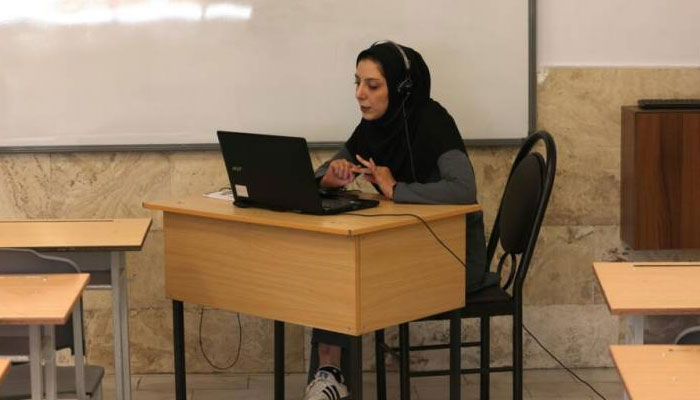
Iranian Families Adjust To Wartime Online Education
Parents Concerned Over Long-Term Effects Of Virtual Learning

ISLAMABAD: (Web Desk) – As the war between Iran, the United States and Israel intensified earlier this year, millions of Iranian families saw their daily routines turned upside down — especially schoolchildren forced into online learning amid continuing security fears.
For 38-year-old Sarah, afternoons are now spent sitting beside her seven-year-old son during virtual classes while managing household responsibilities at the same time. Although a ceasefire has remained in place since April 8, schools across many areas are still closed.
The conflict, which erupted on February 28 following joint US-Israeli strikes on Iranian military and civilian infrastructure, caused widespread destruction, including severe damage to educational institutions. According to Iranian Education Minister Alireza Kazemi, at least 20 schools were destroyed and 279 students lost their lives during the fighting.
European Countries Call Israel to End Settlement Expansion in West Bank
One of the deadliest incidents occurred in the southern city of Minab, where an elementary school was struck in the early days of the conflict, killing dozens of children. Iranian officials reported more than 150 deaths in the attack. A later investigation by The New York Times suggested that a US Tomahawk missile hit the school building.
Parents across Iran say online classes may offer safety, but they have created emotional, educational and social challenges for children. Many mothers now spend hours helping younger students attend classes, complete homework and stay focused.
Another Tehran-based mother, Vahideh Gitifard, expressed concern over the long-term impact of isolation on children. She said students are missing physical activity, direct interaction with teachers and valuable social experiences that schools normally provide.
Despite diplomatic efforts and ongoing discussions between Tehran and Washington aimed at ending the crisis permanently, uncertainty still dominates daily life. Many parents say they remain unwilling to send their children back to school until a formal end to the conflict is officially announced.
Teachers are also struggling to maintain normalcy. At Tolou Sabz School, educator Faezeh Hesarakizad said staff members regularly use webcams and counseling sessions to maintain close communication with students and prevent emotional distance.
The situation has been further complicated by internet disruptions and technical difficulties. Since the beginning of the conflict, Iran has experienced major internet blackouts, forcing teachers and students to rely on domestic online platforms that many parents describe as slow and unreliable.
Educators in rural areas warn that prolonged online learning could seriously damage educational standards, particularly in villages where internet access remains limited or unavailable.
While virtual classrooms continue for now, both parents and teachers say they deeply miss the return of ordinary school life and hope children can soon safely reunite with classmates and teachers once again.
Comments are closed, but trackbacks and pingbacks are open.