

Pakistan presently traverses an exceedingly delicate conjuncture of internal security exigencies, regional diplomatic recalibration, and economic stabilization, wherein the evolving morphology of terrorism, the intensification of cross-border proxy warfare, and the intricate stratagems of contemporary geopolitics have compelled the State’s strategic doctrine toward a markedly multidimensional orientation. Within such a fraught and volatile milieu, the recent pronouncements delivered by Prime Minister Shehbaz Sharif and Chief of Defence Forces Syed Asim Munir may not merely be construed as ceremonial declarations; rather, they constitute an articulate manifestation of Pakistan’s emergent national security paradigm, one wherein military preparedness, political resilience, economic safeguarding, and regional equilibrium are collectively elevated to the status of unified strategic imperatives. The messages articulated during the proceedings at the Command and Staff College in Quetta and the provincial Apex Committee meetings represented, in essence, a lucid exposition of Pakistan’s evolving policy trajectory concerning national security, foreign affairs, and domestic stability.
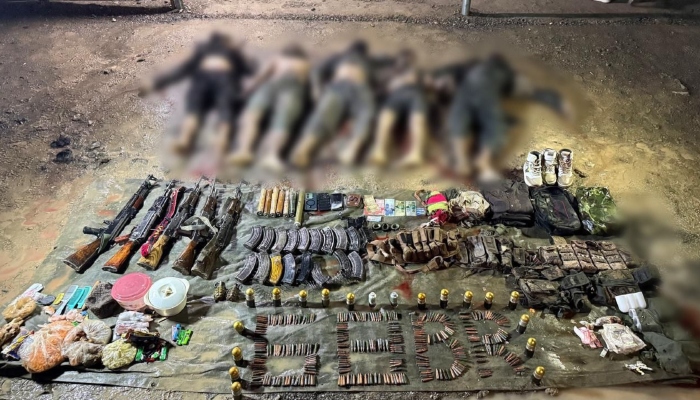
The Prime Minister’s unequivocal reaffirmation regarding the continuation of “Operation Ghazab-ul-Haq,” together with his resolve to proceed uncompromisingly against terrorist proxies affiliated with the Afghan Taliban, fundamentally underscores the State’s recognition that terrorism can no longer be regarded as a mere domestic law-and-order predicament, but must instead be apprehended as an organized and externally sustained transnational security challenge. The violent activities perpetrated in recent years by the proscribed Tehreek-e-Taliban Pakistan and various insurgent formations operating within Balochistan have amply demonstrated that certain regional actors continue to pursue a deliberate strategy of proxy destabilization aimed at eroding Pakistan’s internal cohesion and sovereign stability. Consequently, the State now appears increasingly inclined toward a doctrine characterized not by reactive defence alone, but by anticipatory, pre-emptive, and decisively coercive strategic engagement. The Prime Minister’s assertion that the Afghan Taliban administration must undertake substantive measures against both the TTP and the BLA simultaneously functions as a diplomatic admonition and as a reminder of the obligations inherent within regional statecraft and responsible neighbourly conduct.
Of equally profound significance is the fact that Pakistan, while adopting a stern and uncompromising posture against terrorism, has concurrently reiterated its aspiration for peaceful coexistence and durable regional stability alongside neighbouring states. Such equilibrium between coercive capability and diplomatic restraint constitutes the very cornerstone of sophisticated modern statecraft. Pakistan remains acutely cognizant of the reality that perpetual instability within South Asia and the wider regional geography invariably undermines not only security architecture but also the prospects of sustainable economic advancement. Accordingly, Islamabad appears intent upon cultivating a strategic model in which military strength and diplomatic engagement operate in simultaneous and complementary fashion. Against the backdrop of recent tensions with India, the Prime Minister’s observation that Pakistan adopted a responsible and prudent course of conduct was, in effect, an attempt to communicate to the international community that Pakistan seeks not confrontation but regional equilibrium and stability; nevertheless, such restraint ought under no circumstances to be misconstrued as strategic frailty or political timidity.
Field Marshal Syed Asim Munir further reinforced this broader national narrative by explicitly declaring that external proxies, hostile propaganda mechanisms, and campaigns of psychological warfare would prove incapable of obstructing Pakistan’s trajectory of national development. In the contemporary age, warfare no longer remains confined to territorial frontiers or conventional battlefields; rather, it now unfolds across informational ecosystems, digital narratives, cyberspace infrastructures, and arenas of economic coercion. It was precisely within this context that he emphasized the indispensability of multi-domain operations, emergent technological adaptation, and integrated coordination among the tri-services. Indeed, the rapidly transforming realities of modern military engagement necessitate a corresponding reconfiguration of traditional defence doctrines so as to harmonize them with the evolving dimensions of twenty-first century conflict. Pakistan’s military leadership appears not only fully conscious of this transformation but is simultaneously engaged in substantial institutional preparations designed to accommodate and operationalize these changing paradigms.
The governmental and military emphasis upon Balochistan warrants particularly close examination. Balochistan no longer represents merely a federating province of Pakistan; rather, it has assumed the character of a pivotal axis for the nation’s economic future, mineral wealth, and regional connectivity architecture. Large-scale projects, including the strategically consequential Reko Diq development, possess the potential to profoundly transform Pakistan’s economic orientation in the foreseeable future. Yet the successful realization of such ventures remains inextricably contingent upon the preservation of peace and institutional stability. The Prime Minister’s announcement concerning the establishment of a mineral corridor, supplementary security wings, surveillance grids, and reinforced border checkpoints clearly signifies that the State has now integrated economic security into the broader framework of national security doctrine. Fundamentally, investment capital gravitates only toward environments wherein sovereign authority remains robust, public order is preserved, and policy continuity is rendered both credible and predictable.
It is equally imperative to acknowledge that unrest within Balochistan cannot be interpreted exclusively through the lens of security operations, for it is also deeply interconnected with questions of socioeconomic deprivation, political marginalization, and developmental inequity. It was for this reason that the Prime Minister emphasized the necessity of incorporating the youth of Balochistan into the national mainstream, empowering them through opportunity structures, and redirecting them toward constructive civic participation. In the modern era, successful counterterrorism campaigns are not secured solely through military force; rather, education, employment generation, political inclusion, and social justice constitute equally indispensable instruments within the broader struggle against extremism. Once younger generations are furnished with hope, opportunity, dignity, and a meaningful sense of belonging, the ideological appeal of radical and militant narratives correspondingly diminishes.
Pakistan presently stands at a profoundly consequential crossroads where it is simultaneously confronted by terrorism, economic pressures, regional volatility, and the increasingly pervasive phenomenon of informational warfare. Nevertheless, the recent declarations issued by the State’s political and military leadership collectively convey the unmistakable impression that Pakistan has now adopted a more lucid, dynamic, and comprehensive strategic posture concerning its sovereignty, security architecture, and economic destiny. Should this trajectory continue in conjunction with political stability, institutional harmony, and national cohesion, Pakistan may not only succeed in overcoming the spectre of internal disorder, but may also consolidate its position as a resilient, influential, and strategically consequential power within the broader regional order.
Comments are closed, but trackbacks and pingbacks are open.