
Govt plans nationwide smart lockdown for energy conservation
Pakistan to impose smart lockdown focusing on energy and fuel

ISLAMABAD: (Web Desk – The Federal Government of Pakistan has, in principle, decided to introduce a nationwide smart lockdown, with an official announcement expected soon. The plan focuses on conserving energy, reducing fuel consumption, and promoting a hybrid working model.
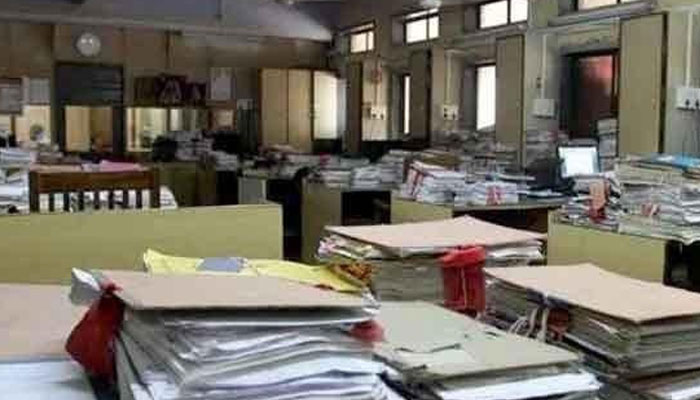
Under the proposed framework, government offices will adopt a one-month hybrid system. Offices operating five days a week will function physically for three days from 8:30 AM to 3:00 PM, while the remaining two days will shift online. For six-day offices, four days will be physical (8:30 AM to 1:30 PM) and two days remote. A 50 percent staff rotation policy will also be implemented to minimize commuting.
Authorities plan to introduce an online attendance monitoring system, ensuring at least 65 percent participation, along with weekly audits of both physical and remote work. Private sector organizations will also be encouraged to adopt at least 50 percent remote work to cut energy and fuel usage.
Strict rules are being proposed for official transport. Senior officials may be required to share vehicles, while the use of official vehicles for personal purposes will be banned. Violations could lead to fuel recovery penalties and possible vehicle confiscation.
Energy-saving measures include restricting air conditioner usage before 10:30 AM and shifting up to 50 percent of office energy consumption to solar power within two months.

IMF Questions Government Plan After Super Tax, Salary Cuts
Educational institutions across Pakistan may also adopt hybrid learning, with a mix of online and on-campus classes, and the option to extend remote learning if needed.
Commercial activities will face time restrictions, with markets and shopping centers required to close by 9:30 PM. Wedding events will be limited to one dish, a maximum of 200 guests, and must end by 10:00 PM.
The plan also includes possible financial adjustments, such as reduced taxes on internet and telephone services, increased property and vehicle transaction taxes, higher toll charges, and discounted railway fares to encourage public transport use.
Additionally, subsidies on electricity and fuel for employees in relevant sectors may be cut by half for three months to reduce government expenditure. A high-level monitoring team, including officials from the Prime Minister’s and Chief Ministers’ offices, will oversee implementation.
Comments are closed, but trackbacks and pingbacks are open.