
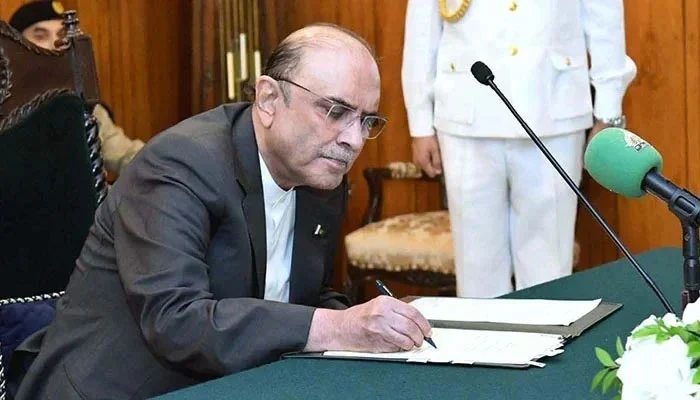
Zardari Approves Judges as Additional Appointments Made to High Courts
President confirms new judicial appointments and okays key benefits for top court judges

President Asif Ali Zardari – (Staff Reporter/Web Deskl) – President Asif Ali Zardari has given his approval for a fresh batch of judges to join high courts around the country. This move comes as part of routine judicial strengthening, and it touches almost every province in Pakistan.
According to an official statement released on Tuesday, the president signed off on additional judges for five high courts. These include the Lahore High Court, Sindh High Court, Peshawar High Court, Islamabad High Court, and Balochistan High Court. This step is expected to help ease pending case loads and speed up justice delivery.
Along with new appointments, the president also confirmed several additional judges as permanent judges. This confirmation applies to judges already serving in the Lahore High Court and Sindh High Court. Making them permanent gives these judges long-term security in their roles.
صدرِ مملکت آصف علی زرداری نے مختلف ہائی کورٹس میں ایڈیشنل ججز کی تقرری اور بعض ایڈیشنل ججز کی توثیق کی منظوری دے دی۔
صدرِ مملکت نے لاہور ہائی کورٹ، سندھ ہائی کورٹ، پشاور ہائی کورٹ، اسلام آباد ہائی کورٹ اور بلوچستان ہائی کورٹ میں ایڈیشنل ججز کی تقرری کی منظوری دی۔
صدرِ مملکت نے…
— The President of Pakistan (@PresOfPakistan) August 11, 2026
In a separate but related move, President Zardari approved changes to bring Supreme Court judges’ pay in line with judges of the Federal Constitutional Court. This means salaries, allowances, and pensions for Supreme Court judges will now match those given to FCC judges. The goal seems to be fairness and consistency across top judicial posts.
The president also gave his nod to amendments in the 1997 order. This order deals with leave, pension, and other benefits for high court judges. These updates are meant to modernize old rules and bring them up to date with current needs.
In addition to judicial matters, President Zardari made another important appointment. He approved Haroon Akhtar as Adviser to the Prime Minister on Industries and Production. This adds a new voice to the government’s economic and industrial policy team.
Legal experts believe these changes reflect a broader effort to reform the justice system. Filling vacant judge positions can help courts handle more cases and reduce delays. Many pending cases in Pakistan’s courts have waited years for hearings, so more judges could bring real relief.
The confirmation of judges as permanent also matters for judicial independence. When judges know their positions are secure, they can work with more confidence and less pressure. This is seen as a positive step for the rule of law in the country.
The pay revision for Supreme Court judges is also drawing attention. Aligning salaries with the newer Federal Constitutional Court shows an effort to standardize benefits across Pakistan’s top courts. This could reduce disputes or concerns about unequal treatment among senior judges.
Overall, these presidential approvals mark a active period for Pakistan’s judiciary. With new judges joining high courts and existing ones gaining permanent status, the courts may see improved efficiency in the coming months. The public will likely watch closely to see how these changes affect case resolution times and overall trust in the legal system.
As government reshuffles continue, more updates on judicial and administrative appointments are expected soon.
Comments are closed, but trackbacks and pingbacks are open.