
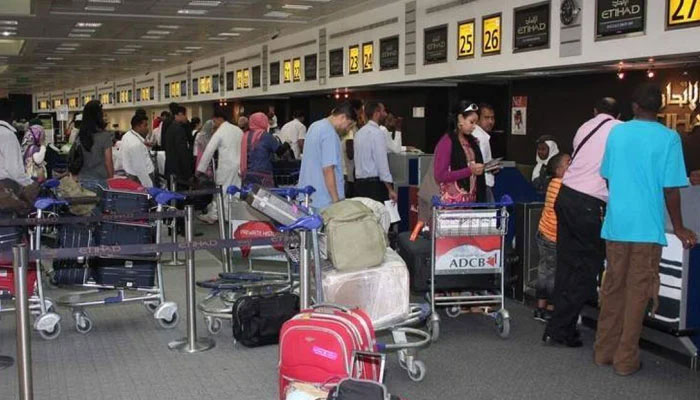

“Send us abroad, even if it means Kenya, Uganda, or Burma.”
These words are not merely an expression of a young person’s desire; they reflect the growing anxiety in our society, where educated, skilled, and hardworking young Pakistanis become exhausted while searching for opportunities in their own country. They become willing to move to almost any country where they see the possibility of finding employment, living with dignity, and supporting their families. The question is: why has our younger generation begun to regard leaving its homeland as a path to success? Have opportunities in Pakistan disappeared, or have we weakened the system that should provide these opportunities to our youth?
Pakistan is a country with a predominantly young population. Young people are the real driving force behind economic growth, industrial production, scientific research, modern technology, entrepreneurship, and national defence. Developed countries invest in education, employment, research, and business opportunities to benefit from the abilities of their younger generations. In contrast, when young people remain unemployed despite earning degrees, when personal connections are given preference over merit, and when the future appears uncertain despite hard work, frustration becomes inevitable.
The major reasons behind the desire of Pakistani youth to move abroad include unemployment, inflation, limited incomes, and economic instability. A young person spends years acquiring an education, while parents invest their savings in the hope that their child will eventually improve the family’s circumstances. However, when that young person submits countless job applications, attends interview after interview, and still fails to find a suitable opportunity, those hopes begin to fade. Even when employment is secured, the salary is sometimes so low that, after meeting personal expenses, the individual is unable to provide meaningful financial support to their parents.
Meanwhile, the rising cost of everyday necessities creates further pressure. House rents, electricity and gas bills, children’s education, healthcare, and food prices make life increasingly difficult for ordinary families. Young people realise that despite working day and night, they cannot feel secure about their future. When they discover that even an ordinary job abroad may offer better earnings and opportunities for professional advancement, their thoughts increasingly turn towards leaving their homeland.
An important question arises here: does every young person who moves abroad dislike their own country? Absolutely not. Many young Pakistanis love their homeland and maintain deep emotional ties with their parents, families, friends, and native soil. They want to remain here, but they also want fair compensation for their work, recognition of their abilities, and a secure future for their children. When these expectations remain unfulfilled, moving abroad becomes not merely a personal preference but an economic necessity.
The problem is not limited to unemployment; inequality in the employment system is another major concern. When young people feel that personal connections, recommendations, and influence matter more than qualifications in securing jobs, their confidence in the system is damaged. Merit is the foundation of any progressive society. If a capable young person is denied an opportunity simply because they lack influential connections, they gradually become disillusioned with their society. Conversely, if they believe that hard work, competence, and honesty can lead to success, they are more likely to strive for a better future within their own country.
The mismatch between the education system and market requirements further aggravates the problem. Large numbers of young people obtain degrees, yet they often lack access to practical skills, modern technology, vocational training, and business experience. Industries require workers with specialised skills, while many graduates complete courses that do not adequately prepare them for available jobs. Education must therefore go beyond the mere acquisition of degrees and be connected with employment, industry, agriculture, information technology, digital commerce, and modern business requirements.
Another important reason for moving abroad is the search for better governance and greater institutional reliability. Young people want legal protection, fewer unnecessary obstacles when starting a business, and a future that does not depend on unpredictable policies. When economic decisions lack continuity, business activities suffer, and investment opportunities become limited, the creation of new jobs also slows down. Under these circumstances, the desire to leave the country becomes stronger.
Social media has also contributed to this trend. Young people observe the achievements, living standards, and lifestyles of their contemporaries in other countries. They realise that opportunities for professional and personal advancement exist in different parts of the world. However, the picture presented on social media does not always reflect the complete reality. Those who move abroad may also face high living costs, language barriers, loneliness, legal complications, discriminatory attitudes, and uncertain employment conditions. It is therefore essential for young people to make informed decisions based on reliable information, legal procedures, and proper planning rather than emotions alone.
The willingness to move to Kenya, Uganda, Burma, or any other country reflects the depth of frustration in which the destination itself becomes less important than the desire to leave Pakistan. However, every country has its own economic conditions, employment opportunities, visa regulations, and legal protections. It is unrealistic to consider any destination a paradise offering easy employment. Young people must remain cautious of illegal agents, fraudulent job offers, and the dangers of human trafficking. The government has a responsibility to provide guidance on safe and legal overseas employment and take effective action against those who exploit job seekers.
Nevertheless, the lasting solution is not simply to prevent young people from going abroad. The real solution is to give them compelling reasons to remain in Pakistan. The government must take practical measures to expand employment opportunities in the private sector, industry, agriculture, construction, tourism, and information technology. Young entrepreneurs should receive accessible loans, training, tax guidance, and business support. Vocational education must be promoted, while universities should provide greater opportunities for research, innovation, and collaboration with industry.
Similarly, merit-based recruitment, transparency in public institutions, policy continuity, and economic stability are essential. It is not enough to describe young people as the nation’s future in speeches; genuine opportunities for employment, education, housing, and professional advancement must be created. The private sector must also provide fair wages, professional training, and clear pathways for career development.
Parents also have an important role to play. Sending children abroad is not inherently wrong, because international experience acquired through legal channels can benefit both individuals and their country. Overseas Pakistanis send valuable foreign remittances, acquire new skills, and establish business connections that can benefit Pakistan. However, if a young person leaves simply because they cannot see a future in their own homeland, the issue demands serious national reflection.
We must also recognise that not everyone who goes abroad will eventually return. When a country loses its best doctors, engineers, scientists, teachers, and skilled workers, the consequences affect its institutions, industries, and overall national development. To reduce this trend, capable individuals must be offered suitable opportunities, research facilities, professional freedom, and compensation commensurate with their abilities. A favourable environment should also be created to encourage those who have gained international experience to return home and invest in Pakistan.
Ultimately, the question remains: why is our younger generation so eager to leave its country? The answer cannot be attributed to a single government, institution, or social group. It is a complex issue rooted in economic hardship, limited opportunities, problems with merit, an uncertain future, and a lack of confidence in the system. The solution lies not in blaming one another but in making a collective national effort.
Pakistan’s young people are not asking for special favours. They want opportunities to work hard, live with dignity, and progress in life. They want their degrees to be more than meaningless pieces of paper, their skills to be valued, and their dreams to become reality. If we can convince them that respectable employment, a better life, and a brighter future are possible within Pakistan, many will reconsider their decision to move abroad.
We must remember that young people are not a burden on a country; they are its greatest asset. Nations that give hope to their youth achieve progress, while those that destroy their hopes risk losing their most valuable people.
The decision is now ours: will we continue to create circumstances that force our young people to leave, or will we build a Pakistan where their first dream is to achieve success while remaining in their own homeland?
Comments are closed, but trackbacks and pingbacks are open.