

By Mudassar Chuhdary 
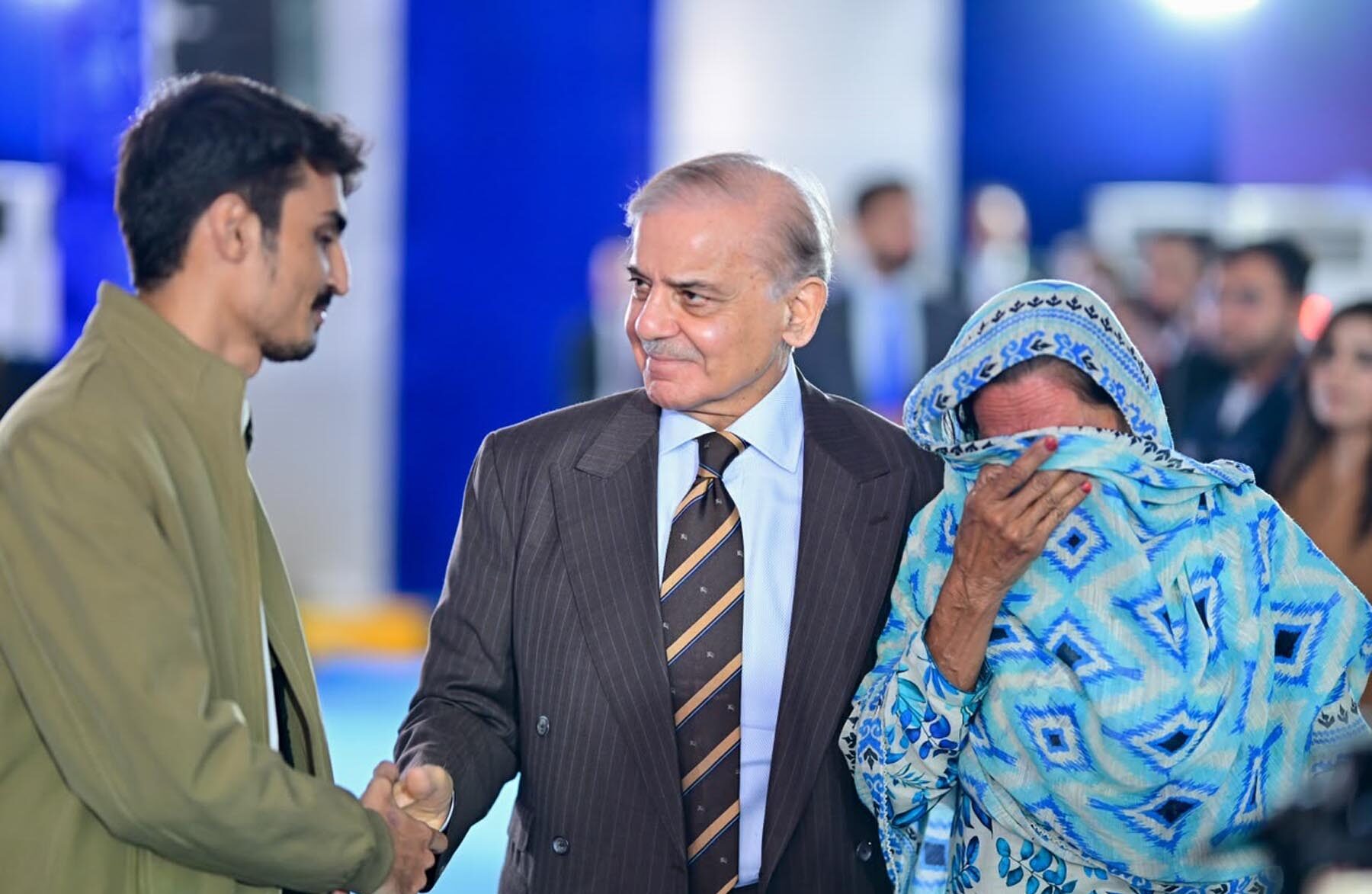
Sometimes, a few words spoken by a child can break the silence of the corridors of power. Sometimes, a tear in a child’s eye can remind an entire nation of its responsibilities. Something of this nature unfolded at the inauguration of Danish School Islamabad on 18 October, when children who had battled deprivation, endured hardship and continued to dream of a better future shared their stories with Prime Minister Muhammad Shehbaz Sharif. As he listened to their accounts, the Prime Minister was visibly moved to tears. It was more than an emotional moment; it was a reminder of a painful reality: countless children in Pakistan possess the talent and determination to succeed, yet remain deprived of opportunities simply because their families lack the financial means to support their ambitions.
One child struggles to continue his education while collecting scrap from rubbish heaps. Another, the daughter of a hardworking tailor, overcomes considerable hardship on her journey towards becoming a doctor. The son of a martyr dreams of supporting his ailing mother, while an orphan from Balochistan looks to education as a means of finding his identity, purpose and place in society. These are different stories, yet they raise the same fundamental question: should a child’s future be determined by the poverty of their parents, or should ability, hard work and determination determine how far that child can go?
The Danish Schools initiative seeks to offer an answer to this question. At the heart of Prime Minister Shehbaz Sharif’s educational vision is the belief that poverty should never become an insurmountable barrier between a talented child and a promising future. The real significance of this vision, however, lies not merely in the construction of educational institutions, but in the broader national principle that Pakistan’s future depends on providing its children and young people with education, skills, confidence and genuine opportunities to succeed.
The Prime Minister’s tears gave the ceremony a deeply human dimension. Yet the greatest hope associated with that emotional moment is that the children’s aspirations will be translated into reality through sound policies, adequate resources and sustained action. The most meaningful expression of a leader’s concern for the younger generation is to ensure that no talented child is left behind simply because their family cannot afford school fees, books or the cost of higher education.
The Danish Schools initiative was conceived around the idea that talented children from disadvantaged and underprivileged backgrounds should have access to quality education, regardless of their families’ financial circumstances. The inauguration of Danish School Islamabad represents a further step in advancing this vision. It is not simply the opening of another educational institution; it is an affirmation of the principle that quality education must not remain the privilege of a particular social or economic class.
Across Pakistan, thousands of children possess remarkable intelligence, potential and determination but are unable to access quality education. Some are compelled to contribute to household expenses at an early age. Others struggle to afford books, uniforms and transport, while many girls are unable to continue their studies because their families cannot meet the associated costs. For these children, an educational opportunity can represent the difference between a future constrained by poverty and one shaped by choice, dignity and achievement.
The educational vision associated with Prime Minister Shehbaz Sharif rests on the principle that economic deprivation should not permanently obstruct a child’s abilities. Poverty does more than limit material resources; it restricts choices, undermines confidence and narrows the horizons of young people. A child may possess intelligence, discipline and ambition, but without qualified teachers, suitable learning facilities, books and access to further education, that potential may never be fully realised.
Danish IT Park Opens New Avenues of Opportunity for Pakistan’s Youth: Prime Minister
This is where the role of the state becomes indispensable. The responsibilities of government extend beyond building roads, bridges and infrastructure. They also include nurturing capable, educated and confident citizens who can contribute meaningfully to the country’s development. Investing in the education of a disadvantaged child is, in essence, an investment in Pakistan’s future. Today’s student may become tomorrow’s doctor, engineer, teacher, scientist, entrepreneur or public servant.
The accounts shared at the inauguration of Danish School Islamabad revealed both the harsh realities of Pakistani society and the extraordinary resilience of its children.
The story of a child collecting scrap from rubbish heaps highlights the difficult choices facing families who struggle to meet even their most basic needs. For such a child, attending school is not an ordinary part of daily life; it is an ongoing struggle against circumstances that can make education seem like an unattainable luxury. The determination to continue studying despite such conditions is a powerful reminder of what young people can achieve when given the right support.
The journey of a tailor’s daughter towards becoming a doctor demonstrates that a family’s financial position should never be mistaken for a measure of a child’s potential. When a girl receives the opportunity to pursue her education, the benefits extend well beyond her own life. She can transform her family’s circumstances, inspire other girls and help break the cycle of poverty for generations to come.
The aspiration of a martyr’s son to support his ailing mother offers another poignant perspective. Some children are forced to shoulder responsibilities far beyond their years. For them, education is not merely a route to a qualification or a well-paid job; it is a means of providing security for their families and living with dignity.
The story of an orphan from Balochistan carries a similarly important national message. Talent is not confined to major cities, nor is ambition the preserve of privileged communities. Children across every province and region have the potential to contribute to Pakistan’s progress. National unity becomes stronger when every child, regardless of geographical location or family background, feels that the state values their future and is prepared to invest in it.
These stories elevate the significance of Danish Schools beyond that of an educational programme. They represent the aspiration for a Pakistan in which a child’s prospects are determined not by wealth, family connections or place of birth, but by ability, effort and character.
Prime Minister Shehbaz Sharif’s emotional response to the children’s accounts was one of the most striking human moments of the ceremony. Their struggles and aspirations served as a reminder that behind economic statistics, development plans and policy announcements are real people whose lives are shaped by the decisions of those in power.
When a Prime Minister listens to the struggles of a child, he is also confronting a picture of the country’s future. Among these children may be the doctor who will treat disadvantaged patients, the teacher who will educate future generations, the scientist who will advance research, or the entrepreneur who will create jobs and contribute to economic growth.
Yet the true value of a leader’s tears lies in what follows. Emotion can reflect compassion and a genuine awareness of human suffering, but the demands of governance require that such concern be translated into lasting policies, effective institutions, transparent administration and measurable outcomes. Being moved by the plight of disadvantaged children is a meaningful human response; establishing a system that reduces their hardship is the practical responsibility that accompanies it.
The Prime Minister’s reaction should therefore be viewed in the context of a wider national debate about the future of Pakistan’s children. Their problems cannot be treated merely as statistics or administrative challenges. Every disadvantaged child represents a reservoir of potential that, given the right opportunities, could become an asset to society.
The lasting significance of the occasion will depend on whether the compassion witnessed at the ceremony is reflected in sustained efforts to improve educational access and outcomes across the country.
Pakistan’s large youth population can become one of the country’s greatest strengths. However, this demographic advantage will only translate into meaningful progress if young people receive quality education, relevant skills, practical training and access to employment.
Constructing a school building is not enough. Educational success also requires competent teachers, modern curricula, science and technology facilities, digital literacy, sports, extracurricular activities and the intellectual and moral development of students. Scholarships, access to colleges and universities, and pathways into technical and vocational education are equally important.
A student who receives an excellent education at a Danish School may still face a significant obstacle if their family cannot afford the costs of university. It is therefore essential to connect these institutions to a broader and more coherent educational system that supports students from school admission through further education, professional training and entry into working life.
Students should also be equipped with more than the ability to seek employment. They need the skills to conduct research, think creatively, solve problems, establish businesses and adapt to emerging technologies. In an increasingly competitive global economy, nations prosper when their young people are prepared for changing economic conditions and new professional opportunities.
Danish Schools could make an even greater contribution if their students were connected with universities, research institutions, industries and the business community. Such links could help transform the initiative from a means of individual advancement into a broader instrument of economic development and human capital formation.
No worthwhile public initiative can achieve lasting success without continuity. Education is a long-term undertaking, and its results often become visible only after years of sustained effort. A child’s intellectual development, personal growth and professional future cannot be secured through short-term planning or occasional announcements.
For Danish Schools, this means regularly assessing educational standards, administration, funding, teacher performance and student outcomes. Admissions should be transparent, information about opportunities should reach eligible families, and the use of public resources should be subject to effective oversight. Parents and the wider public should also be able to understand what the programme is achieving.
It is equally important not to view specialised institutions such as Danish Schools as a substitute for improving Pakistan’s wider public education system. It may not be possible to provide every child with a fully resourced residential school, but it should be possible to work towards better teaching, safer environments, essential facilities and improved learning outcomes in ordinary state schools.
The experience gained through Danish Schools could serve as a model for wider educational reform. If successful teaching practices, management systems and student-support mechanisms are adapted for other public schools, the benefits could extend far beyond the students enrolled in the initiative itself.
Ultimately, the programme must become more than an achievement associated with an individual leader or political administration. Its success will depend on the strength of its institutions, the consistency of its standards and the commitment to educational opportunity across successive governments.
Pakistan needs economic stability, social cohesion and new avenues for sustainable development. Each of these objectives depends, to a significant extent, on the capabilities of its people. A country cannot realise its full potential if its children are denied quality education, its young people lack relevant skills, or its talented citizens are unable to find opportunities to progress.
Conversely, when the state treats education as a national investment, recognises the potential of disadvantaged children and provides them with meaningful opportunities, those children can become the people who strengthen the country’s economy, institutions and society.
The Danish Schools vision represents the hope that poverty need not determine a child’s destiny. A child from a low-income household should be able to aspire to greatness. A girl from a disadvantaged community should be able to dream of becoming a doctor. An orphan should be able to build a secure future for himself and his family. No child should grow up believing that the circumstances of their birth are more powerful than their abilities.
Prime Minister Shehbaz Sharif’s commitment to the initiative, and his emotional response to the children’s stories, have brought renewed attention to the wider question of Pakistan’s responsibility towards its younger generation. Yet the vision can achieve its full potential only when compassion is accompanied by planning, announcements by adequate resources, and hope by tangible results.
The future of a nation is closely connected to the dreams its children carry in their eyes. If those dreams are supported by education, opportunity and confidence, today’s disadvantaged students can become tomorrow’s architects of national progress. When a child is forced to abandon those dreams solely because of poverty, the loss is not merely personal or familial; it is a loss for the entire country.
The fundamental message of Danish Schools is therefore clear: if Pakistan wishes to secure its future, it must provide its children with the opportunity to build one of their own. The hope associated with the Prime Minister’s tears is that this moment of compassion will translate into lasting commitment, ensuring that a child is ultimately recognised not for the deprivation they have endured, but for the potential they possess.
Real progress cannot be measured solely through impressive buildings, ambitious projects or economic indicators. It is also measured when a child from a poor household can stand tall, confident that their dreams matter, their hard work has value and their country offers them a genuine chance to succeed.
That is the promise of Danish Schools—and the hope of a brighter Pakistan.
Comments are closed, but trackbacks and pingbacks are open.