
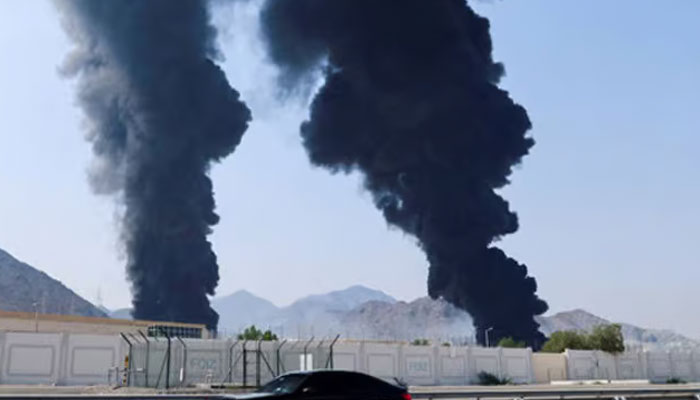
US-Iran Conflict Escalates With Fresh Cross-Border Strikes
Strait of Hormuz Tensions Push Oil Prices Higher

WASHINGTON: (Web Desk) – The United States and Iran exchanged a fresh round of military strikes on Thursday, marking a second consecutive day of escalating hostilities that have heightened tensions across the Middle East and unsettled global energy markets. Reports indicate that both sides carried out retaliatory operations following recent confrontations near the Strait of Hormuz.
According to U.S. Central Command, American forces launched additional strikes targeting Iranian military surveillance systems, communication networks, radar installations, and air defense sites. Washington described the operation as a defensive response aimed at protecting U.S. personnel and commercial maritime traffic operating in the region.
Iran responded by claiming attacks on several U.S.-linked military facilities across the Gulf region, including bases in Jordan, Bahrain, and Kuwait. Iranian state media reported that missile and drone operations were conducted against strategic military targets, while Gulf nations activated air defense systems and issued security alerts in response to the threats.
Iran Spy Cases United States: FBI Posts $200K Reward for Monica Witt
One of the key flashpoints remains the Strait of Hormuz, a critical global energy corridor through which a significant portion of the world’s oil supplies passes. Iranian officials renewed warnings regarding maritime traffic in the area, while U.S. officials disputed claims that the waterway had been fully closed, insisting that commercial shipping continued to transit through the strait.
U.S. President Donald Trump accused Iran of delaying negotiations aimed at ending the conflict and warned of further military action if diplomatic efforts fail. Meanwhile, senior U.S. officials maintained that Washington remains open to a negotiated settlement despite the ongoing military exchanges.
Iran, however, rejected the use of military pressure as a pathway to diplomacy. Iranian representatives at the United Nations argued that sustainable negotiations cannot be achieved through threats or force, while emphasizing Tehran’s position on regional security issues and broader conflict-related demands.
The renewed confrontation has already impacted financial markets, with oil prices rising sharply amid fears of supply disruptions. Analysts warn that any prolonged disruption in the Strait of Hormuz could have significant consequences for global energy supplies and international trade.
International leaders, including António Guterres, have urged restraint and called for intensified diplomatic efforts to prevent the crisis from expanding into a wider regional conflict. Despite the latest violence, mediators continue efforts to revive negotiations and reduce tensions between Washington and Tehran.
Comments are closed, but trackbacks and pingbacks are open.