
PM Shehbaz Shifts Focus to Growth as NEC Approves Rs3.669 Trillion Development Budget
Govt disburses Rs5.4bn fuel subsidy, provides Rs4.61bn support to farmers so far: Senate told

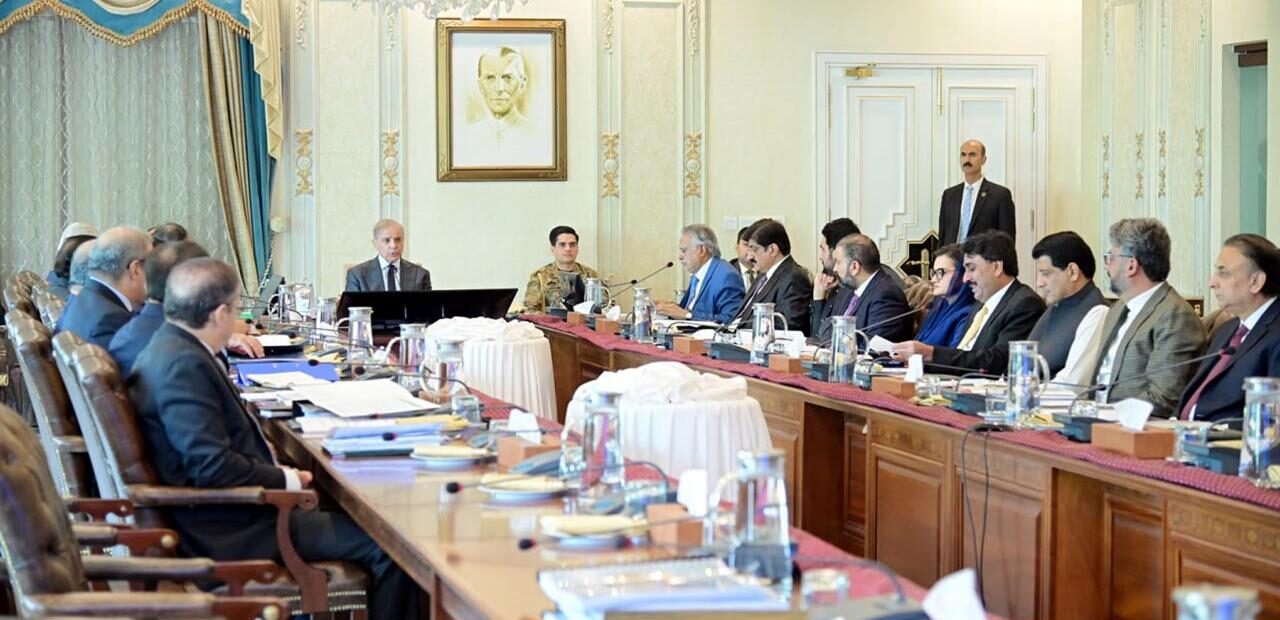
ISLAMABAD-(Mudasssar Iqbal/News Desk)-: Prime Minister Shehbaz Sharif on Wednesday said Pakistan had achieved macroeconomic stability and must now focus on accelerating economic growth, creating jobs, improving public welfare and strengthening the country’s long-term economic foundations.
Addressing a meeting of the National Economic Council (NEC), chaired by him, the prime minister emphasized that economic activity and development were a shared responsibility of both the federal and provincial governments. He appreciated the cooperation of provincial governments during the budget-making process and acknowledged their support in managing resources during difficult economic conditions.
The NEC approved a national development budget of Rs3.669 trillion for the fiscal year 2026-27 and set a GDP growth target of 4 percent. The approved allocations include Rs1 trillion for the Federal Public Sector Development Programme (PSDP), Rs2.218 trillion for provincial Annual Development Programmes (ADPs), and Rs451 billion for State-Owned Enterprises (SOEs).
The council also approved a revised GDP growth rate of 3.7 percent for the outgoing fiscal year and directed federal ministries, provincial governments and public-sector institutions to work closely with the Ministry of Planning to achieve the targets outlined in the Annual Plan 2026-27.
Prime Minister Shehbaz said Pakistan had successfully navigated several economic challenges while remaining within the International Monetary Fund (IMF) programme. Referring to recent regional tensions that pushed up global oil prices, he noted that effective coordination between the federation and provinces ensured uninterrupted fuel supplies across the country and prevented panic among consumers.
Highlighting future priorities, the prime minister stressed the need to boost agriculture, exports and industrial development. He said that despite improvements in macroeconomic indicators, ordinary citizens remained concerned about employment opportunities and access to basic services, making economic growth the government’s next major objective.
The NEC was also informed that the government had approved 11 National Economic Development Missions under the Uraan Pakistan initiative. A comprehensive implementation roadmap will be prepared in coordination with federal ministries and provincial governments.
The meeting reviewed the performance of development institutions over the past year. Participants were informed that the Central Development Working Party approved 116 projects worth Rs316 billion, while the Executive Committee of the National Economic Council approved 72 projects valued at more than Rs5.1 trillion.
In another important development, Prime Minister Shehbaz Sharif ordered a comprehensive review of information technology education in Pakistani universities after expressing concern over the results of a nationwide skills competency test conducted by the Higher Education Commission (HEC).
During a high-level meeting on higher education in the IT sector, officials briefed the prime minister on the outcomes of the National Skills Competency Test, which assessed the abilities of IT graduates across the country. The test involved 33,038 students from 190 higher education institutions.

The results revealed serious gaps in student competencies. Only 0.4 percent of participants scored above 80 percent, while 61 percent failed to achieve even 50 percent marks. Another 21.3 percent scored between 50 and 57 percent, 13.2 percent between 58 and 67 percent, and only 3.6 percent scored between 68 and 79 percent.
Calling the results unsatisfactory, the prime minister directed authorities to conduct a third-party audit of IT education and training programmes offered by universities nationwide. He also instructed relevant institutions to prepare a roadmap focused on emerging technologies such as artificial intelligence, robotics, data science and other advanced fields.
“Young people must be equipped with skills that meet global industry demands,” the prime minister said, stressing that Pakistan’s youth remain the country’s greatest asset and a key driver of exports, investment and digital economic growth.
Meanwhile, the prime minister expressed satisfaction over record remittances of US$4.3 billion received from overseas Pakistanis during May 2026. According to official figures, remittances increased by 20.2 percent compared to the previous month and by 15.4 percent on a year-on-year basis.
Shehbaz Sharif described overseas Pakistanis as a valuable national asset and said the increase in remittances reflected their confidence in the country’s economy and reform efforts.
On the security front, President Asif Ali Zardari and Prime Minister Shehbaz Sharif expressed deep grief over the Pakistan Army’s MI-17 helicopter crash near Muzaffarabad. In separate statements, both leaders paid tribute to the personnel who lost their lives in the accident and offered condolences to the bereaved families.
“The entire nation salutes the sacrifices of our brave soldiers,” the prime minister said, praying for the elevation of the martyrs’ ranks and strength for their families.
Separately, Members of the National Assembly Chaudhry Naseer Ahmed Abbas and Saad Waseem called on Prime Minister Shehbaz Sharif and briefed him on ongoing development and public welfare projects in their respective constituencies. They also presented proposals for new initiatives and discussed local political matters.
The developments underscore the government’s efforts to transition from economic stabilization toward growth, while simultaneously addressing challenges in education, human capital development, infrastructure, and public welfare. With a new development budget, ambitious growth targets, record remittances and a renewed focus on technology and skills, the government aims to lay the foundation for sustainable economic progress and long-term national prosperity. While,Minister for Finance and Revenue Muhammad Aurangzeb on Wednesday informed the Senate that the government had disbursed Rs5.4 billion so far under a targeted fuel subsidy programme besides providing Rs4.61 billion support to small farmers in view of rising international fuel prices.
Responding to a Calling Attention Notice moved by Senator Mohsin Aziz about the recent increase in prices of petroleum products and its impact on costs of industrial productions and national economy, the minister said the government announced the relief package after tensions in the Middle East led to an increase in global oil prices.
KP Unveils Rs2.25 Trillion Budget for FY2026-27
He said an overall subsidy of Rs129 billion was provided to reduce the burden on the public.
Aurangzeb said the government initially offered a general subsidy but later shifted to a targeted programme so that relief could reach motorcycle owners, public transport users, transport operators and small farmers.
He said around 800,000 motorcycle owners had benefited from the scheme, while financial assistance ranging from Rs35,000 to Rs100,000 was provided to passenger and goods transport vehicles.
The minister said Rs3.5 billion had been distributed among more than 105,000 eligible vehicle owners in the first phase, while another Rs1.9 billion had been disbursed among over 65,000 beneficiaries in the second phase through a transparent verification system based on vehicle registration data.
He said the programme was implemented with the cooperation of provincial governments to ensure that relief reached deserving people and to help keep transport fares under control.
Aurangzeb said the government would continue efforts to protect low-income groups from the impact of higher fuel prices while maintaining economic stability. He said that further details about the economy would be shared during the presentation of the Economic Survey and the federal budget.
Comments are closed, but trackbacks and pingbacks are open.