
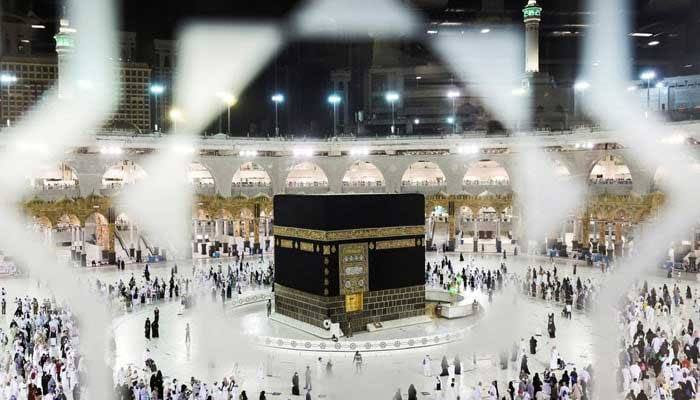
The Security of the Land of the Two Holy Mosques Is the Voice of the Entire Muslim Ummah
By: Muhammad Siddiq Anzar

For the first time, Saudi Arabia has witnessed the rise of a young and capable leadership that has presented a new vision for the future of the Kingdom. Under the dynamic leadership of Crown Prince and Prime Minister Mohammed bin Salman, Saudi Arabia is moving away from traditional dependencies and increasingly pursuing independent economic and political decisions.
At the heart of this policy is the objective of protecting Saudi Arabia from unnecessary external influence while placing its national interests at the forefront. This independent approach has not been welcomed by certain global powers, which appear determined to exert pressure on Saudi Arabia through different means and strategies.
The Saudi Vision 2030, under the leadership of Mohammed bin Salman, has provided a clear direction for the Kingdom’s economic transformation. Major development projects, the promotion of tourism, opportunities for international investment, economic diversification and new employment prospects for young people are giving the Saudi economy a new identity.
At the international level, Saudi Arabia’s role has also become increasingly significant. The Kingdom plays an influential role in global energy markets, Middle Eastern peace and stability, affairs of the Muslim world and international diplomacy. Maintaining balanced relations with major global powers while effectively safeguarding Saudi national interests is one of the notable characteristics of its present leadership.
Today, as the world passes through an extremely sensitive and decisive period, the Middle East has once again become a center of competition among global powers, regional interests and changing strategic alliances. In such circumstances, Pakistan’s support for the security, sovereignty and stability of Saudi Arabia is not merely an ordinary foreign-policy decision. It is also a historic, moral, Islamic and fraternal responsibility.
Saudi Arabia is not merely a friendly country for Pakistan. It is the land where the Holy Kaaba and the Prophet’s Mosque ﷺ are located. It is a country with which the Pakistani people share an extraordinary emotional and spiritual bond. It is also a state with which Pakistan has maintained a relationship of friendship, trust and mutual support through difficult periods.
The complex strategic situation facing Saudi Arabia today cannot simply be viewed as a conflict limited to Yemen. The advancement of Houthi forces, the situation in the Red Sea and the Bab el-Mandeb Strait, the regional role of Iran and its allied networks, the changing strategy of the United States, and the security concerns of the Gulf states are all interconnected issues.
Recent developments around the Bab el-Mandeb have increased concerns regarding international trade and energy transportation. For Saudi Arabia, the issue is directly connected to national security, maritime security and the protection of its economic and energy interests.
Pakistan’s position on the Yemen issue is clear and balanced, and it supports the security of Saudi Arabia. Pakistan wants peace in Yemen, understands the suffering of the Yemeni people and supports any solution that safeguards Yemen’s sovereignty, territorial integrity and the future of its people.
However, this does not mean that attacks against Saudi Arabia, strikes against its installations, or actions that threaten its maritime and territorial interests should be tolerated silently. Saudi Arabia has every right to protect its territory, its people and its national security.
It must also be recognized that the situation in Yemen is no longer confined to Yemen itself. The Bab el-Mandeb Strait is one of the world’s most important maritime routes, and instability there can affect international trade, oil transportation and the global economy. The importance of the Red Sea for Saudi Arabia has therefore increased significantly, particularly at a time when the Strait of Hormuz is also facing serious geopolitical tensions.
The role of the United States is also extremely important in this changing environment. Saudi Arabia and the United States have maintained decades-long defense, economic and security cooperation. However, the current situation has placed Washington’s policy before a difficult strategic test. While Saudi Arabia seeks international support in confronting threats posed by the Houthis, the United States appears cautious about becoming directly involved in another major military campaign.
In this changing environment, the importance of Saudi Arabia for Pakistan has become even greater. Pakistan must place its national interests, regional stability and its longstanding brotherly relations above the desire to please any particular global power.
Pakistan-Saudi relations are not merely relations between governments. They are deep people-to-people relations. The Pakistani nation has always expressed its love and respect for Saudi Arabia, while Saudi Arabia has also stood by Pakistan during various difficult periods.
At a time when Saudi Arabia is facing strategic pressure from different directions, Pakistan has made it clear to the world that Riyadh is not alone. Pakistan supports the security, sovereignty and regional stability of Saudi Arabia and has also expressed its position at the diplomatic level against any aggression directed toward the Kingdom.
This support does not mean a call for war against any country. Rather, it represents a principled position. Pakistan wants the bloodshed in Yemen to end, political negotiations to resume, the Yemeni people to enjoy peace, and all countries of the region to respect one another’s sovereignty.
However, peace does not mean allowing a state to remain continuously exposed to attacks. Sustainable peace can only be established when aggression, armed pressure and attempts to undermine the sovereignty of states come to an end.
At present, every possible means appears to be being used to exert pressure on Saudi Arabia. In such circumstances, it is essential that Pakistan continue to stand by its brotherly country through diplomatic engagement, political support and principled cooperation.
For the Pakistani nation, support for Saudi Arabia is not a temporary emotional slogan. It is a relationship rooted in history, culture, religious attachment and decades of mutual trust. Whenever the security of Saudi Arabia is threatened, the hearts of Pakistanis are deeply concerned because our relationship with Saudi Arabia extends far beyond diplomatic offices—it exists in the hearts of ordinary Pakistanis.
Pakistan-Saudi relations have now entered a new strategic era. Defense cooperation, economic partnership, investment, energy, trade and diplomatic coordination have brought the two countries even closer. In a rapidly changing international environment, this partnership is important not only for Pakistan and Saudi Arabia but also for stability across the Muslim world.
We must also understand that modern wars are not fought only on battlefields. Economic strength, technology, information, cybersecurity, energy security and diplomacy are equally important pillars of strategic power. Saudi Arabia is rapidly advancing in all these areas, and Pakistan should play its role as a reliable partner in this journey.
Today, new alliances are emerging around the world, the nature of traditional alliances is changing, and the balance of power in the Middle East is rapidly evolving. In such circumstances, Pakistan and Saudi Arabia must stand closer to each other than ever before.
Pakistan has strongly supported the sovereignty, territorial security and legitimate right of Saudi Arabia to defend itself, while at the same time encouraging every diplomatic effort capable of bringing lasting peace to the region.
This is not a time for silence. It is a time to reassure friends that difficult moments do not test friendships—they reveal them. Saudi Arabia has stood by Pakistan and honored the bonds of friendship, and now it is Pakistan’s responsibility to stand with its brotherly country through its voice, diplomacy and principled position.
The security of the land of the Two Holy Mosques is the voice of the entire Muslim Ummah. The peace of Saudi Arabia is not merely the peace of Saudi Arabia; it is an important foundation for peace and stability across the region.
For this reason, Pakistan should continue to firmly support Saudi Arabia’s sovereignty, security and legitimate right to defend itself.
The friendship between Pakistan and Saudi Arabia is not merely a memory of the past; it is a source of strength for the future. In today’s difficult global environment, if the two countries continue to stand shoulder to shoulder, they can not only protect their national interests but also establish a new example of peace, stability and development in the Muslim world.
Pakistan stood with Saudi Arabia yesterday, stands with Saudi Arabia today, and will continue to stand with its brotherly country tomorrow in support of its security, sovereignty and stability.

Comments are closed, but trackbacks and pingbacks are open.