


The Iran war reaches a Lahore family living on Rs 30,000 a month through the price of fuel and food and the uncertainty of jobs in the Gulf. Canada’s response shows how much difference public relief can make.
By Malik Muslim Raza Awan
Vancouver, Canada · November 2026
A man in Lahore earns Rs 30,000 a month. Before he pays the rent, he knows where most of his salary will go. There is flour to buy, milk for the children, an electricity bill to pay and petrol for the motorcycle that takes him to work. Then someone at home falls ill. Even a visit to a public hospital can mean paying for transport, a test or medicine. That same month, his niece is getting married. He wants his children to be there and would like to give her a modest gift. He sits down to work out what can wait until payday.
I think of that man when I read the news from the Gulf. A disputed report about a radar in Bahrain seems far removed from his life. But when tankers change course, when diesel costs more to import, or when a Pakistani worker in the Gulf learns that his contract may end, the consequences reach households like his.
A month on Rs 30,000
Petrol fell to Rs 330 a litre on November 14. Even at that lower price, ten litres cost Rs 3,300, or 11 percent of this worker’s monthly pay. The rest of this family-of-four budget is illustrative. It shows how a hospital visit and a wedding can stretch a salary already committed to essentials.
Household expense Illustrative cost
Groceries Rs 16,500Rs 16,500
Electricity Rs 3,500Rs 3,500
Motorcycle petrol, 10 litres10 litres Rs 3,300Rs 3,300
Cooking fuel, water and phone Rs 2,500Rs 2,500
Hospital transport, tests or medicine Rs 2,500Rs 2,500
Wedding travel and a modest gift Rs 2,000Rs 2,000
Total before rent and school expenses Rs 30,300Rs 30,300
Even if the family skips the wedding, it has only Rs 1,700 left for rent and school expenses. Pakistan’s annual inflation eased from 10.3 percent in September to 9.6 percent in October. Yet the weekly index of essential items was 11.21 percent higher than a year earlier in the week ending November 12. A slower rise in prices still leaves the family paying more if its income stays the same.
Pakistan has a way to get cash to households under pressure. Benazir Kafaalat pays eligible families Rs 14,500 every three months, equivalent to about Rs 4,833 a month. In this example, that would cover the electricity bill and leave roughly Rs 1,300. The government itself faces tighter finances. Pakistan reportedly told the IMF that the war cost it Rs 144 billion in tax revenue from July through September. That loss comes at a time when more families have reason to need help.
What I underestimated about Iran
Before the war, I paid too much attention to the public image of Iran’s clerical leadership and too little to its engineers, manufacturers and technical institutions. Years of sanctions had forced Iranian businesses and institutions to adapt to restricted access to foreign goods and finance. I underestimated what the country could produce at home and how much experience it had gained operating under those restrictions. That experience helps explain Iran’s ability to withstand pressure. Ordinary Iranians still bear the costs of inflation, isolation and war.
On November 13, Iran’s Revolutionary Guards claimed they had destroyed a U.S. early-warning radar in Bahrain. U.S. Central Command said it intercepted two drones and reported no damage. The claim of destruction remains unverified. If incidents recur across the Gulf, insurers could raise premiums, airlines could reroute flights and shipping companies could cut sailings. Those decisions can add to the cost of doing business while ports remain open.
Two straits and the Gulf economies between them
At Bab el-Mandeb, the southern entrance to the Red Sea and the route to the Suez Canal, Houthi attacks have disrupted commercial shipping since 2023. Some carriers have diverted vessels around the Cape of Good Hope, adding days at sea and raising fuel and freight costs. Commercial traffic has continued through the strait. A November 12 maritime advisory reported competing claims over nearby positions and found no independent confirmation of complete control over the approaches or key islands. Even a partial disruption can make the passage too costly or risky for some operators.

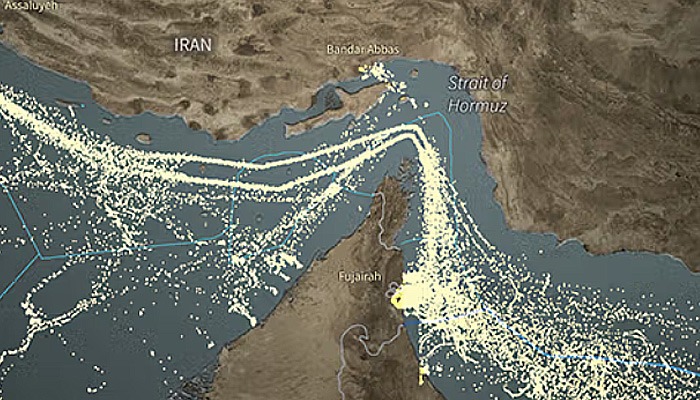
The Strait of Hormuz poses a different risk. Qatar, Kuwait and Bahrain are especially exposed to disruption there, and Qatar depends on the strait to ship its liquefied natural gas. Saudi Arabia and the United Arab Emirates can send some oil through pipelines that bypass Hormuz. Oman has direct access to waters outside the strait. If both passages are disrupted, some Saudi shipments routed through the Red Sea would also face constraints. Higher prices per barrel can bring limited relief when export volumes fall.
The Gulf’s exposure extends beyond energy. Airlines face higher costs when flights take longer routes. Hotels lose revenue when travellers cancel. Developers may defer projects if borrowing becomes more expensive. A sustained interruption to power or desalination could affect access to drinking water. Allianz Research projects US$790 billion in cumulative economic losses for the Gulf through 2030, with the heaviest impact expected in the economies most dependent on Hormuz.
Pakistan pays through fuel, freight and Gulf jobs
The IMF says 81 percent of Pakistan’s fuel imports come from Gulf Cooperation Council countries. When fuel gets more expensive, Pakistan needs more dollars to buy the same amount. Within Pakistan, a vegetable seller in Lahore pays more for delivery, a farmer spends more to run diesel equipment, and a motorcycle clothing exporter in Sialkot may have to absorb higher freight charges to honour a price already agreed with an overseas buyer.
The other exposure is through Pakistani workers abroad. Pakistan received about US$1.8 billion in workers’ remittances from Saudi Arabia and the UAE alone in October. Those inflows were strong. If the war delays Gulf construction projects or slows hiring, some families could face higher prices at home while receiving less from abroad. Islamabad’s relationships with Gulf capitals and Tehran give it room to press for reliable fuel supplies and protections for Pakistani workers.
What Canada can afford to absorb
I look at this from Vancouver as well as Lahore. Canadian households also feel the pressure when groceries and fuel cost more. Ottawa has more room to put money directly into the hands of families who need it.
The C$7.3 billion figure combines two measures in Canada’s November budget. C$4.1 billion is the proposed cost of a one-time supplement to the Canada Groceries and Essentials Benefit, intended for more than 12 million people with low or modest incomes in early 2027. An eligible single adult without children could receive up to C$339, and an eligible couple with two children up to C$679. The remaining C$3.2 billion is for a national food security strategy that includes investment in production, distribution and grocery competition. Canada had announced an earlier expansion of the grocery benefit in January, before the war began.
Ottawa separately estimates C$5.3 billion in temporary federal fuel-tax relief in 2026–27. Ontario’s budget watchdog projected C$8.5 billion in additional gasoline and diesel costs in Ontario in 2026, under its assumptions about fuel prices and demand. The federal figure measures tax revenue Ottawa expects to give up. The Ontario figure estimates extra spending by fuel buyers in that province. Canada’s oil producers can earn more when prices rise, while Pakistan has to find more foreign currency to buy the oil it imports.
The cost beyond the region
The IMF’s October outlook projected 3.4 percent global growth in 2027. In a downside scenario involving prolonged disruption at Hormuz and Bab el-Mandeb alongside other economic pressures, oil reaches US$130 a barrel and global growth falls to about 2.9 percent. Longer voyages would make it more expensive to move goods. Higher gas and fertilizer prices could raise the cost of growing food far from the fighting. A verified worldwide dollar total for the losses already incurred remains unavailable.
Back in Lahore, the man earning Rs 30,000 has put the electricity bill beside the hospital slip. He knows what ten litres of petrol will cost. What he still has to decide is whether to buy the medicine today or keep enough money to get to work until payday. When I hear talk of the next phase of this war, that is the decision I think about.

Malik Muslim Raza Awan
Vancouver, Canada · November 2026
Comments are closed, but trackbacks and pingbacks are open.