
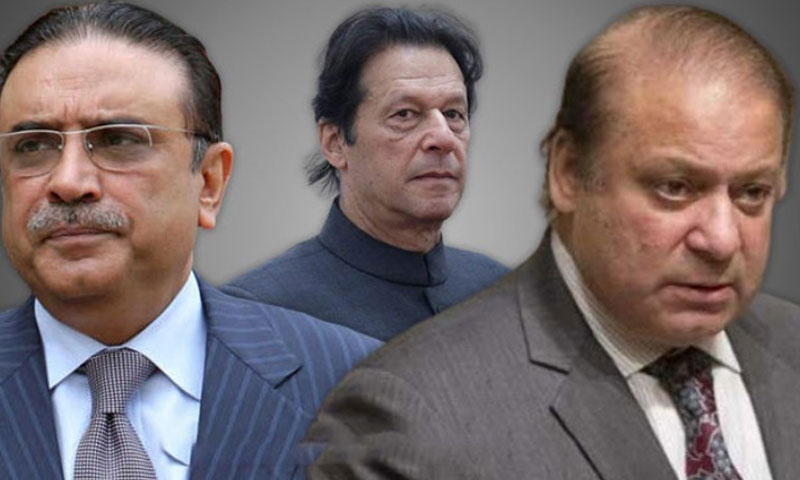

There arise, in the political evolution of nations, certain critical junctures at which the gravest peril does not emanate from the multiplicity of challenges confronting the state, but rather from the erosion of the collective wisdom required to address them. Pakistan presently finds itself at such an inflection point. Political polarization, institutional distrust, electoral controversies, regional disquiet, and an increasingly fragmented national discourse have converged to form a crisis of considerable magnitude. Within such a milieu, the Prime Minister’s invocation of a new “Charter of Democracy” ought neither to be dismissed outright as a rhetorical expedient nor accepted uncritically as a sufficient remedy. Its efficacy will ultimately be determined not by proclamations or symbolic gestures, but by sincerity of purpose, inclusivity of process, and demonstrable commitment to implementation.
The annals of political history reveal that democracy is far more than a procedural mechanism for conducting elections. Rather, it constitutes a comprehensive framework of governance founded upon the peaceful transfer of authority, respect for dissent, constitutional supremacy, and the sanctity of the popular mandate. Pakistan’s predicament does not stem from the absence of a constitutional order; it arises from the inconsistency with which that order has been upheld. The Constitution of 1973 represented an extraordinary achievement in national consensus, bringing divergent political and ideological currents within a common constitutional framework. Yet, throughout the subsequent decades, numerous episodes have witnessed the subordination of constitutional principles to transient political considerations, thereby weakening the normative authority of the constitutional compact.
It must likewise be acknowledged that, within any genuinely democratic polity, the constitution itself constitutes the supreme covenant between state and citizen. Were constitutional principles implemented in both letter and spirit, the necessity for supplementary political accords would be substantially diminished. However, when constitutional interpretation, application, and reverence become contingent upon expediency, additional mechanisms of confidence-building and national dialogue become indispensable. The Charter of Democracy concluded in 2006 emerged from precisely such a historical necessity. It reflected a recognition among major political actors that democratic stability and institutional continuity must supersede the imperatives of partisan confrontation.
The central question confronting Pakistan today is not whether a new charter ought to be formulated, but rather who shall participate in its formation and upon what foundational principles it shall rest. No national political compact can attain legitimacy or durability if substantial political constituencies remain excluded from the process. Strategies designed to marginalize political parties, neutralize leadership, or suppress dissenting voices may yield temporary advantages, yet they seldom produce enduring stability. Historical experience repeatedly demonstrates that the exclusion of political forces does not extinguish crises; it merely transforms them into more intricate and potentially more destabilizing forms.

An equally consequential dimension of Pakistan’s contemporary predicament is the gradual transformation of nationally oriented political parties into regionally confined entities. Such a development presents a serious challenge to the cohesion of the federation. When political organizations cease to command support across the breadth of the country and become identified predominantly with particular provinces or ethnic constituencies, the unifying national narrative weakens while regional identities acquire greater political salience. This phenomenon has, at various points in the country’s history, contributed to the marginalization of significant political currents from the national mainstream. A resilient federation depends upon a political order that affords all constituent units an equitable sense of participation and representation.
The situations in Azad Kashmir and Balochistan must likewise be examined within this broader framework. While the historical origins, sociopolitical dynamics, and immediate grievances of these regions differ considerably, a common principle remains applicable to both: meaningful political engagement, sustained dialogue, and the cultivation of mutual trust. The stability of a state cannot be secured exclusively through administrative measures or coercive capacities. It rests equally upon the extent to which citizens perceive themselves as stakeholders in the collective enterprise of governance. Where such perceptions diminish, estrangement and alienation invariably deepen.
A further and persistent source of Pakistan’s political instability has been the recurring controversy surrounding electoral processes. Electoral transparency is not merely an administrative requirement; it constitutes one of the moral foundations of democratic legitimacy. When citizens possess confidence that their votes are accorded their proper value, the prospects for resolving political disputes through constitutional means are significantly enhanced. Conversely, when electoral outcomes are widely contested, public confidence in democratic institutions deteriorates, and political contention assumes a prolonged and often debilitating character.
At the present juncture, the country stands in greater need of a transformation in political conduct than of another political slogan. Constitutional supremacy, respect for the popular mandate, acceptance of political pluralism, and the inclusion of all major political stakeholders within a framework of dialogue are indispensable prerequisites for any meaningful national settlement. Absent these principles, any new covenant risks becoming little more than a ceremonial document devoid of transformative capacity. The restoration of national politics cannot be achieved through exclusion, recrimination, or perpetual antagonism; it must proceed through reconciliation, inclusion, and the reconstruction of democratic trust.
Pakistan has, on various occasions, demonstrated a noteworthy capacity for mediation and conciliation in international affairs. If it can facilitate understanding between rival states and contribute to the resolution of external conflicts, there exists no compelling reason why it should be incapable of addressing its own internal political divisions through wisdom, statesmanship, and democratic maturity. The paramount requirement of the present moment is not merely the drafting of another agreement, but the reaffirmation of a collective commitment to regard the Constitution not simply as a legal instrument, but as the foundational expression of national consensus and political continuity. Such a commitment alone offers a credible path toward relieving the country of its recurring cycles of political turbulence and guiding it toward a more stable, inclusive, and enduring democratic future.
Comments are closed, but trackbacks and pingbacks are open.