

The Growing Addiction to Screens among Adolescents and Its Impact on Mental Health and Academic Engagement
How Excessive Screen Use Is Damaging Mental Health & Academic Engagement in Today's Adolescents

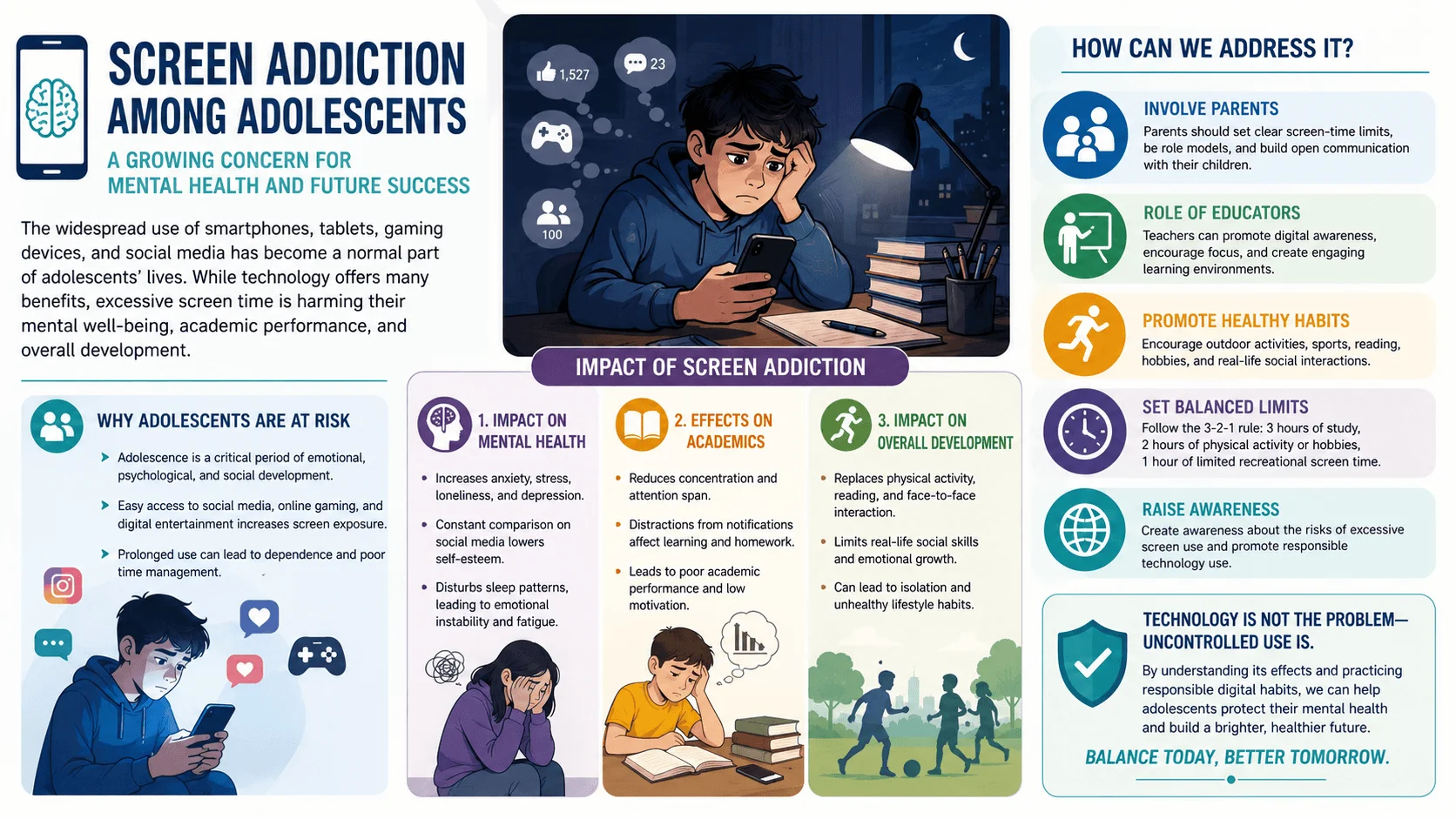
Screen addiction among adolescents has become an increasingly serious concern in modern society. With the widespread availability of smartphones, tablets, gaming devices, and social media platforms, young people are spending a significant portion of their daily lives in front of screens.
While technology has brought many educational and social advantages, excessive screen use has created challenges that are affecting the mental well-being and academic lives of adolescents.
Adolescence and the Risk of Screen Dependency
Adolescence is a crucial stage of development during which individuals experience emotional, psychological, and social changes. During this period, excessive screen exposure can interfere with healthy growth and behavior.
Many adolescents become deeply attached to social media, online gaming, and digital entertainment, often spending several hours a day online. Over time, this pattern can develop into dependence, reducing their ability to manage time and maintain balance in daily activities.
How Screen Addiction Affects Mental Health
One of the major consequences of screen addiction is its impact on mental health. Continuous use of digital platforms can increase feelings of anxiety, stress, loneliness, and depression.
Social media often exposes adolescents to unrealistic lifestyles and constant comparisons with others, creating pressure to meet idealized standards. This may lead to low self-esteem and dissatisfaction with personal appearance or achievements.
Furthermore, excessive screen use can disturb sleep patterns. Lack of adequate sleep is strongly linked with emotional instability and reduced mental well-being.
Impact on Academic Performance and Engagement
Academic engagement is also significantly affected by screen addiction. Students who spend excessive time on phones or other devices often struggle to maintain concentration during lessons and while completing assignments.
Frequent notifications and the habit of constantly checking social media can reduce attention span. This makes it difficult to focus on educational tasks.
As a result, academic performance may decline, classroom participation may decrease, and motivation toward learning can weaken.
What Gets Replaced by Excessive Screen Time
Another concern is that excessive screen time often replaces activities that contribute to healthy development. These include physical exercise, face-to-face communication, reading, and participation in social events.
These activities play an important role in building confidence, improving emotional health, and strengthening interpersonal skills. Their absence can further increase the negative effects associated with screen dependency.
How to Address Screen Addiction in Adolescents
Addressing screen addiction among adolescents requires a balanced approach involving parents, educators, and society. Young people should be encouraged to use technology responsibly rather than being completely separated from it.
Setting reasonable screen-time limits can make a meaningful difference. Promoting outdoor activities and creating awareness about healthy digital habits can help adolescents maintain a better balance between technology use and personal development.
Written By:

Zahid Mushtaq Qureshi (PhD Scholar)


Comments are closed, but trackbacks and pingbacks are open.