
Strait of Hormuz Reopening Conditions Still Unclear as Oil Prices Climb
Iran's fresh demands over the Strait of Hormuz keep global energy markets on edge, pushing Brent crude higher on Monday.

IRAN – (Special Correspondent/Web Desk) – Oil markets are feeling the strain again. The strait of hormuz reopening conditions set by Tehran are proving tougher than many traders had hoped, and that uncertainty is pushing prices upward this week.
Brent crude, the world’s key oil benchmark, gained more than one percent on Monday. The jump came after Iran made clear that the vital waterway would stay closed unless Washington agreed to major concessions.
By 2:30 GMT, October Brent futures were trading near $83.77 a barrel. That’s roughly 16 percent higher than prices seen before the US and Israel launched military action against Iran earlier this year.
Market watchers say the mood remains tense. One Sydney-based trading analyst explained that the absence of real progress, combined with unanswered questions about how any deal would actually work, is keeping extra risk baked into oil prices. He added that every day without a breakthrough makes traders more nervous.
Iran’s foreign minister said over the weekend that talks with Oman are nearing a resolution on the strait. However, he stressed that the passage won’t open again until the United States eases sanctions and agrees to pay reparations tied to the war.
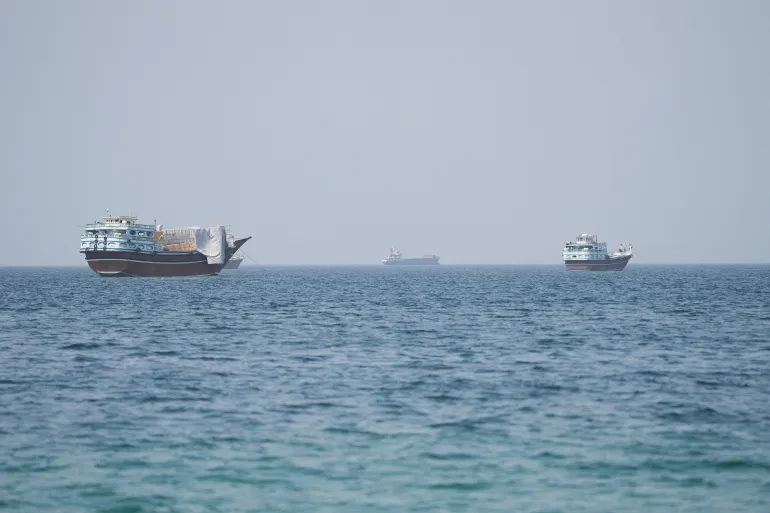
The Strait of Hormuz normally carries about one-fifth of the world’s oil supply. Since fighting broke out in late February, traffic through the strait has nearly stopped, triggering what’s being called the biggest energy supply disruption on record.
Ship-tracking data tells the story clearly. Only eight to fifteen vessels passed through the strait on August 4th, 5th, and 6th. Before the conflict, that number was closer to 130 crossings.
Iran continues to claim authority over shipping routes through the strait, even though international law guarantees free passage for all nations. Tehran has warned it may target commercial ships that try to use routes it hasn’t approved.
Tensions flared again over the weekend. The United Arab Emirates accused Iran of firing a missile at a tanker belonging to the Abu Dhabi National Oil Company.
Since the war began, the region has recorded at least 64 violent incidents involving commercial vessels, with 17 deaths reported. Most of these attacks have been linked to Iran, according to maritime safety officials.
Despite the shaky energy outlook, stock markets across Asia posted gains on Monday. Japan’s Nikkei climbed 2.1 percent, South Korea’s Kospi rose 0.7 percent, and Hong Kong’s Hang Seng added 0.6 percent.
Analysts remain doubtful that a workable agreement will come together quickly. Even if a deal is announced, past experience shows such arrangements often don’t hold. That lingering doubt could stop oil prices from falling too far, even after a diplomatic win.
For now, traders are watching closely, waiting to see whether words turn into real action in the days ahead.
Comments are closed, but trackbacks and pingbacks are open.