
Pakistan Seeks National Strategy for Sustainable Poverty Graduation
International Conference Urges National Policy to End Poverty

Islamabad: (News Desk) – An international conference in Islamabad has called for a coordinated national strategy to eliminate poverty and help vulnerable households achieve sustainable livelihoods, financial independence and long-term economic security.
The two-day International Conference on Inclusive and Resilient Economic Empowerment and Growth brought together delegates from 12 countries and more than 1,000 participants under the theme “From Poverty to Prosperity.” The event brought together political leaders, government officials, international experts, development partners, civil society representatives, private-sector stakeholders and community members to explore practical ways to promote inclusive growth and strengthen economic resilience.
Organised by the Pakistan Poverty Alleviation Fund (PPAF), in collaboration with the Ministry of Poverty Alleviation and Social Safety, the Ministry of National Heritage and Culture, the Centre of National Cohesion and Outreach (CENCO) and Paigham-e-Pakistan, the conference focused on strengthening Pakistan’s poverty reduction efforts and enabling families to achieve lasting economic independence.
Participants stressed that poverty alleviation must extend beyond short-term financial assistance. They called for an integrated approach combining social protection with vocational training, productive assets, access to finance and markets, enterprise development and community-led initiatives. The discussions also highlighted the need to help families withstand economic pressures and climate-related disasters after emerging from poverty.
The conference declaration outlined key priorities, including a National Poverty Graduation Policy, sustainable livelihoods, the development of micro, small and medium-sized enterprises (MSMEs), green growth, climate resilience, youth empowerment, financial inclusion and sustainable investment.
The proposed policy aims to establish clear pathways for households to transition from cash transfers and other forms of assistance towards stable and productive sources of income. The declaration also emphasised stronger community institutions, improved financing and market access for small businesses, expanded economic opportunities for women and young people, youth entrepreneurship and greater investment in climate adaptation.
PPAF Chief Executive Officer Nadir Gul Barech called for the conference to become a regular platform for reviewing progress, strengthening partnerships and turning policy discussions into practical outcomes.
He said the initiative should help ensure that people not only escape poverty but also remain economically secure and enjoy productive and dignified lives.
Six thematic panel discussions explored poverty graduation and sustainable livelihoods, MSME development and value addition, green growth, youth economic empowerment, financial inclusion and the contribution of the cultural economy to national cohesion. Speakers discussed how government policies, development financing, private-sector participation and community-based initiatives could work together to expand opportunities and make poverty reduction more sustainable.
During a session on youth economic empowerment, Rana Mashhood Ahmad Khan, Chairman of the Prime Minister’s Youth Programme, stressed the importance of including disadvantaged and marginalised communities in economic development.
He said national progress would remain limited without greater investment in volunteerism and the empowerment of underserved sections of society. He emphasised that disadvantaged people must receive the opportunities and resources needed to compete on an equal footing with more privileged groups.
A major development at the conference was the launch of PPAF’s Climate Change and Green Growth Strategy 2025–2030. The strategy places community-level adaptation and resilience at the heart of sustainable poverty reduction, with a focus on climate change mitigation, environmentally sustainable growth and stronger capacities for climate-resilient livelihoods.
The event also highlighted the role of small businesses and local entrepreneurship in generating employment and improving household incomes. Exhibitions featuring micro, small and medium-sized enterprises from Pakistan’s provinces and regions showcased locally produced goods, traditional skills and entrepreneurial initiatives. The displays demonstrated how community-based businesses can strengthen livelihoods, expand economic participation and connect local producers with wider markets.
The programme also featured the Pakistan launch of Weaving My South Asian Tapestry by Chandni Joshi. The author introduced her book and read a chapter, reflecting on her decades of work in women’s rights, gender equality and development across South Asia.
In a move to strengthen cooperation on social inclusion and national cohesion, PPAF signed a memorandum of understanding with CENCO. The partnership aims to connect economic empowerment with community engagement and initiatives designed to promote a more inclusive and cohesive society.
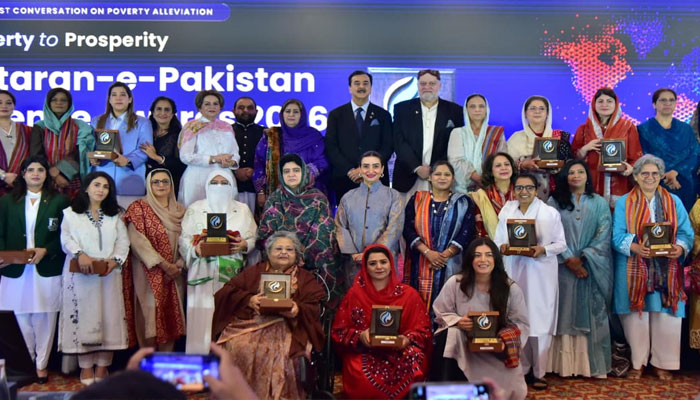
The Dukhtaran-e-Pakistan Excellence Awards recognised women for their achievements across various fields and highlighted the importance of expanding their participation in the country’s social and economic development. Minister of State for Federal Education and Professional Training Wajiha Qamar presided over the ceremony, while Federal Minister for National Heritage and Culture Aurangzeb Khan Khichi presented the awards.
Addressing the ceremony, Wajiha Qamar stressed that a nation’s progress is reflected in the opportunities available to its women and the recognition given to their accomplishments. She called for greater access to education, financial resources, skills training, safer workplaces and decision-making positions to help women realise their full potential.
Federal Minister for Poverty Alleviation and Social Safety Syed Imran Ahmad Shah highlighted the need for coordinated action to tackle poverty and create sustainable routes towards economic independence.
He said the conference brought together political and administrative leadership, international experts, development partners, civil society, businesses and grassroots representatives to turn policy commitments into meaningful improvements in people’s lives.
In his concluding remarks, Chairman of the Senate of Pakistan Syed Yusuf Raza Gilani said the government recognised the conference’s recommendations and was committed to translating its conclusions into action, while acknowledging the country’s existing constraints.
Gilani stressed that helping a family cross the poverty line should be considered only the first step. He said lasting success depended on whether households could establish secure livelihoods, withstand economic and environmental shocks and avoid falling back into poverty.
He emphasised the need to combine social protection with skills development, productive assets, access to finance and markets, and resilient community institutions to ensure sustainable progress.
The conference also presented Youth Excellence and Media Excellence Awards to acknowledge contributions to youth engagement and media. The awards complemented the event’s broader emphasis on inclusive development, community participation and cooperation across different sectors.
The international gathering concluded with a call for stronger partnerships, coordinated national action and sustained commitment to the priorities outlined in its declaration. Participants emphasised that lasting poverty reduction requires more than raising household incomes above the poverty line; it also requires creating sustainable employment, expanding economic opportunities, strengthening resilience and enabling families to build secure and dignified futures.
[…] community with growing industries and new economic opportunities, Minning Town in northwest China’s Ningxia Hui Autonomous Region offers a remarkable example of how poverty alleviation can lay the foundation for rural […]