


Islamabad – (Staff Reporter/Web Desk) – Pakistan Aurangzeb Bessent Washington talks have taken a new turn, as Islamabad has quietly asked the United States for a huge financial favor. According to a source close to the matter, Pakistan wants a $10 billion facility from the US Treasury to help support its weak economy.
This news is coming out for the first time, and it shows just how much Pakistan is hoping to gain from its recent role in global diplomacy. The country helped bring peace talks between the US and Iran, and that seems to have opened new doors in Washington.
The Pakistan $10 billion US Treasury request is officially called a Bilateral Exchange Stabilisation Support Facility. If approved, it would last up to five years and could give Pakistan’s shaky economy some much-needed breathing space.
This kind of deal would help Pakistan build up its foreign reserves, keep the rupee steady, and depend less on loans from places like the IMF. Right now, Pakistan is going through tough financial reforms under a $7 billion IMF program.
The US Treasury has not said anything publicly about this request. Pakistan’s finance ministry also stayed quiet when asked for comment, since the news broke outside normal working hours in Asia.
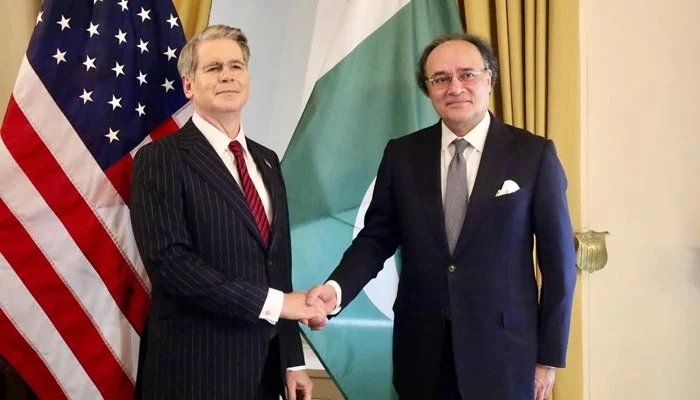
However, something did happen this week. Finance Minister Muhammad Aurangzeb sat down with Bessent in Washington on Tuesday. Their meeting focused on Pakistan’s economic risks, especially ones tied to regional conflicts nearby.

A government statement said Aurangzeb pushed for stronger US backing. He wants better access to global markets, bigger reserves, and an improved credit score for Pakistan. Both sides also talked about growing investment and working closer on shared projects.
These exchange stabilisation deals are not common. The US Treasury usually saves them for special cases, and they work differently from regular currency swap lines used by central banks. A similar deal was given to Argentina last year, the first of its kind in over twenty years.
Pakistan has faced serious money troubles before. Back in 2023, the country barely avoided default. It later secured a $7 billion rescue package along with extra funding to fight climate-related damage.
Even with support from China and Saudi Arabia, Pakistan’s reserves remain fragile. In April, the country had to repay a large chunk of money to the UAE, which used up a big part of its reserves. Saudi Arabia stepped in with fresh help soon after.
Still, there is some hope. Pakistan’s central bank believes reserves could climb close to record levels by the end of 2026.
A deal with the US would mean more than just money. It would send a strong political signal too, showing that Washington trusts Pakistan’s economic direction.
Pakistan has also been building new ties with the US through business deals, including crypto payments, real estate projects, and mining investments. All of this points to a country trying hard to rebuild trust with global partners, one step at a time.
Comments are closed, but trackbacks and pingbacks are open.