
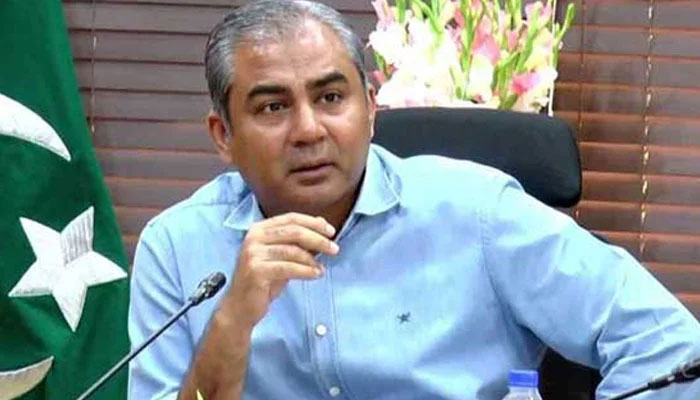
Mohsin Naqvi Blames Sohail Afridi for Failed Government-PTI Talks
“Protest is permitted, but storming Islamabad will not be allowed,” Naqvi said

Lahore: (Staff Reporter) – Interior Minister Mohsin Naqvi on Sunday blamed Khyber Pakhtunkhwa Chief Minister Sohail Afridi for the breakdown of government-Pakistan Tehreek-e-Insaf (PTI) negotiations, claiming both sides had reached a “win-win” agreement before the chief minister sought changes to the final draft.
Addressing a press conference in Lahore, Naqvi said the agreement had been finalised after several rounds of negotiations and only required approval from Prime Minister Shehbaz Sharif and President Asif Ali Zardari.
Naqvi warned that Sohail Afridi would be held responsible if any life was lost during the planned long march. He also said the repeated practice of protesters “storming Islamabad” must end.
“Protest is permitted, but storming Islamabad will not be allowed,” Naqvi said, adding that the government would not tolerate another incident similar to May 9.
The interior minister said he had briefed both the prime minister and president about the negotiations and had also presented the draft agreement to President Zardari.
According to Naqvi, the draft was amended four times during the negotiations before being finalised. He claimed that after the agreement had been settled, Afridi raised objections and said the KP government would not accept it.
“If Sohail Afridi had to make the decisions, he should have joined the negotiations,” Naqvi said.
He clarified that the federal government had not asked the opposition to postpone its long march. Instead, he said, Islamabad wanted the KP government to cooperate with the federal authorities in combating terrorism.

Naqvi said the government had suggested that if the KP chief minister had reservations about the agreement, he should either attend the negotiations himself or send a representative.
He further claimed that Afridi subsequently pressured PTI and opposition leaders, including Senator Raja Nasir Abbas, over the proposed agreement. Naqvi said PTI leader Asad Qaiser had initially indicated that the KP government supported the federal government’s position during the talks.
The federal government then sent the PTI negotiating team to Peshawar to meet Afridi and resolve the differences, but the delegation returned without reaching an agreement, Naqvi said.
According to the interior minister, the federal government’s primary concern was counterterrorism in Khyber Pakhtunkhwa, particularly in the merged districts.
Naqvi said the KP government had initially agreed to sign a written agreement and submit a 72-hour implementation plan covering several security-related measures. These included preventing militants from operating freely or establishing safe havens in the province, condemning the Tehreek-i-Taliban Pakistan (TTP) and other militant groups, supporting the federal government’s Afghan refugee policy, increasing funding for counterterrorism operations and police, and strengthening coordination between the provincial government and armed forces.
The proposed agreement also included implementation of the National Action Plan, counterterrorism measures in the former Federally Administered Tribal Areas and merged districts, and greater provincial ownership of counterterrorism efforts.
Naqvi claimed that the KP government later backed away from these commitments during the final stage of negotiations.
However, PTI negotiator Salman Akram Raja gave a different account, saying the government wanted the KP administration to support federal actions and counterterrorism operations, including the imposition of an emergency in the merged districts and adjoining areas within 72 hours.
Comments are closed, but trackbacks and pingbacks are open.