

Killi Zaik Operation Kills Two Terrorists in Balochistan
Security forces launch Killi Zaik operation near Baseema camp, killing two terrorists and injuring three militants in Balochistan.

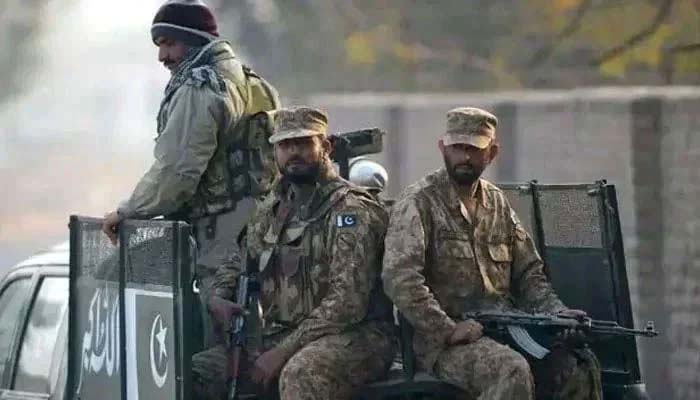
Balochistan – (Staff Reporter/Web Desk) – The Killi Zaik operation has left at least two terrorists dead and three others wounded, security sources confirmed on Monday. The intelligence-based raid took place in Balochistan, marking another blow to militant networks operating in the province.
Security officials said the action was carried out between Killi Zaik and Kaghli, a stretch located roughly 12 kilometres north of the Baseema camp. Troops moved in after receiving credible tips about militants hiding in the area.
During the raid, forces recovered a large cache of weapons and explosive material. This included ammunition, hand grenades, loaded magazines, and components commonly used to build improvised explosive devices, or IEDs.
The Killi Zaik operation forms part of a wider counterterrorism campaign known as Operation Rad-ul-Fitna-3. The military’s media wing has described this ongoing effort as a direct response to networks it says are backed by India.
This latest strike comes barely a day after another major success for security forces. On Sunday, troops killed seven India-linked militants during a separate raid in the Kharan district of Balochistan.
That earlier operation unfolded in the Lajay area, again triggered by intelligence about armed men gathering nearby. Together, the two raids highlight how frequently security forces are now acting on real-time tips across the province.
Balochistan has remained a hotspot for violence for several years now. The trouble intensified sharply after 2021, when the Afghan Taliban took control of neighbouring Afghanistan.
Since then, both Balochistan and Khyber Pakhtunkhwa have witnessed a steady climb in attacks, ambushes, and targeted killings. Security analysts often point to porous border areas and cross-border militant movement as key drivers behind this surge.
Fresh data backs up these concerns. A recent report from the Centre for Research and Security Studies, known as CRSS, paints a troubling picture for the second quarter of 2026.
According to the report, KP and Balochistan together made up nearly 96 percent of all violence-linked deaths recorded nationwide during that period. That figure alone shows how concentrated the unrest has become in just two provinces.
Khyber Pakhtunkhwa bore the heaviest toll, accounting for more than 61 percent of total fatalities, or 475 lives lost. Balochistan followed close behind, recording 34 percent of deaths, translating to 265 people killed.

The pattern held true for incident counts as well. KP logged 151 violent incidents during the quarter, representing 57 percent of all cases reported across Pakistan.
Balochistan wasn’t far off, with 94 recorded incidents making up 35 percent of the national total. Combined, these numbers confirm that militant activity remains heavily clustered in these two regions.
Against this backdrop, operations like the one in Killi Zaik carry real significance. Each successful raid disrupts militant supply lines and denies fighters the weapons and explosives needed to plan further attacks.
Security forces have increasingly relied on intelligence-based operations rather than large-scale sweeps. This approach allows troops to act quickly on specific tips, reducing risk to nearby civilian populations.
The recovery of IED-making material during the Killi Zaik raid is particularly notable. IEDs remain one of the deadliest tools used by militant groups, often targeting security convoys and public spaces alike.
By seizing these components before they could be assembled into functional devices, forces may have prevented a future attack. Officials have not yet released further details on the identities of those killed or captured.
Operation Rad-ul-Fitna-3 continues to expand across multiple districts in Balochistan. Military officials have indicated that similar intelligence-driven raids will continue as long as threats persist in the region.
For residents living near Killi Zaik and Kaghli, these operations bring a mix of relief and ongoing uncertainty. While each successful raid weakens militant networks, the broader security situation in Balochistan remains fragile.
The coming weeks are likely to see continued military activity as authorities work through intelligence gathered from recent operations. Whether this translates into a sustained drop in violence remains to be seen, especially with KP and Balochistan still recording the bulk of the country’s security incidents.
As the CRSS report makes clear, the human cost of this ongoing conflict remains high. Hundreds of lives have already been lost in 2026 alone, underscoring the urgency behind operations like the one carried out in Killi Zaik.
Security forces stand alert near the Killi Zaik area in Balochistan following a successful intelligence-based operation against militants.
Comments are closed, but trackbacks and pingbacks are open.