

Kashmir, the UN and the Pursuit of Peace: Security Council Resolution 2788 Explained
A fresh Security Council debate reopens old questions about Kashmir, diplomacy, and the true meaning of peaceful settlement

KASHMIR – (Staff Correspondent/Web Desk) – Security Council Resolution 2788 explained a lot about where the UN really stands when member states gathered on July 23, 2026, for a high-level debate titled “Strengthening the Mechanism for the Peaceful Settlement of Disputes.” More than seventy delegations took part, led by DR Congo’s Foreign Minister Thérèse Kayikwamba Wagner, who currently holds the Council presidency.
The session built on a resolution first adopted in July 2025 under Pakistan’s presidency. That text urged countries to rely more on dialogue, mediation, and early warning tools instead of letting tensions boil over into conflict.
UN Secretary-General António Guterres opened with a blunt warning. He said today’s conflicts show an alarming disregard for international law, and every ignored violation only paves the way for the next one. He reaffirmed his commitment to using his own diplomatic influence to support peace wherever possible.
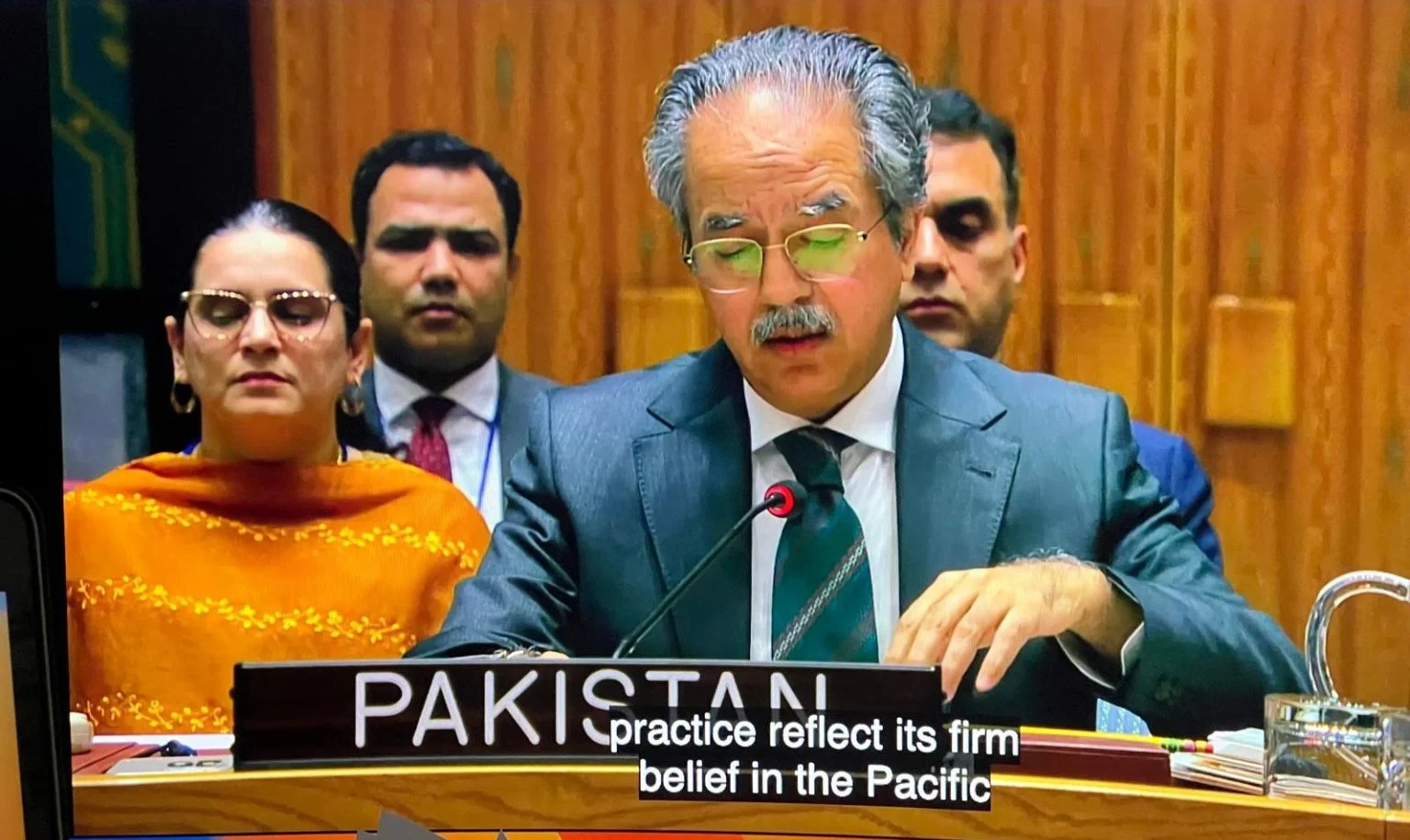
Pakistan’s Ambassador, Asim Iftikhar Ahmad, used the moment to bring up Jammu and Kashmir, calling it one of the world’s oldest unresolved disputes. He reminded the Council that more than sixteen resolutions call for a plebiscite under UN supervision, giving Kashmiris the right to decide their own future.
India’s representative disagreed, calling the matter outdated and reaffirming Kashmir as an integral part of India. It’s the same standoff that’s played out for more than seven decades, with both sides holding firm to their positions.

But here’s a fair question worth asking: does time really erase an unresolved dispute? If old age alone could cancel international commitments, then countless treaties and Charter principles would lose their meaning too. That’s simply not how international law functions.
This isn’t just a distant political debate either. India and Pakistan are both nuclear-armed neighbors, and their relationship has come dangerously close to conflict more than once. The 2025 Pahalgam attack and the crisis that followed were a stark reminder of how quickly things can spiral before diplomacy steps in.
Respected voices over the decades have echoed the same concern. Former diplomats, scholars, and even world leaders have pointed to Kashmir as a genuine threat to regional stability, not just a talking point for speeches.
One researcher from the International Crisis Group made an especially important point — any lasting peace process needs to include Kashmiris themselves at the table, not just governments speaking on their behalf.
The bigger lesson from this debate is hard to miss. If the international community truly believes in peaceful settlement, it can’t apply that belief selectively. Charter principles either mean something for every dispute, or they risk losing credibility altogether.
Resolution 2788 is a strong statement of intent. But its real test lies ahead, measured not by speeches at the UN podium but by consistent follow-through. Until that happens, Kashmir will remain a quiet but persistent reminder of unfinished business in the pursuit of global peace.
Comments are closed, but trackbacks and pingbacks are open.